The current escalation between Islamabad and Kabul, characterized by retaliatory airstrikes and the closure of strategic airspace, is not a series of isolated border skirmishes but a predictable outcome of the Security-Sovereignty Paradox. This paradox occurs when the domestic legitimacy of a revolutionary government (the Taliban) necessitates the defiance of the very borders that ensure the regional stability required for its economic survival. To understand the collapse of the Pakistan-Afghanistan relationship, one must deconstruct the conflict into its three constituent pressures: ideological non-recognition of colonial boundaries, the "Strategic Depth" fallacy, and the transition from a non-state actor to a state-responsible entity.
The Structural Breakdown of the Durand Line
The 2,640-kilometer Durand Line functions as the primary friction point. For Pakistan, the line is a settled international border; for the Taliban, it remains a "notional" line that bisects the Pashtun heartland. This divergence in legal interpretation creates a permanent state of low-intensity kinetic friction. Recently making headlines recently: The Kinetic Deficit Dynamics of Pakistan Afghanistan Cross Border Conflict.
When the Taliban assumed power in August 2021, the operational logic changed. As an insurgency, they utilized the porous nature of the border for sanctuary. As a governing body, they are now compelled to demonstrate territorial integrity to their domestic base. Every yard of fencing installed by Pakistan is viewed by Kabul not as a security measure, but as an act of "cartographic aggression." This leads to the first major pillar of the conflict: The Sovereignty Signaling Loop.
- Pakistan installs or repairs border fencing to prevent TTP (Tehrik-i-Taliban Pakistan) infiltration.
- Taliban local commanders, seeking to assert "Ghairat" (honor) and nationalist credentials, dismantle the fencing.
- Pakistan responds with artillery or tactical closures of key transit points like Torkham and Chaman.
- Economic fallout ensues, which the Taliban uses to further fuel anti-Pakistan sentiment, completing the loop.
The TTP as a Proxy Liability
The most significant driver of the current airspace closure and military posture is the Tehrik-i-Taliban Pakistan (TTP). Islamabad’s "Strategic Depth" doctrine—the idea that a friendly government in Kabul provides a backyard for Pakistani interests—has inverted. Instead of Afghanistan providing depth for Pakistan, it has provided a Permissive Operational Environment for the TTP. Further details into this topic are detailed by NBC News.
The TTP and the Afghan Taliban share an unbreakable "umbilical" link consisting of shared Deobandi ideology, intermarriage, and decades of joint combat against NATO forces. Asking the Afghan Taliban to neutralize the TTP is a request for organizational fratricide. The Taliban leadership understands that forcefully disarming the TTP would likely trigger a mass defection of their most radical fighters to the Islamic State Khorasan (IS-K), the Taliban’s primary internal rival.
Consequently, the Taliban's strategy is one of strategic procrastination. They offer "negotiations" as a stalling tactic while the TTP utilizes Afghan soil to modernize its kit—often using abandoned Western military hardware—and launch sophisticated cross-border raids. Pakistan’s shift toward airstrikes within Afghan territory (as seen in Khost and Kunar) represents the exhaustion of diplomatic patience and a transition to a "pre-emptive containment" model.
The Economic Cost Function of Airspace Closure
Pakistan’s decision to shut down or restrict its airspace is a high-stakes lever of Economic Asymmetric Warfare. Because Afghanistan is landlocked, it is structurally dependent on Pakistani geography for access to international markets.
The Transit Bottleneck
- Aviation Fuel and Logistics: International flights to Kabul often require Pakistani waypoints. Forcing reroutes through Iranian or Central Asian airspace increases fuel consumption by 30% to 45%, making commercial flight to Afghanistan nearly non-viable.
- The Revenue Deficit: The Taliban government relies heavily on customs duties at border crossings. When Pakistan closes the border or restricts airspace, Kabul loses its primary source of liquid revenue.
- The Perishable Goods Factor: Afghanistan’s agricultural exports (fruits and nuts) are time-sensitive. A three-day border closure at Chaman can result in the total loss of a seasonal harvest’s profit margin.
Pakistan is betting that the economic pain felt by the Afghan merchant class—the group the Taliban needs for urban stability—will eventually force the Taliban leadership to rein in the TTP. However, this assumes that the Taliban operates on a Rational Actor Model based on economic stability. Evidence suggests they prioritize Ideological Purity and internal cohesion over GDP growth.
The Strategic Depth Fallacy and the New Alignment
The military establishment in Rawalpindi is currently undergoing a painful "Strategic Realignment." The decades-long investment in a pro-Pakistan regime in Kabul has yielded a neighbor that is more defiant than the previous Western-backed administration. This is because the Taliban possesses a level of indigenous legitimacy and military capability that the Ghani administration lacked.
This creates a new security architecture where Pakistan must treat Afghanistan as a traditional adversary rather than a client state. The closure of airspace is the first step in "de-coupling" the two nations' security interests. We are seeing the emergence of a Hard Border Policy, characterized by:
- Biometric Enforcement: Moving away from the "easement rights" of border tribes to a strict visa-based regime.
- Kinetic Buffers: Establishing a 5-10km "no-go" zone on the Pakistani side where any unauthorized movement is met with immediate drone or artillery fire.
- Regional Diversification: Pakistan is increasingly looking to China and Iran to help mediate, realizing that bilateral engagement with the Taliban has reached a terminal dead-end.
The Failure of Negotiation Frameworks
Previous attempts at "Jirga" (tribal council) diplomacy have failed because they lack a Verification Mechanism. When the Taliban promises to "restrict" militants, there are no third-party observers to monitor the camps in Logar or Paktika. Furthermore, the decentralized nature of the Taliban means that a decree from the "Amir-ul-Momineen" in Kandahar may be ignored by a hardline commander on the ground in Nangarhar who has personal ties to TTP fighters.
The TTP has also evolved. They no longer seek mere "autonomy" in the tribal areas; they are executing a State-Replacement Strategy. By targeting Pakistani police and military infrastructure, they aim to create a "governance vacuum" that they can fill. This makes the conflict existential for the Pakistani state, explaining why the military response has escalated to the level of airspace restrictions—a move usually reserved for full-scale interstate war.
The Probability of Regional Contagion
The risk of this conflict spilling over into a wider regional crisis is tied to the Spillover Coefficient of militancy. If the TTP successfully establishes a semi-permanent "liberated zone" in North Waziristan, it will embolden other separatist movements in the region, specifically in Balochistan. We are already seeing tactical coordination between religious extremists (TTP) and ethnic separatists (BLA), a "Red-Green Alliance" that utilizes Afghan territory as a safe harbor.
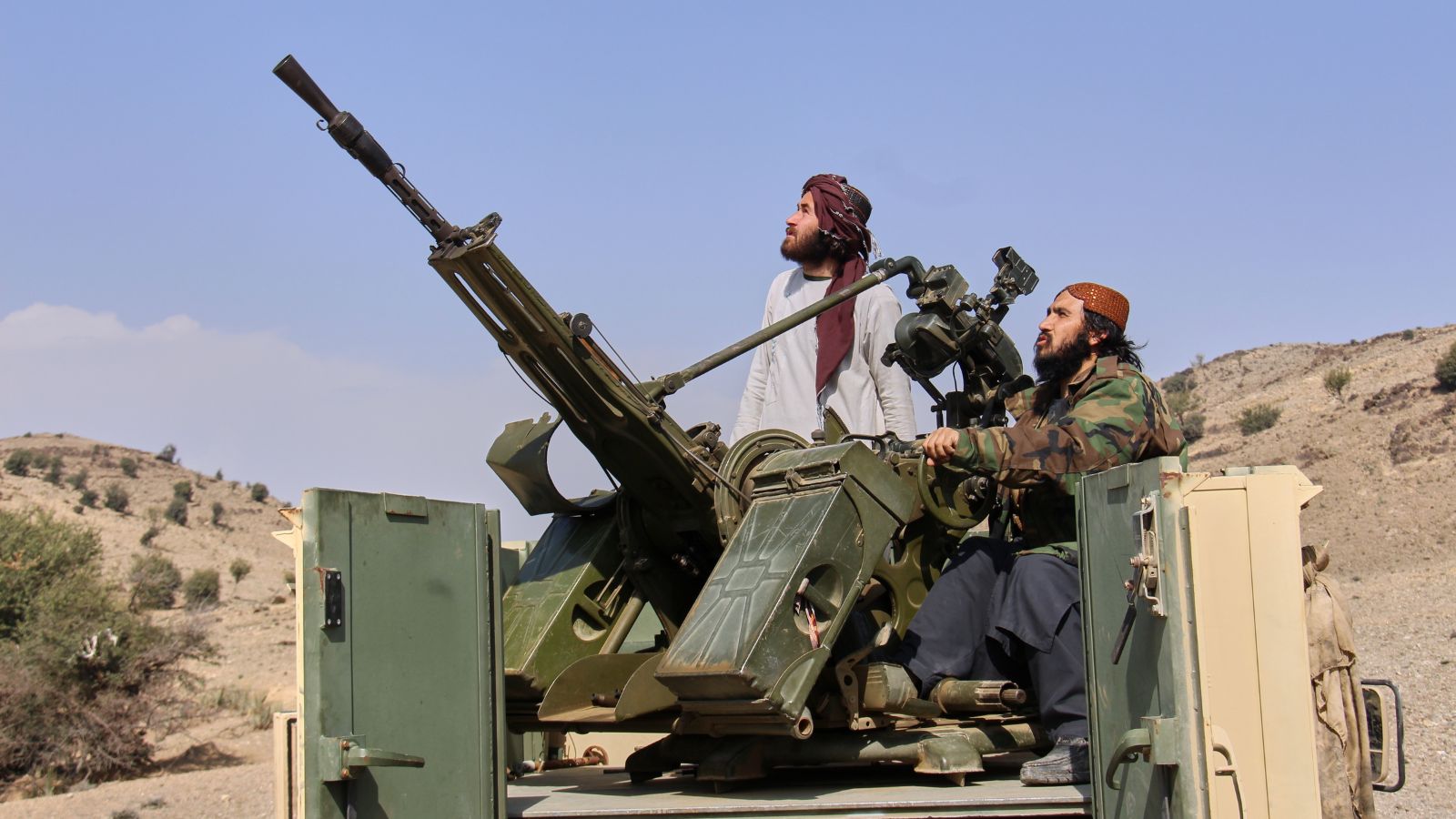
The Taliban’s refusal to acknowledge the border creates a vacuum where international law is unenforceable. If Pakistan continues to conduct strikes inside Afghanistan, Kabul may retaliate by targeting Pakistani infrastructure with the D-30 howitzers and tanks it inherited. This would move the conflict from a "counter-insurgency" operation to a Conventional Border War.
The Strategic Play for Islamabad
To break the current deadlock, Pakistan is likely to move beyond tactical border closures into a phase of Total Isolationism. This involves the systemic deportation of Afghan refugees to remove the "human shield" element used by militants for urban blending, combined with a permanent shift in trade routes to the Central Asian Republics (CARs) that bypass the Afghan corridor.
The objective is to make the cost of hosting the TTP higher than the cost of a domestic rift within the Taliban. If the Taliban leadership faces a choice between their "TTP brothers" and the total collapse of the Afghan state's ability to pay its officials, the internal friction in Kandahar may finally reach a breaking point. However, until the Taliban's internal cost-benefit analysis shifts, the Durand Line will remain the most volatile border in South Asia, and the closure of airspace is merely a prelude to a deeper, more permanent severance of ties.
The immediate tactical requirement for Pakistan is the establishment of a Technological Perimeter—a high-altitude persistent surveillance (HAPS) layer over the Durand Line. Without the ability to monitor and strike TTP launch points in real-time without the "drag" of diplomatic friction, Pakistan will continue to play a defensive, reactive game. The era of "Strategic Depth" is dead; the era of "Fortress Pakistan" has begun.