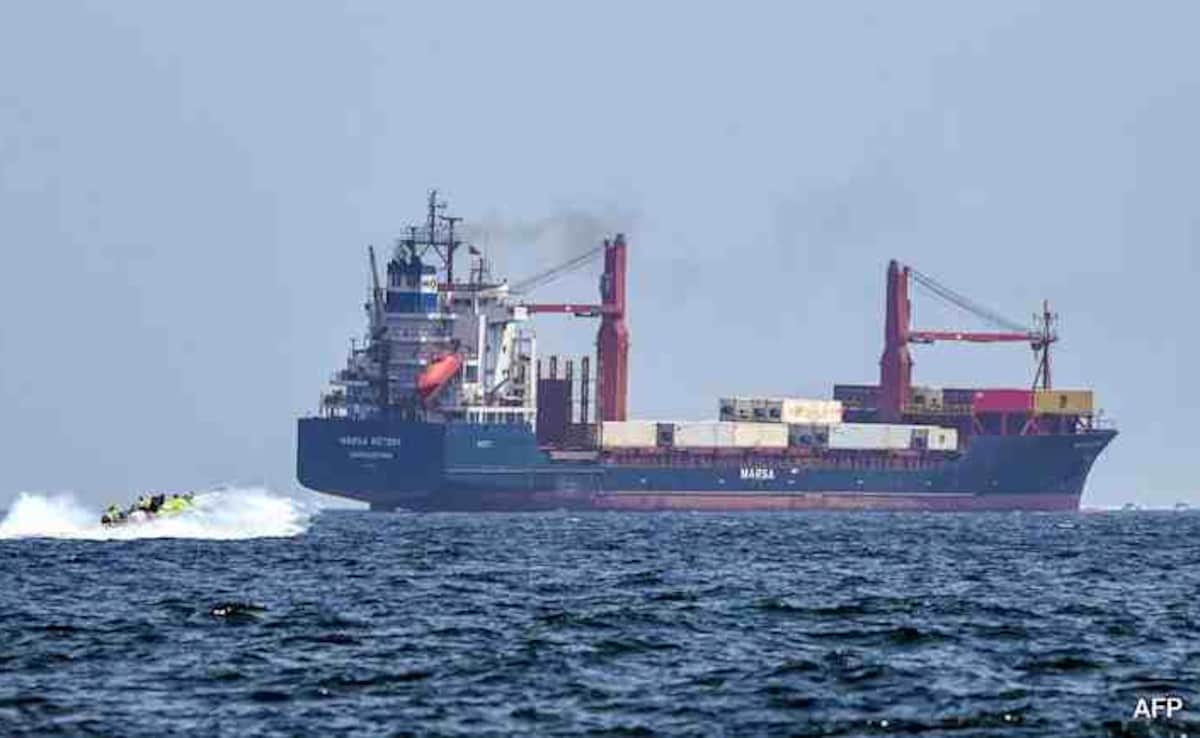
The imposition of a $2 million "war cost" toll by Iranian authorities on vessels transiting the Strait of Hormuz represents a shift from conventional naval posturing to a model of kinetic state-sponsored rent-seeking. This mechanism functions as a localized tax on global supply chains, leveraging a geographic chokepoint to internalize the costs of regional conflict. To understand the implications for global trade, one must look past the immediate sticker shock and deconstruct the operational, legal, and economic frameworks that allow such a toll to exist.
The Mechanics of Chokepoint Monetization
The Strait of Hormuz is a geographic bottleneck where approximately 20% of the world’s daily oil consumption passes through a navigable channel only two miles wide in each direction. Iran’s move to charge $2 million per transit is not merely a retaliatory gesture; it is a sophisticated exercise in Asymmetric Economic Warfare.
This toll acts as a "security premium" extracted under duress. From a consultant's perspective, the cost function for a shipping company now includes a binary variable: pay the state-sanctioned fee or risk the confiscation of the hull, which triggers total loss claims and astronomical increases in Protection and Indemnity (P&I) insurance premiums.
The revenue model relies on three pillars:
- Legal Ambiguity: Iran utilizes a specific interpretation of the United Nations Convention on the Law of the Sea (UNCLOS). While UNCLOS generally provides for "transit passage," Iran—which has signed but not ratified the treaty—frequently asserts that "innocent passage" applies instead. This distinction allows the coastal state to suspend passage if it deems the transit prejudicial to its peace or security.
- Escalation Dominance: By setting a fixed price, Iran creates a predictable, albeit high, cost of doing business. For a Supertanker carrying 2 million barrels of crude, a $2 million fee adds $1 to the cost of each barrel. While significant, this is often lower than the cost of rerouting around the Cape of Good Hope or the certain loss of a $100 million vessel.
- Institutionalized Extortion: Unlike piracy, which is decentralized and erratic, this toll is administered by state or quasi-state actors (such as the IRGC). This provides a veneer of "officialdom" that complicates the legal recourse available to international shipping firms.
The Cost Structure of Maritime Transit Under Duress
Standard maritime economics are built on the assumption of "Freedom of Navigation." When a state introduces a mandatory fee for passage, it disrupts the Net Present Value (NPV) of every shipment currently at sea. The $2 million figure is not arbitrary; it is calculated to sit just below the threshold of making the route entirely unviable, while remaining high enough to fund state operations.
The actual cost to the shipper is the sum of:
$$Total Cost = T + I_w + D_o + (C \times P)$$
Where:
- $T$: The $2 million flat toll.
- $I_w$: The War Risk Insurance premium, which typically spikes to 1% of the hull value during periods of active seizure.
- $D_o$: Opportunity cost of delays (demurrage) while waiting for clearance or processing payments.
- $C$: The capital value of the cargo.
- $P$: The probability of seizure if the toll is unpaid.
The primary friction point is the Probability of Seizure. If $P$ is high, the $2 million toll becomes a rational business expense. If $P$ is low, the toll is a bluff. Iran’s strategy involves periodically seizing vessels (the "demonstration effect") to keep $P$ high enough to ensure the toll is paid by the rest of the fleet.
Fragmentation of the Global Insurance Market
The insurance industry is the first responder to maritime tolls. Typically, a vessel has "hull and machinery" insurance, but transit through the Strait now requires "War Risk" coverage. Underwriters are currently recalibrating their models because the $2 million toll is a "known-known" cost, whereas seizure is a "known-unknown."
The emergence of this toll creates a bifurcated market.
- The Shadow Fleet: Vessels operating under opaque ownership or carrying sanctioned oil may ignore the toll or have back-channel agreements, effectively operating outside the standard insurance framework.
- The Blue-Chip Fleet: Publicly traded shipping giants (e.g., Maersk, Euronav) cannot legally pay fees that might be classified as "terrorist financing" or "sanctions evasion" under Western law.
This creates a deadlock. If a company pays the $2 million to ensure safe passage, they risk being de-banked or sanctioned by the U.S. Treasury. If they do not pay, they risk the physical loss of the asset. The result is an immediate contraction in available tonnage for the Persian Gulf, leading to a spike in Worldscale rates—the unified system used to calculate freight costs for tankers.
Strategic Infrastructure Vulnerabilities
The Strait of Hormuz cannot be easily bypassed. While Saudi Arabia and the UAE have pipelines (the East-West Pipeline and the ADCOP pipeline, respectively), their combined capacity is less than 40% of the total volume that moves through the Strait.
The "War Cost" toll exposes the fragility of the "Just-in-Time" energy delivery model. When a state can unilaterally increase the cost of a voyage by $2 million, they are not just taxing oil; they are taxing the global manufacturing base. This creates a ripple effect:
- Refinery Margin Compression: Refineries in South Korea, Japan, and India—the primary destinations for Hormuz oil—operate on thin margins. A $1/barrel increase in input costs can wipe out their quarterly profit.
- Inflationary Export: As energy costs rise, the cost of manufacturing and shipping finished goods from Asia to the West increases, effectively exporting the "Hormuz Tax" to consumers in New York and London.
The Legal and Diplomatic Bottleneck
International law offers few immediate solutions to state-led maritime tolling. The International Maritime Organization (IMO) has no enforcement arm. The only mechanism to stop the collection of such a toll is a freedom of navigation operation (FONOP) or a naval escort system.
However, naval escorts introduce their own set of economic inefficiencies. A convoy system slows down transit times, reducing the "velocity" of the global tanker fleet. If a tanker that usually makes six trips a year is reduced to four due to waiting for military escorts, the global supply of oil is effectively reduced by 33% without a single drop being spilled.
The strategic move for energy-dependent nations and shipping conglomerates is no longer about optimizing fuel or hull design; it is about Geopolitical Risk Hedging.
- Contractual Force Majeure: Shippers must rewrite "Contracts of Affreightment" to explicitly include "state-imposed transit fees" as a pass-through cost to the cargo owner. This shifts the $2 million burden from the carrier to the end-user (the refinery or the nation-state).
- Escrow-Based Toll Management: To avoid sanctions violations, an international intermediary—likely based in a non-aligned jurisdiction—would need to facilitate these payments under the guise of "harbor and light dues" or "environmental protection fees" to provide legal cover for Western firms.
- Accelerated Pipeline Redundancy: The $2 million toll provides the final economic justification for the massive capital expenditure required to expand the Trans-Arabian pipeline networks, which were previously considered too expensive compared to sea transit.
The Strait of Hormuz has been transformed from a public good into a private asset. Any organization operating in the energy or maritime space must now treat "Geopolitical Tolls" as a standard line item in their operational budget, rather than an outlier event. The era of free transit in the Persian Gulf is effectively over; the only remaining question is which state will be the next to monetize its geography.
Would you like me to model the specific impact of this $2 million toll on the Worldscale freight rates for VLCC (Very Large Crude Carrier) routes between Ras Tanura and Chiba?