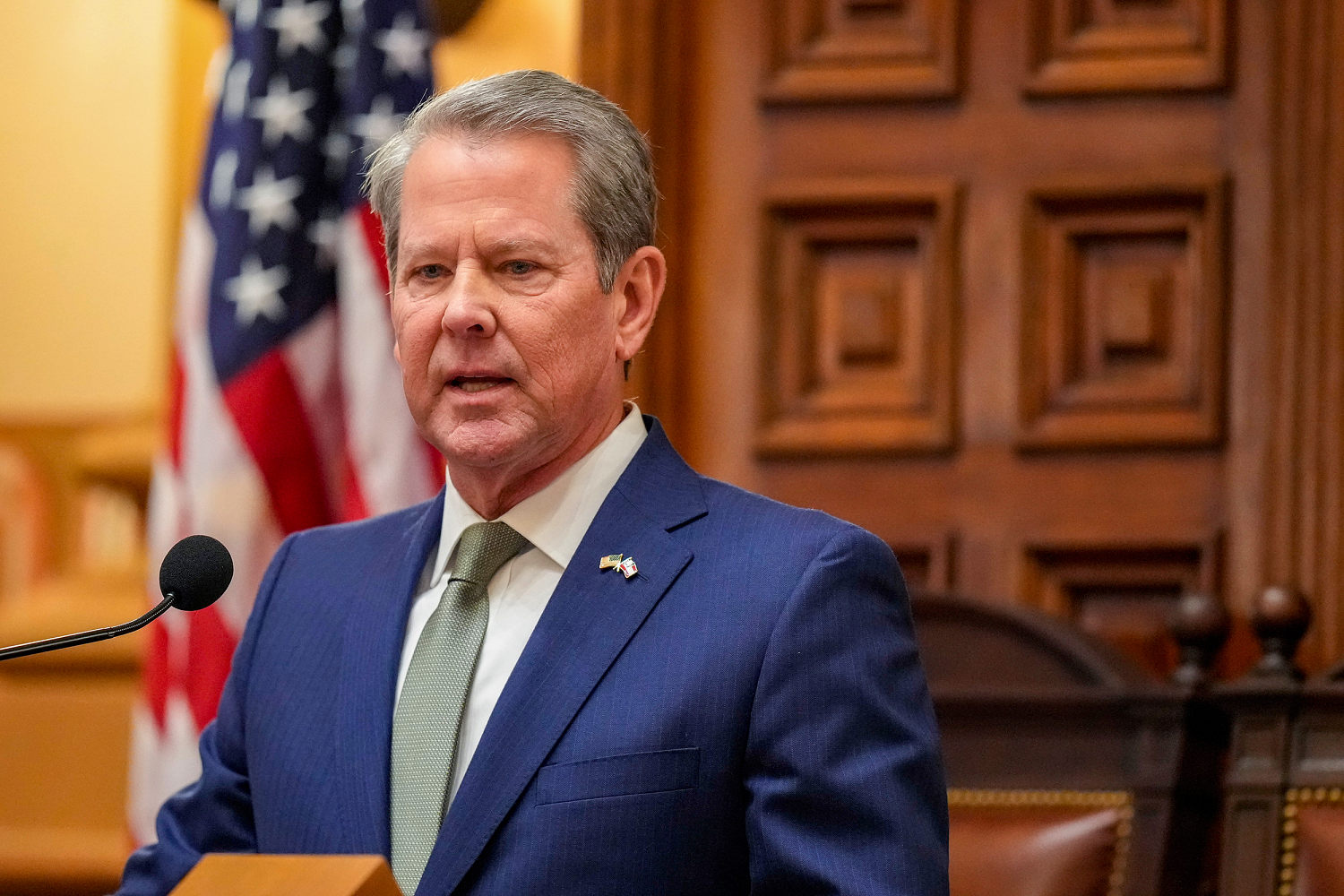
Political journalists love a clean, cinematic narrative. The current darling of the beltway pundit class is the epic test of Governor Brian Kemp’s sway in the Georgia Republican Party. The mainstream consensus is lazy, predictable, and fundamentally wrong.
The narrative goes like this: Kemp is the ultimate post-Trump Republican titan, boasting a sky-high 85% approval rating among state primary voters. He bypassed a personal Senate run, hand-picked former football coach Derek Dooley to challenge Democratic Senator Jon Ossoff, and is now putting his massive political capital on the line. If Dooley wins the May 19 primary, Kemp is a certified kingmaker. If Dooley fails, Kemp’s brand is busted.
What total nonsense.
I have watched political operations waste tens of millions of dollars chasing the phantom menace of "coattails" and "kingmaker status." The idea that a governor’s personal popularity is a liquid asset that can be poured into a completely separate candidate’s bucket is a myth manufactured by consultants who want to sell ad buys. Kemp is not testing his sway in the party because his sway cannot be transferred. Political capital is not Bitcoin. You cannot open a digital wallet and send 15% of your approval rating to a guy whose primary qualification is that his dad coached the Georgia Bulldogs.
Look at the brutal reality of the data. The latest Atlanta Journal-Constitution poll shows Dooley sitting in a miserable fourth place at 11%, trailing Mike Collins at 22% and Buddy Carter at 13%. More damningly, 54% of likely primary voters remain completely undecided. If Kemp’s endorsement actually possessed the magical, structural power that pundits claim, Dooley wouldn't be scraping the bottom of the barrel just days before the vote.
The mainstream press is asking the wrong question. They want to know if Kemp can crown the next senator. The real question is why a master political operator like Kemp made such a glaring tactical error in the first place, and what his real play is.
To understand the mechanics of Georgia politics, you have to separate a politician's protective armor from their offensive weaponry. Kemp's high approval rating is a defensive shield. It is built on his specific record: opening the state early during the pandemic, signing tax cuts, and maintaining an independent profile while strategically aligning with Donald Trump when necessary. That armor protects Kemp. It does not fit Derek Dooley.
Primary voters are highly sophisticated consumers. They know exactly who Brian Kemp is, and they like him. But when they look at Dooley, they see a candidate who did not even bother to vote in the 2016 or 2020 presidential elections. No amount of joint campaign stops at rural cafes can erase that lack of core political skin in the game. Voters do not look at Kemp and think, "I love the governor, so I will automatically vote for the guy standing next to him who skipped the most important elections of our lifetime."
Imagine a scenario where a CEO has a 90% approval rating inside a Fortune 500 company. That CEO suddenly decides to back an outside hire for an executive VP role over two highly successful, entrenched internal division heads. The employees do not just blindly accept the pick; they revolt because they know the division heads have done the actual work. That is exactly what is happening here. Mike Collins and Buddy Carter are known quantities with established congressional voting records. They are running classic, red-meat MAGA campaigns. Dooley is trying to straddle a fence that does not exist, pretending to be a political outsider while relying entirely on the ultimate insider endorsement.
The downside of this contrarian reality is bleak for the establishment. By forcing a hand-picked candidate into a race where he clearly lacks traction, Kemp has fractured the field instead of unifying it. Jon Ossoff is sitting on a war chest of over $31 million. He is one of the most formidable Democratic incumbents in the country. While Republicans are busy fighting a proxy war over an endorsement that isn't moving the needle, Ossoff is consolidating cash and preparing to steamroll whoever survives the June runoff.
Stop looking at the Senate primary as a metric for Kemp's power. It isn't. If you want to see where Kemp's actual authority lies, look at what he did this week. He ignored the frantic demands of his own party's right wing to suspend the 2026 primaries and forcefully called a special legislative session for June to redraw the state’s congressional maps for the 2028 cycle. He did this by leveraging the Supreme Court's Louisiana v. Callais decision to legally dismantle majority-Black districts before a potential Democratic governor can take office.
That is real power. It is structural, institutional, and cold-blooded. It doesn't rely on voters liking a surrogate candidate; it relies on the raw exercise of legislative majorities.
The upcoming primary results will likely show Dooley either losing outright or getting dragged into a bruising runoff where he is heavily disadvantaged. The talking heads will immediately write obituaries for Kemp's national ambitions, claiming his "sway" has vanished. They will be wrong again. Kemp will remain the most powerful Republican in Georgia because his strength was never based on a kingmaker myth. It was based on his own ballot performance and his control over the state machinery.
The lesson for the broader political landscape is simple: stop buying the hype of the transferred endorsement. Candidates must win on their own merits, their own money, and their own message. If a candidate's entire campaign strategy can be summarized as "the governor likes me," they have already lost.