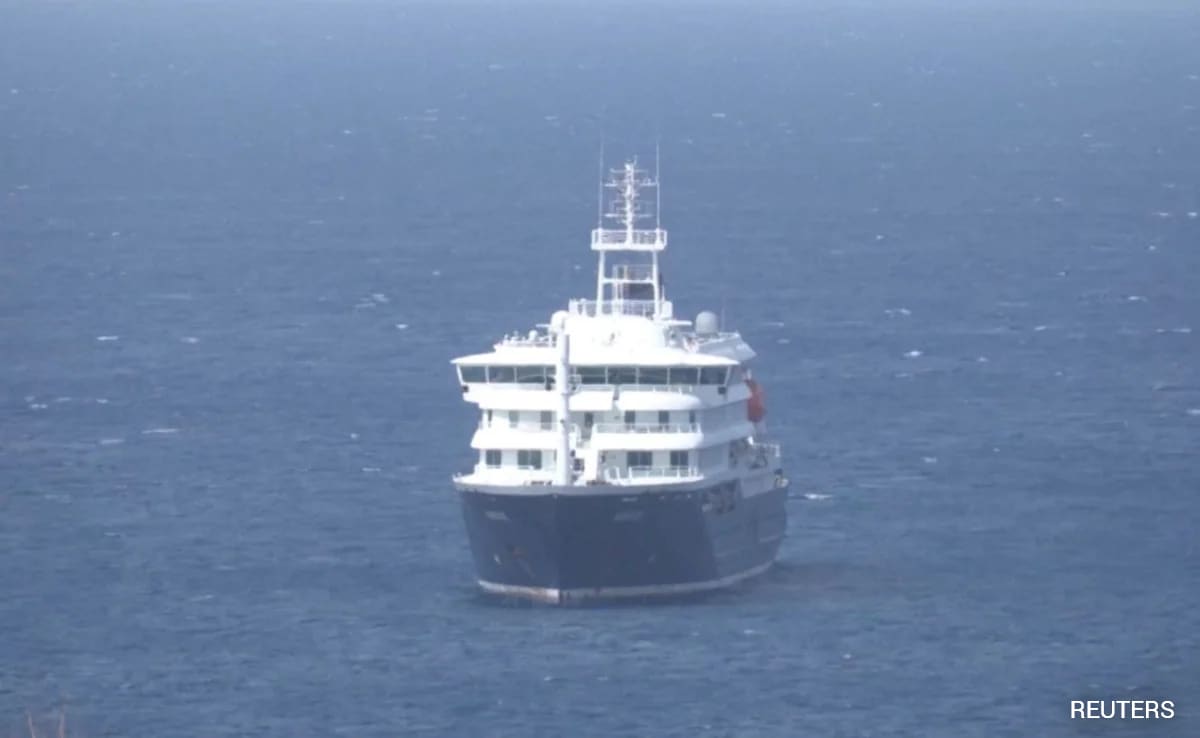
The champagne was still cold when the first shivers began.
For the three thousand souls aboard the Silver Horizon, the voyage was supposed to be a masterclass in luxury. It was a week of azure horizons, crisp white linens, and the soft hum of stabilizers cutting through the Pacific. But beneath the gilding and the midnight buffets, something ancient and indifferent had hitched a ride. It wasn't a visible intruder. It didn't rattle the doors or haunt the corridors. It waited in the dust.
Hantavirus is a name that carries the weight of the American Southwest—red rocks, dry heat, and rural cabins. It feels out of place on a multi-million dollar vessel. Yet, the biology of a tragedy doesn't care about your ticket price.
The Unseen Passenger
Consider a passenger we will call Elias. He is sixty-four, a retired architect who spent three years saving for this specific balcony suite. He notices a faint, musky scent near the baseboards of his closet on day three. He thinks nothing of it. It’s an old ship, he reasons. A little dampness is expected.
What Elias cannot see is the microscopic debris swirling in the stagnant air of the ventilation duct.
Hantavirus Pulmonary Syndrome (HPS) begins with a deceptively simple origin story: the deer mouse. These tiny rodents carry the virus in their urine, droppings, and saliva. When these materials dry out, they become airborne. One sweep of a broom, one gust of air from a long-dormant vent, and the virus is inhaled.
On a cruise ship, the "cabin" is a closed ecosystem. It is a pressurized box where we sleep, breathe, and dream. When the Silver Horizon underwent its dry-dock maintenance in a coastal facility three weeks prior, a few resourceful rodents found their way into the sub-flooring. They lived, they nested, and they left behind a biological landmine.
Elias wakes up on day five feeling like he’s coming down with a standard bout of the flu. His muscles ache—specifically his thighs and lower back. He blames the shore excursion in Cabo. He takes two aspirin and orders tea. He expects to be better by dinner.
He won't be.
The Body’s Civil War
The cruelty of Hantavirus lies in its timing. The incubation period is a slow burn, lasting anywhere from one to eight weeks, but once the "prodromal" phase begins—the fever, the chills, the headaches—the clock accelerates violently.
By the time the ship’s doctor sees Elias, his lungs are already beginning to betray him.
Imagine your lungs as a series of delicate, airy sponges. Their only job is to swap carbon dioxide for life-giving oxygen. When Hantavirus takes hold, it doesn't actually "attack" the lung tissue in the way we might think. Instead, it turns the body’s defense system into a scorched-earth army. The capillaries—the tiny blood vessels surrounding those sponges—become suddenly, catastrophically leaky.
http://googleusercontent.com/image_content/202
Fluid floods the air sacs. It isn't a slow drowning; it is a flash flood. Doctors call this the "cardiopulmonary phase." To Elias, it simply feels like he is trying to breathe through a wet towel. His heart rate climbs. His blood pressure craters.
The ship, once a floating palace, becomes a labyrinth of steel and panic. The infirmary, designed for seasickness and minor lacerations, is suddenly a frontline ICU. The "deadly outbreak" isn't a headline yet. It is just the sound of a ventilator bellows clicking in a room that smells like salt air and antiseptic.
The Logistics of a Nightmare
Why does this happen on a ship?
The answer is a mix of engineering and oversight. Modern cruise ships are marvels of recycling. They recycle water, they recycle energy, and to an extent, they recycle air. While high-end HEPA filters are standard in many areas, the "void spaces"—the gaps between the beautiful teak walls and the functional steel hull—are often overlooked. These are the highways for pests.
When a ship sits idle, or when it enters a region where local rodent populations are high, the risk profile shifts. It only takes one contaminated nest in a primary air intake to turn a vacation into a hot zone.
The statistics are sobering. Unlike the seasonal flu, which has a low mortality rate, HPS carries a staggering fatality rate of roughly 38%. It is a coin flip with a weighted edge.
Elias is now one of seven. The news has broken on the mainland. Families are calling satellite phones that go unanswered. The captain has to make a choice: continue to the next port and risk a quarantine that could last weeks, or turn back and face the legal and financial ruin of a botched voyage.
But for the people in the cabins, the business of the cruise line is a distant abstraction. They are focused on the person in the next bed. They are focused on the terrifying realization that the very air they paid to breathe has become an enemy.
The Human Cost of Cleanliness
We have a tendency to view hygiene as a binary: clean or dirty. We assume that because the glass is polished and the carpet is vacuumed, the environment is safe.
Hantavirus shatters that illusion. It is a "clean" disease in the sense that it doesn't require a lack of sanitation to thrive. It only requires an intersection of human habit and wild biology. A single mouse in a luxury suite is just as dangerous as a hundred mice in a tenement.
The crew of the Silver Horizon works double shifts, wiping down surfaces with bleach solutions. They are terrified. They are mostly young people from overseas, sending money home, now trapped on a vessel where a sneeze could be a death sentence. The hierarchy of the ship dissolves. The waiter and the CEO are breathing the same air, staring at the same closed doors.
There is no cure for Hantavirus. No magic pill. No "standard" antibiotic that can stop the flood in the lungs. Treatment is "supportive care," which is a clinical way of saying we keep the heart beating and the oxygen flowing while the body tries to survive the storm.
The Aftermath in the Vents
The ship eventually docks. The images on the nightly news show men in hazmat suits walking up the gangplank, their yellow silhouettes stark against the blue ocean. It looks like a movie. It feels like a warning.
Elias survives, though his lungs will never quite return to their former capacity. He will always feel a slight tightness when he climbs a flight of stairs, a physical souvenir of a week he’d rather forget. Others weren't as lucky. Three cabins remained empty when the ship was finally cleared. Three families went home with luggage they didn't want to open.
The industry responds with "new protocols" and "enhanced screening." They talk about "robust" measures and "safety frameworks." They use words that sound like armor but feel like paper.
The reality is that we are never truly separated from the wild. We build floating cities and fill them with ice sculptures and theater troupes, but we are still biological entities moving through a world that we do not fully control. We are guests in every environment we inhabit.
The Silver Horizon is back at sea now. It has a new name, a fresh coat of paint, and a different itinerary. The vents have been scrubbed. The void spaces have been sealed with steel wool and chemical barriers.
But sometimes, when the ship is quiet in the middle of the night, a passenger might look at a vent and wonder. They might feel a slight chill that has nothing to do with the air conditioning. They might remember that the most dangerous things in life aren't the storms we see on the radar, but the invisible ghosts we carry with us into the dark.
The ocean remains indifferent. The wind continues to blow. And somewhere, in a quiet corner of the world, a deer mouse finds a warm place to sleep.