The Anatomy of an Unprovoked Attack
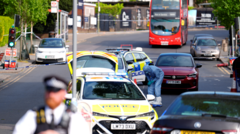
On a damp morning in Golders Green, the illusion of metropolitan safety evaporated for thousands of London residents. An unprovoked assault left a member of the local community fighting for his life, providing a chilling reminder that religious and ethnic tensions are not safely confined to distant geopolitical conflicts. When the victim spoke to the BBC, he described a narrative of survival against impossible odds. Yet, the broader implications of the incident extend far beyond one man’s miraculous recovery. It raises uncomfortable questions about urban security, the adequacy of public policing, and the rising tide of antisemitism in modern European cities.
To understand the severity of the Golders Green attack, one must look at the demographics of the neighborhood. The area contains one of the largest concentrations of Jewish residents in the United Kingdom. For decades, it served as a quiet sanctuary where families could walk freely without the heavy presence of private or state security. That era has officially ended. The incident highlights the vulnerability of open communities located in modern, densely populated urban centers.
The Failure of Preventive Measures
Local authorities were quick to point to increased patrols in the aftermath of the assault. However, long-term industry analysts and community security personnel know that reactive policing does little to deter targeted violence. The assailant did not materialize out of thin air. The attack followed months of escalating community tensions across Europe, driven by geopolitical conflicts in the Middle East and amplified by unregulated social media algorithms.
The security apparatus in place was fundamentally flawed. When public spaces rely on deterrence rather than active surveillance, vulnerable targets are left exposed. The Golders Green victim noted the delay in emergency services and the lack of immediate physical protection on the street corner. These gaps are not accidents of municipal management. They are structural failures caused by decades of underfunding and a persistent refusal to acknowledge the specific threat profiles facing religious minorities.
The Economic and Social Toll
Urban safety is an economic issue. When residents feel unsafe walking to a kosher bakery or a local school, the social fabric of the neighborhood begins to fray. Property values in the area have seen stagnation, while insurance premiums for community centers and small businesses are rising rapidly.
+-------------------------------------------------------------+
|                     Urban Security Cycle                    |
|                                                             |
|   1. Threat Escalation  --->  2. Reactive Police Presence   |
|            ^                                   |            |
|            |                                   v            |
|   4. Neighborhood Decline  <---  3. Increased Risk Premium  |
+-------------------------------------------------------------+
The cost of protection is shifting from the state to the individual. Private security firms are reporting a massive spike in inquiries from neighborhood watch groups and religious institutions. This shift creates a two-tiered system of protection. Those who can afford private guards remain safe, while those who cannot are left to navigate the unpredictable streets.
Community Resilience and the Path Forward
The resilience displayed by the Golders Green victim is remarkable. However, relying on the bravery of individuals is not a sustainable public policy. Real change requires a fundamental overhaul of how municipal authorities allocate security resources.
First, law enforcement agencies must abandon broad, generalized patrol strategies. They need to implement targeted, intelligence-led security zones around places of worship and high-density community hubs. Second, city councils must invest in robust surveillance infrastructure, including high-resolution cameras and emergency call boxes, to reduce response times.
Finally, community leaders and local government officials must bridge the gap between rhetoric and action. Condemnation is cheap, but tangible security measures require significant capital. Until the state takes the physical protection of its citizens seriously, the streets of North London will remain a precarious place to live, work, and exist.