Rain slicked the granite of Connaught Road, reflecting the neon hum of a city that never seems to catch its breath. For David, a fund manager who had spent the last decade hopping between London, Singapore, and New York, the humidity of Hong Kong felt less like weather and more like a weighted blanket. It was familiar. It was heavy. Most importantly, it felt solid.
The world outside this tiny, vertical strip of land felt like it was fraying at the edges. Headlines were dominated by bank runs in mid-sized economies, soaring inflation that ate life savings for breakfast, and a geopolitical chill that made every cross-border transaction feel like a walk through a minefield. David wasn’t looking for a "game-changer" or a "seamless experience"—the hollow buzzwords of his trade. He was looking for a vault.
Hong Kong has always been a city built on the edge of a knife, a precarious rock that shouldn’t work but does. Lately, the narrative shifted. The pundits called it a "decline." They looked at the empty shopfronts in Tsim Sha Tsui or the changing political winds and wrote the city’s obituary. But they missed the pulse beneath the pavement. While the surface fluctuated, the underlying plumbing of the city—the capital, the legal infrastructure, and the sheer proximity to the world’s largest manufacturing engine—remained stubbornly, almost defiantly, intact.
The Weight of Gold
Consider a hypothetical family from a volatile region in Southeast Asia or a nervous entrepreneur in Europe. Let’s call them the Chens. For decades, they moved their wealth through various offshore accounts, chasing the highest yield. But yield is a secondary concern when the very ground beneath your feet feels liquid.
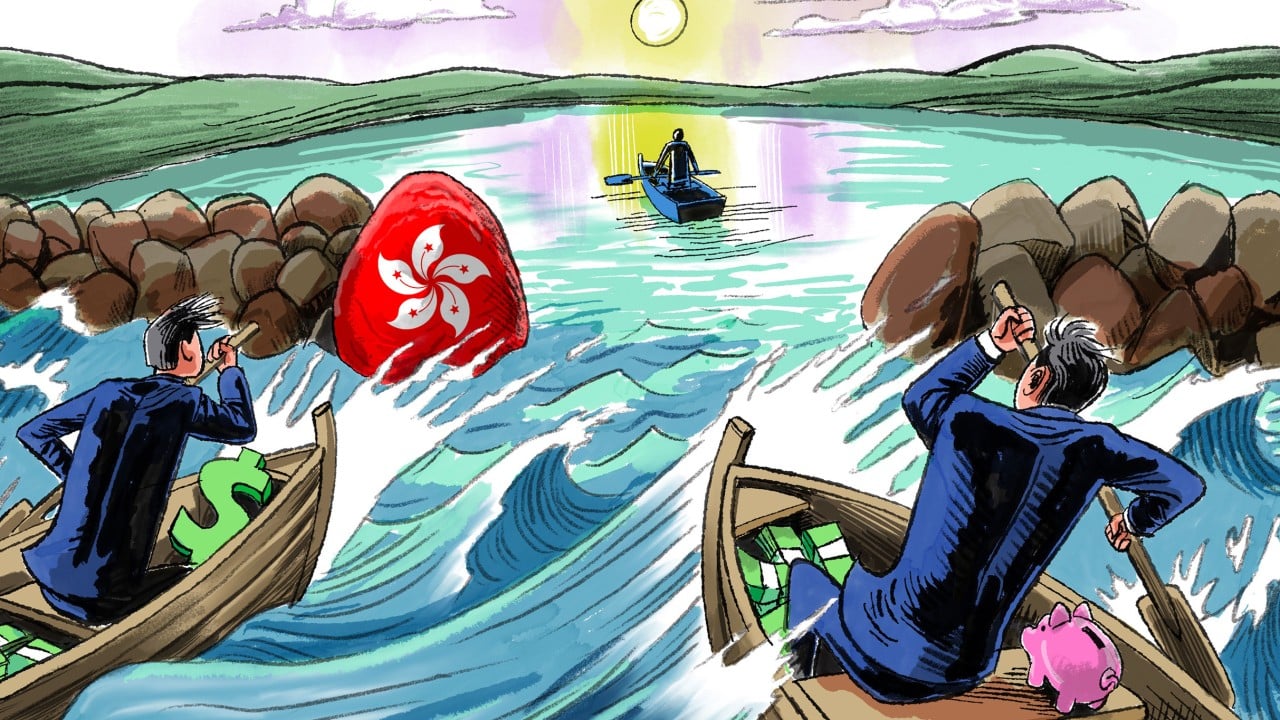
The Chens don’t care about the flashy new tech hubs of the desert or the tax-haven islands where the only local industry is palm trees and paperwork. They care about the fact that when they want to move ten million dollars on a Tuesday morning, the system doesn’t blink. In Hong Kong, the Hong Kong Dollar remains pegged to the US Dollar. It is a financial anchor in a storm. This isn't just a policy; it’s a promise written in the blood of the city’s history. Since 1983, through handover, through health crises, and through global financial collapses, that peg has held. It is the sound of a door locking securely.
The Invisible Shield
Safety isn't just the absence of crime. It is the presence of predictability.
The city’s legal system, rooted in common law, acts as an invisible shield for the nervous traveler and the weary investor. If you enter a contract in Hong Kong, you know exactly how it will be adjudicated. There is no guesswork. There is no sudden "reinterpretation" of the rules because a local official changed their mind.
David remembers a colleague who tried to move operations to a "emerging" hub in Eastern Europe. On paper, the taxes were lower. In reality, the legal fees to protect himself from arbitrary regulation ate the difference within eighteen months. He eventually came back to Central, sitting in a coffee shop overlooking the Star Ferry, admitting that he’d rather pay the premium for the certainty.
That certainty is what makes the city a haven. It is a place where the rulebook is thick, dusty, and followed to the letter. This provides a psychological buffer. When the rest of the world feels like a series of "what-ifs," Hong Kong operates on "this is."
The Alchemy of Proximity
There is a specific energy to the air in the Greater Bay Area. It’s the smell of ozone and wet concrete.
To understand why people are flocking back, or staying put, you have to look at the map. Hong Kong is the front porch of the Chinese mainland, but it’s a porch that faces the entire world. It’s the only place on Earth where you have a common law system and international standards sitting directly atop the gateway to the world’s second-largest economy.
Imagine a bridge. One side is built of wood and the other of steel. They shouldn't meet, but they do. Hong Kong is the joint.
Wealthy individuals from the mainland see it as their window to the world. International investors see it as their secure basecamp for exploring the vast, often opaque, markets of the north. This dual-facing nature creates a unique kind of safety: the safety of being indispensable. The world cannot afford for this city to fail, and that creates a floor for how far it can fall.
The Human Toll of Stability
But let’s be honest. This haven comes with a cost.
The "safety" people seek here is often sterile. It’s the safety of high-end malls, of gated towers in Mid-Levels, and of private banks where the carpet is so thick it swallows your footsteps. For the average resident, the city is a pressure cooker. The very stability that attracts David and the Chens drives up the price of a shoebox apartment to levels that defy logic.
There is a tension in the air. You see it in the eyes of the taxi drivers who work eighteen-hour shifts and the students who wonder if they will ever own a piece of the rock they call home. To call it a haven is to speak from a position of privilege. It is a haven for capital, and by extension, a haven for those who possess it.
Yet, even for those without millions, there is a different kind of safety. Hong Kong remains one of the safest physical cities in the world. You can walk through Mong Kok at three in the morning with your phone in your hand and your wallet in your back pocket. The streetlights are always on. The trains run with a surgical precision that borders on the miraculous. In a world where basic infrastructure is crumbling in once-great Western capitals, the functional reliability of Hong Kong feels like a luxury.
The Return of the Nomad
The "Great Resignation" and the "Great Relocation" of the early 2020s saw a lot of people packing their bags. They headed for the mountains or the beaches, convinced that the era of the dense urban hub was over.
They were wrong.
Isolation is a poor substitute for opportunity. The nomads are trickling back. They realized that while you can work from a laptop in Bali, you can't build a dynasty from a hammock. You need the collision of ideas. You need to be in the room where the decisions are made. You need the friction of a city that forces you to compete.
David sees them in the gyms and the bars of Soho. They look a little older, a little more tired, but they have a look of relief. They found that "safe" doesn't mean "quiet." Safe means that the power stays on, the banks stay open, and the contracts stay valid.
The Last Bastion of the Tangible
We live in a digital age, yet we are increasingly desperate for the tangible.
Gold, property, and cold hard cash. These are the things people reach for when the "tapestry" of global stability begins to unthread. Hong Kong is a city of the tangible. It is a city of physical trade, of shipping containers, of gold vaults tucked away in nondescript buildings, and of some of the most valuable real estate per square inch on the planet.
It is a fortress of the physical.
When you stand on the Peak and look down at the harbor, you aren't just looking at a view. You are looking at a machine. It is a machine designed to move, protect, and grow value. It doesn't care about your feelings or your politics. It cares about the ledger.
That coldness is exactly what makes it a haven. In a world increasingly driven by volatile sentiment and erratic leadership, the mechanical, profit-driven heart of Hong Kong is a comfort. It is predictable. It is rational. It is, in its own brutal way, honest.
The rain eventually stops. The sun begins to peek through the smog, hitting the glass of the IFC tower with a blinding glare. David closes his laptop and looks out at the water. He knows the risks. He knows the criticisms. But as he watches a massive cargo ship navigate the narrow channel, he realizes he wouldn't want his money—or his life—anywhere else.
The harbor is busy. The lights are on. The vault is closed.
In an uncertain world, that is enough.