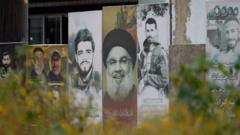
Western observers often look at the rubble in south Lebanon and ask how anybody could still support the group that brought the war to their doorstep. It’s a logical question if you’re looking at a map from an office in D.C. or London. But on the ground in places like Nabatieh or Tyre, the logic shifts. Despite the failed November 2024 ceasefire and the massive escalation in March 2026, Hezbollah's base isn't abandoning them. They’re doubling down.
If you want to understand why, you have to stop looking at Hezbollah as just a militia. For the people living under the shadow of the Litani River, the group is the state, the insurance company, and the local police force all rolled into one. When the Lebanese government fails to provide electricity or clean water—which is basically every day—Hezbollah’s "Martyr’s Foundation" or their Jihad al-Bina construction arm steps in. They don’t just fire rockets; they pave roads and pay for heart surgeries.
The failure of the 2024 ceasefire
The November 2024 truce was supposed to bring peace. Instead, it brought a slow-motion disaster. For over a year, the border saw near-daily violations. The Lebanese Armed Forces tried to step in, but they lacked the hardware and the money to actually control the south. By the time the U.S. and Israel struck Iran in February 2026, the ceasefire was already a ghost.
When Hezbollah resumed strikes on March 2, 2026, following the assassination of Ali Khamenei, they framed it as a defensive necessity. To a civilian in a border village, the argument isn't about geopolitics. It’s about the fact that they feel Israel will strike whether Hezbollah is there or not. This "permanence of threat" is the glue that keeps the community tied to the resistance.
Why the rubble doesn't turn people away
It’s a common mistake to think that destroying homes destroys support. In south Lebanon, the opposite usually happens. Over 1.2 million people have been displaced since the March 2026 escalation began. You’d think they’d be furious at the group that drew the fire. Some are, sure. But for the core Shia constituency, the destruction is viewed as a collective sacrifice.
- The social safety net: Hezbollah provides monthly stipends to families who lose their homes.
- The narrative of dignity: Many residents believe that without the group's "Protective Shield," the south would simply be occupied territory.
- Lack of alternatives: Who else is going to help? The central government in Beirut is bankrupt and politically paralyzed.
I’ve seen this play out in previous rounds of fighting. After the 2006 war, Hezbollah moved faster than the UN to hand out cash for rent and repairs. They’re doing the same thing now. Even with their finances squeezed by the wider Iran war, they prioritize their "base" because they know their survival depends on it.
The 2026 shift in public mood
Don't get me wrong. The mood isn't exactly celebratory. There’s a deep, exhaustion-soaked anger in Lebanon right now. You can hear it in the cafes of Beirut and even in the quieter corners of the south. People are tired of being the playground for a regional war between Tehran and Tel Aviv.
Recent polls and reports from the ground show that while loyalty remains high among the Shia population, the "cross-sectarian" support Hezbollah once enjoyed is cratering. Christians and Sunnis who used to respect the group for "resisting" now see them as a liability that is dragging the entire country into an Iranian-led abyss. But in the south, where it actually matters for the group's operations, the ranks aren't breaking.
The Litani River reality
Israel’s goal in "Operation Roaring Lion" is to push Hezbollah north of the Litani. They’ve deployed five divisions to do it. But you can't just "clear" a group that is physically part of the villages. The guy firing the anti-tank missile today is the same guy who was selling groceries in the square last week. This blurring of lines between "militant" and "resident" makes a purely military solution nearly impossible.
What happens when the money runs out
The real threat to Hezbollah’s support isn't Israeli bombs—it’s the financial collapse of Iran. The 2026 war has hit Tehran hard. If the "financial pipeline" that funds the schools and hospitals in south Lebanon dries up, that’s when the loyalty will truly be tested.
Right now, the group is surviving on its legacy and its role as a provider. But as the displacement numbers climb past 20% of the population, the logistics of keeping everyone fed and housed are becoming a nightmare.
If you're watching this conflict, don't wait for a "popular uprising" in the south to end the war. It's not coming. Instead, watch the humanitarian aid flows and the reconstruction promises. That's where the real battle for the heart of Lebanon is being fought.
If the international community wants to weaken the group's grip, they need to offer a credible alternative to their social services. Shouting about UN resolutions hasn't worked for twenty years, and it's definitely not working now. Start by supporting the Lebanese state’s ability to actually govern the south. Until then, the cycle of rubble and residence will just keep spinning.