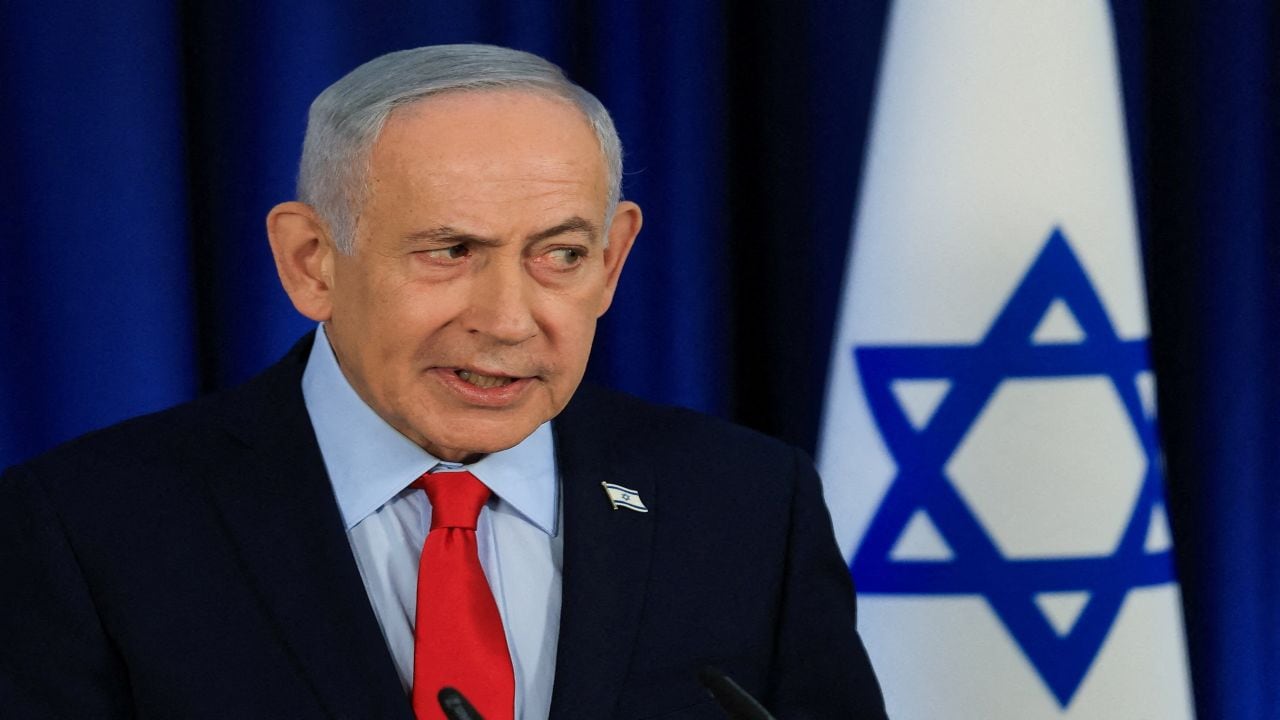
Benjamin Netanyahu is signaling a fundamental shift in the Middle Eastern diplomatic theater by publicly advocating for direct negotiations with the Lebanese state. This move represents more than a mere change in communication channels; it is a calculated attempt to bypass the indirect, third-party mediation that has defined Israel-Lebanon relations for decades. By demanding a seat at the table directly across from Lebanese officials, the Israeli Prime Minister is attempting to strip away the diplomatic insulation provided by intermediaries like the United States or France. He wants to force Beirut to acknowledge the Israeli state as a legitimate sovereign partner in security, a move that would fundamentally alter the geopolitical balance in the Levant.
For years, the border between these two nations has been managed through a "broken telephone" system. Messages go from Jerusalem to Washington, then to Paris, then to Beirut, and eventually to the actors who hold actual power on the ground. Netanyahu’s sudden pivot toward direct engagement is an effort to end this cycle of plausible deniability. If Lebanese officials sit directly across from Israeli representatives, the fiction that Lebanon is a passive observer to the conflict becomes impossible to maintain. For an alternative look, consider: this related article.
The Strategy of Forced Accountability
The core of this new Israeli directive is the erosion of the "buffer" strategy. Historically, Lebanese governments have hidden behind the claim that they cannot control non-state actors within their borders. By seeking direct talks, Netanyahu is putting the Lebanese Armed Forces and the central government in a position where they must either take responsibility for their sovereign territory or admit they lack the power to do so.
This isn't just about optics. It's about legal and international precedent. In the eyes of Israeli security planners, indirect talks allow the Lebanese state to enjoy the benefits of international diplomacy while avoiding the consequences of border provocations. Direct talks would, in theory, create a paper trail of state-to-state commitments. When a rocket is fired or a tunnel is dug, Jerusalem can point to a specific agreement signed by a specific minister in Beirut. Similar analysis regarding this has been shared by The Guardian.
Critics argue this is a trap. They suggest that Netanyahu knows the current Lebanese government is too fragile to survive the domestic backlash of sitting down with Israel. If the Lebanese government refuses the offer, Israel can then frame Lebanon as the recalcitrant party to the international community, potentially clearing the way for more aggressive military action under the guise of "failed diplomacy."
The Energy Factor and the Maritime Ghost
One cannot analyze this shift without looking at the 2022 maritime border deal. That agreement, which carved up natural gas rights in the Mediterranean, was hailed as a breakthrough. However, it was conducted entirely through American intermediaries. The two sides never sat in the same room.
Netanyahu, who was in the opposition when the deal was struck, criticized it as a surrender. Now back in power, he sees the limitations of that "ghost diplomacy." The gas is flowing, but the security situation on land has deteriorated. The Prime Minister’s current stance suggests he believes the maritime deal proved that Lebanon is willing to negotiate when economic survival is on the line. He is now betting that the same economic desperation can be used to force a diplomatic "normalization-lite" on land.
The Lebanese economy is in a state of freefall. The currency has lost over 90 percent of its value, and the infrastructure is crumbling. Jerusalem’s calculation is that the Lebanese people are more concerned with electricity and bread than with the ideological purity of avoiding direct contact with Israelis. It is a high-risk gamble on the pragmatism of a desperate population.
The Regional Shadow Play
While the focus is on the border, the real audience for these direct talks resides in Riyadh, Abu Dhabi, and Tehran. Netanyahu is still chasing the "crown jewel" of normalization with Saudi Arabia. By demonstrating that Israel can even bring its most "hostile" neighbor to a negotiating table, he strengthens his case that the old rules of Arab-Israeli conflict are dead.
On the other side, Tehran views any direct contact between Beirut and Jerusalem as a direct threat to its influence. The Iranian strategy depends on Lebanon remaining a "confrontation state." If Lebanon begins to act like a normal neighbor—one that negotiates its own borders and signs its own security protocols—the Iranian "Axis of Resistance" loses its most critical forward operating base.
This creates a dangerous internal pressure cooker within Lebanon. The political elite in Beirut are caught between an Israeli Prime Minister demanding direct talks, a domestic population demanding economic relief, and an armed wing that views direct talks as an act of high treason.
The Failure of Indirect Mediation
The shift toward direct talks is also a quiet admission that Western mediation is reaching a point of diminishing returns. For decades, the United States has acted as the primary interlocutor. While this has prevented full-scale war on several occasions, it has failed to produce a lasting peace.
The American approach has often focused on "de-confliction"—managing the symptoms of the problem rather than the problem itself. By contrast, Netanyahu’s demand for direct talks is an attempt to settle the underlying issue of state recognition. It is a blunt instrument. It ignores the nuances of Lebanese sectarian politics in favor of a hardline "state-to-state" reality.
From an intelligence perspective, direct talks provide a different kind of value. They allow for the establishment of "hotlines" and immediate communication channels that are not filtered through the priorities of a third party. In a region where a single misunderstanding can lead to a multi-day artillery exchange, the speed of direct communication is a tactical necessity.
The Risks of Public Diplomacy
There is a reason why most sensitive negotiations in the Middle East happen in backrooms in Oman or Switzerland. Publicly demanding direct talks can often kill the prospect of them actually happening. When Netanyahu goes on record with this demand, he is making it politically expensive for any Lebanese politician to say yes.
This raises the question of whether Netanyahu actually expects a "yes." If the goal is truly a negotiated settlement, the demand would likely have been made through quiet channels first. By making it a public ultimatum, the Israeli Prime Minister might be more interested in the "blame game" than the "peace game."
If Beirut ignores the overture, Netanyahu can tell his cabinet and his allies in Washington that he tried the diplomatic route and was rebuffed. This provides a level of political cover for future military operations. It allows Israel to claim that it exhausted all "standard" diplomatic avenues, leaving it with no choice but to use force to secure its northern border.
The New Map of the Levant
The geography of the conflict is changing. The "Blue Line," the UN-recognized border, is no longer just a fence; it is a point of economic and strategic friction that involves billion-dollar energy interests and regional power projections.
Direct talks would necessitate a discussion about the "13 points" of contention along the land border, including the Shebaa Farms and the village of Ghajar. These are not just lines on a map; they are the ideological justifications for continued militancy. If Israel and Lebanon were to sit down and resolve these 13 points, the primary excuse for the existence of armed groups outside the state’s control would evaporate.
Jerusalem is betting that the world is tired of the status quo. By pushing for direct talks, they are forcing the international community to choose: do they support the traditional, slow-moving mediation that keeps the peace but never solves the problem, or do they support a disruptive, direct approach that seeks a definitive end to the ambiguity?
Sovereignty as a Weapon
The ultimate goal for the Israeli administration is the "statification" of the conflict. For too long, Israel has fought an enemy that has no return address. By engaging the Lebanese state directly, Israel is attempting to give the conflict a clear, sovereign return address.
This strategy assumes that the Lebanese state actually exists in a meaningful way. If the central government in Beirut is too weak to negotiate, and too weak to enforce an agreement, then direct talks are a hollow exercise. In that scenario, Netanyahu’s move is less about diplomacy and more about documenting the failure of the Lebanese state for an international audience.
It is a cold, calculated approach to regional security. It replaces the "creative ambiguity" of previous decades with a harsh, unforgiving clarity. Whether this leads to a historic breakthrough or a renewed cycle of violence depends on whether Beirut sees this as an opportunity for survival or a threat to its very identity.
The era of the "middleman" in the Levant is under threat. If Netanyahu succeeds in forcing direct engagement, the diplomatic map of the Middle East will have been permanently redrawn, stripping away the shadows where non-state actors and proxy forces have traditionally operated. The choice for Lebanon is now stark: step into the light of direct negotiation and face the internal consequences, or remain in the dark and face the external ones.