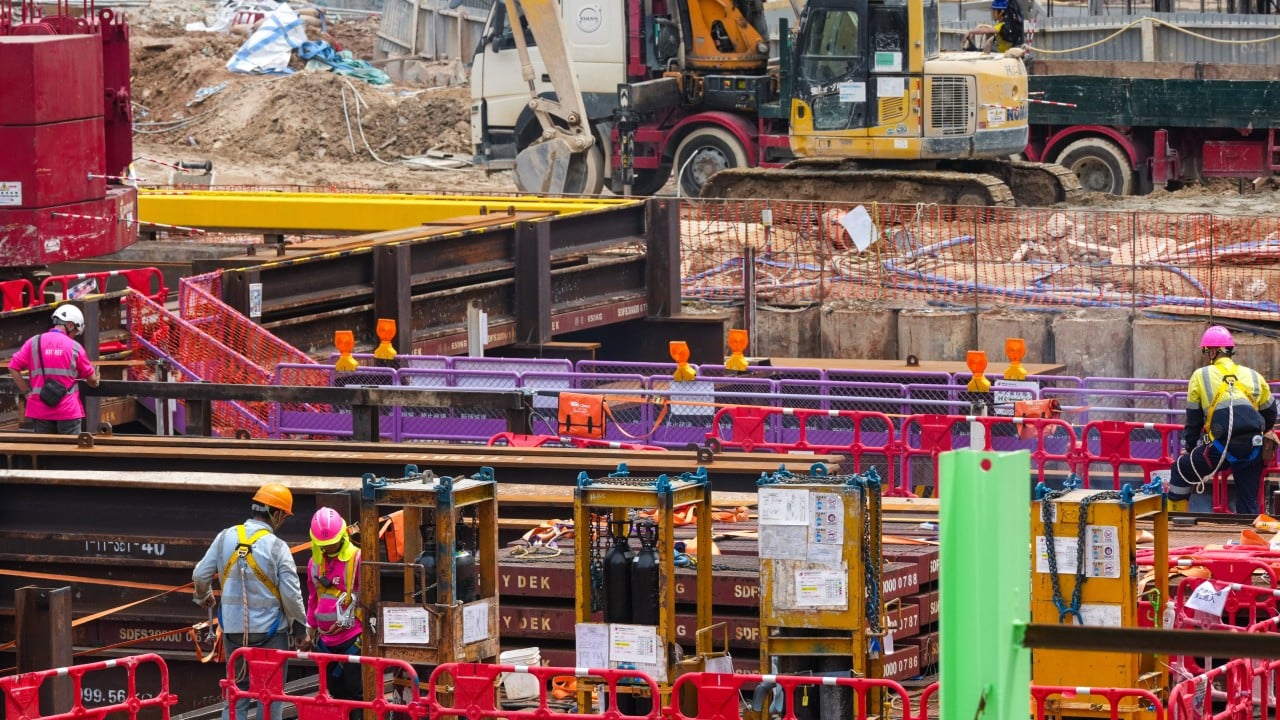
Hong Kong is bleeding money on its building projects. We see it every time a new tunnel or rail link hits the news. Costs spiral out of control. Deadlines vanish. Taxpayers end up footing a bill that keeps growing long after the ribbon-cutting ceremony. It’s a mess. If you look across the water at Singapore, you’ll see a city-state that treats its infrastructure more like a disciplined investment and less like a blank check.
The current system in Hong Kong is broken. It relies too heavily on "lowest-bid" mentalities or rigid frameworks that don't account for the volatility of the 2020s. Singapore doesn't just build faster; they build smarter by changing how they pick who does the work. They've moved toward a collaborative model while Hong Kong is still stuck in a combative one.
The failure of the lowest bidder trap
For years, the default setting for Hong Kong's public works was simple. You pick the cheapest guy. It sounds fiscally responsible on paper. In reality, it’s a disaster. When a contractor bids too low just to win the job, they eventually run out of margin. They start cutting corners. They file endless claims for "unforeseen circumstances" to claw back profit.
Singapore realized this was a losing game. Their Building and Construction Authority (BCA) shifted the weight. They don't just look at the price tag. They look at the "Price-Quality Method" (PQM). In Singapore, the quality component—things like past performance, safety records, and technical capability—can weigh as much as 40% or 50% of the total score.
Hong Kong tries to do this, but the execution is often timid. We’re still too scared of being accused of favoritism, so we retreat to the safety of the smallest number. That "safety" is an illusion. Choosing a contractor who can't actually finish the job for the price they quoted is the most expensive mistake a government can make.
Why Collaborative Contracting is the real winner
The biggest difference lies in the relationship between the government and the builder. In Hong Kong, it’s often adversarial. The government writes a contract that tries to push every bit of risk onto the contractor. When something goes wrong—like hitting unexpected rock layers underground—the lawyers come out.
Singapore is leaning into the New Engineering Contract (NEC4) and other collaborative frameworks. They use "Target Cost" contracts. Here’s how it works. The government and the contractor agree on a realistic price. If the project comes in under budget, they share the savings. If it goes over, they share the pain.
This gives everyone a reason to be honest. It turns the project into a partnership. Instead of a contractor hiding a problem to avoid a penalty, they bring it to the table early because they want to keep the costs down too. Hong Kong has started experimenting with NEC contracts on a few MTR and public works projects, but it’s not the standard yet. It needs to be.
Addressing the labor shortage head on
You can't talk about contracts without talking about who actually does the digging and the pouring. Hong Kong is facing a massive shortage of skilled workers. Our workforce is aging. Young people don't want to spend their days on a hot construction site.
Singapore handles this by baking productivity into their contracts. They don't just ask "how much will this cost?" They ask "how many man-hours will this take?" They force contractors to use Integrated Digital Delivery (IDD) and Building Information Modelling (BIM). If a contractor isn't using the latest tech to reduce the need for manual labor, they simply don't get the contract.
We’re lagging here. Hong Kong still relies on traditional, labor-intensive methods for too many components. By the time we adopt a new technology, Singapore has already made it a mandatory requirement for every public tender. Their contracts act as a nudge to modernize the entire industry.
The transparency gap in public spending
People in Hong Kong are frustrated because they feel they aren't getting the full story. When the Kai Tak Sports Park or the Central-Wan Chai Bypass saw delays, the explanations felt like excuses.
Singapore’s system is more transparent about project milestones. They use a "Performance-Based" approach. If a contractor isn't hitting specific productivity targets, it’s public knowledge, and it affects their ability to win the next five jobs. There’s a real, measurable consequence for being mediocre.
In Hong Kong, we tend to forgive and forget. A firm can mess up a major project and still be in the running for the next one because the "point system" for past failures isn't aggressive enough. We need to start blacklisting underperformers more effectively.
Stop over-engineering the planning phase
One thing Hong Kong does that drives costs through the roof is over-specifying everything before a contract is even signed. We spend years in the "consultancy" phase. By the time the actual builders get on-site, the world has changed. Materials cost more. Labor laws have shifted.
Singapore uses more "Design and Build" contracts. They give the contractor more room to innovate on the actual methods used. Instead of the government telling them exactly how to build every pillar, they set the outcome and let the experts figure out the most efficient way to get there. It cuts down the time between the idea and the opening day.
Moving toward a more resilient procurement strategy
It isn't just about copying Singapore’s homework. It’s about admitting that the way we’ve done things for thirty years isn't working for the current economy. We have massive projects on the horizon, like the Northern Metropolis. If we use the same old procurement methods for a project that big, the cost overruns will be historic.
We need to make three big changes immediately. First, increase the weight of "Quality" in the PQM to at least 50% for all major works. Second, mandate the use of Target Cost contracts to stop the legal battles over "unforeseen" risks. Third, create a centralized performance database that actually bars bad actors from bidding for a set period.
Don't wait for the next budget crisis to fix this. The data is already there. Singapore’s projects are generally more on-time and closer to budget because they treated the contract as a tool for success, not a weapon for litigation. Hong Kong needs to drop the ego and adopt that mindset before the next major ground-breaking ceremony.
Start by reviewing the current tender guidelines for the next phase of the Northern Metropolis. If those documents still prioritize the lowest price over technical innovation, we’re already in trouble. It’s time to demand better from the firms building our city. Check the public tender boards and look at the scoring criteria. That's where the change starts.