The High Cost of Performative Security
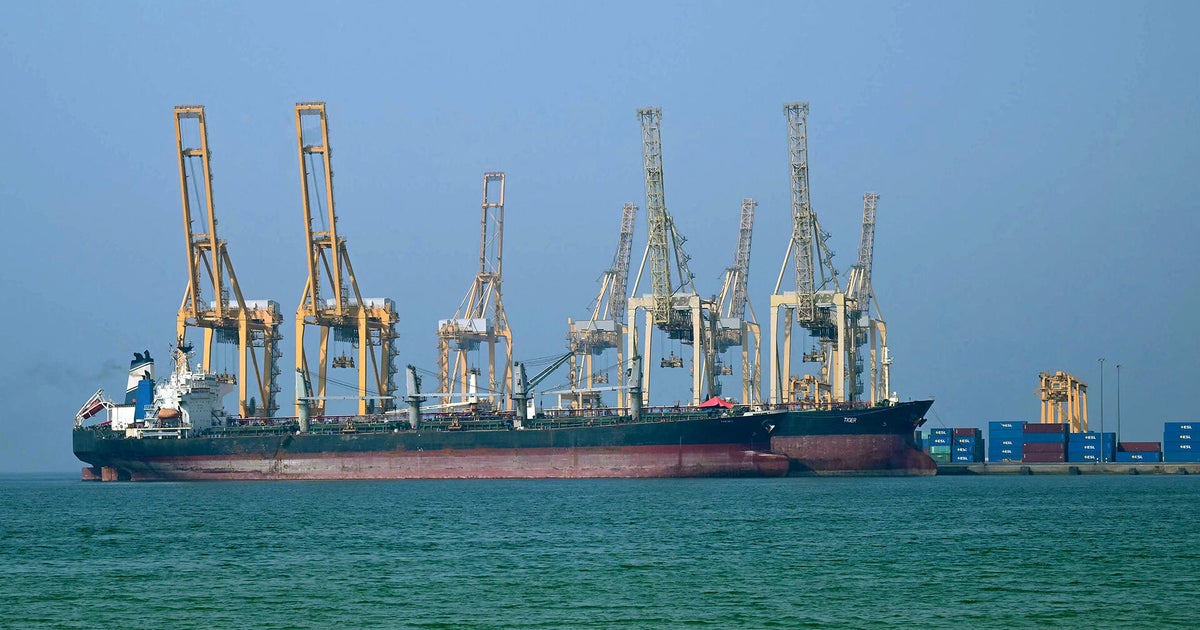
Western capitals are currently congratulating themselves on a "historic" 30-nation coalition meant to secure the Strait of Hormuz. They call it a victory for global trade. I call it an expensive piece of theater that fails to account for the actual mechanics of modern maritime warfare.
The media narrative suggests that if you put enough grey hulls in the water, oil prices will stabilize and risk will evaporate. This is a fundamental misunderstanding of the current energy market and the physics of the Persian Gulf. I have watched shipping firms burn through millions in insurance premiums while naval commanders play a game of cat-and-mouse they are structurally designed to lose.
The presence of a multinational fleet doesn't "reopen" a strait; it merely subsidizes the risk for massive oil conglomerates while passing the bill to taxpayers. More importantly, it creates a false sense of security that ignores the shift from traditional naval engagement to asymmetric, low-cost disruption.
The Mathematical Failure of Surface Fleets
Let’s talk about the cold math of a $2 billion destroyer versus a $20,000 loitering munition.
In the narrow confines of the Strait—barely 21 miles wide at its tightest point—the traditional advantages of a blue-water navy are neutralized. You aren't operating in the open Atlantic. You are operating in a bathtub filled with mirrors and noise.
When a coalition sends a Type 45 or a FREMM-class frigate into these waters, they are deploying an asset that costs thousands of dollars per hour to maintain against threats that cost less than a used sedan. The interceptor missiles used to knock down cheap drones can cost upwards of $2 million each. You do not need a degree in economics to see that this is a war of attrition where the "defender" goes bankrupt first.
The Myth of "Securing" the Flow
If you think a 30-nation push lowers oil prices, you aren’t looking at the data. Crude prices are driven by the perception of risk, not the physical presence of ships.
- Insurance Reality: P&I (Protection and Indemnity) clubs do not lower their rates because a French frigate is five miles away. They lower rates when the political temperature drops. Adding more warships often increases that temperature.
- The Bottleneck Effect: Convoy systems—the favorite tool of these coalitions—actually slow down the throughput of the Strait. When you force tankers to wait for escorts, you create a physical backlog that ripples through the global supply chain, causing "ghost spikes" in localized energy markets.
- The China Factor: While the West flexes its naval muscles, the largest buyer of Iranian and regional crude—China—remains largely silent. They know that physical blockades are rarely total and that the shadow fleet of tankers will continue to move regardless of who is patrolling the shipping lanes.
Why the "Strait of Hormuz" Question is Flawed
People always ask: "Will the Strait be closed?"
The answer is no, because nobody—including the most aggressive regional actors—benefits from a total shutdown. A total closure is a suicide pact. What we are actually seeing is a "grey zone" conflict designed to squeeze margins, raise insurance costs, and force diplomatic concessions.
The 30-nation coalition is trying to solve a 21st-century grey-zone problem with 20th-century gunboat diplomacy. It is the wrong tool for the job.
The Tech Gap the Pentagon Won't Admit
We are entering an era where satellite telemetry and AI-driven targeting make large surface vessels "sitting ducks" in restricted waters.
Imagine a scenario where a swarm of 500 autonomous underwater vehicles (AUVs) is released into the Strait. These aren't ships. They don't have a radar signature that a standard Aegis system is tuned to prioritize. A coalition fleet can't "shoot down" the ocean.
The true threat isn't a regional navy coming out to fight a classic mid-sea battle; it’s the democratization of precision-guided destruction. By the time the UK or France coordinates a response through a multi-national command structure, the economic damage is already done.
The Solution No One Wants to Hear
If the goal is truly to stabilize energy markets, the answer isn't more hardware. It’s the aggressive diversification of transit routes and the hardening of regional infrastructure.
- Pipeline Redundancy: Instead of spending billions on naval patrols, that capital should have been diverted decades ago into expanding the East-West Pipeline (Petroline) in Saudi Arabia and the Abu Dhabi Crude Oil Pipeline.
- The Insurance Buffer: Governments should stop acting as amateur admirals and start acting as reinsurers of last resort. If the goal is to keep oil at $75 a barrel, underwriting the risk for tankers is more effective and cheaper than maintaining a carrier strike group in the Gulf.
- Admitting Limitations: We must admit that we cannot "control" a waterway that is within swimming distance of a hostile coastline.
The Institutional Inertia of the Military-Industrial Complex
Why do we keep doing this? Because "Freedom of Navigation" operations are the best marketing tools for naval procurement budgets.
Defense contractors love a coalition. It justifies the interoperability of systems. It sells more frigates to Gulf allies. It keeps the production lines for interceptor missiles humming. But for the person filling up their tank in London or Paris, these 30-nation "pushes" are a net negative. They provide the illusion of action while ensuring that the underlying vulnerability remains unaddressed.
I have sat in rooms where "maritime security" is discussed as a series of chess moves. The problem is that the other side isn't playing chess; they are playing a game of "make the Western taxpayer blink." Every time we send a billion-dollar ship to swat away a thousand-dollar drone, we are blinking.
The Brutal Reality of Global Logistics
Logistics managers at the major oil firms aren't breathing a sigh of relief because of this news. They are busy rerouting vessels around the Cape of Good Hope. They are factoring in the "Hormuz Surcharge."
The coalition is a reactive entity. It moves at the speed of bureaucracy. Global trade moves at the speed of an algorithm. By the time the 30 nations agree on a Rules of Engagement (ROE) document, the market has already moved on, priced in the disaster, and found a workaround that doesn't involve a single naval escort.
Stop looking at the headlines about "Military Pushes" as a sign of strength. They are an admission of failure. They prove that we have no diplomatic or economic leverage left, so we resort to the most expensive and least effective tool in the shed: floating steel.
The Strait will remain volatile not because we lack ships, but because we lack the courage to admit that the era of Western naval dominance in restricted waters ended with the advent of the cheap missile. The coalition isn't a shield; it's a target.
Move your capital accordingly.