The Strait of Hormuz is no longer just a shipping lane. It has become a high-stakes laboratory for asymmetric warfare where the line between civilian commerce and military target has been erased. Following recent reports from Tehran accusing U.S. forces of striking civilian vessels and causing five fatalities, the geopolitical temperature in the Middle East has moved from a simmer to a flashpoint. Iran’s state media is framing this as a direct act of aggression against non-combatants. Washington remains largely silent or dismissive of the specific casualty counts. Behind these conflicting reports lies a brutal reality of how the world’s most vital maritime chokepoint is being used to rewrite the rules of international engagement.
The math of the Strait is simple but terrifying. Roughly 20% of the world’s petroleum liquids pass through this narrow strip of water. When Iran claims that civilian boats have been targeted, they aren't just filing a legal complaint. They are signaling to every insurance underwriter in London and every energy desk in Singapore that the cost of doing business is about to skyrocket. This is "gray zone" conflict in its purest form—where the objective isn't to win a traditional naval battle, but to make the status quo so expensive and dangerous that the opposition is forced to blink.
The Fog of Iranian Intelligence Claims
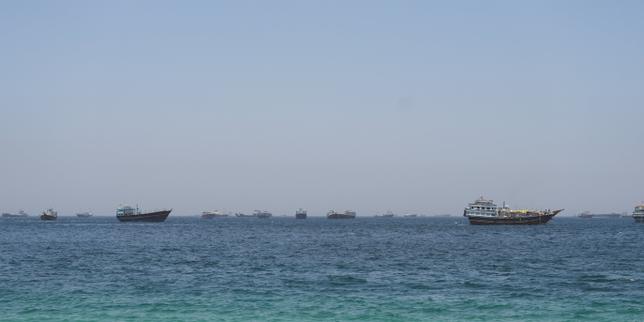
Tehran’s narrative centers on the deaths of five individuals. They claim these were civilian sailors engaged in routine transit. This matters because it shifts the international legal framework from "skirmish" to "war crime." However, the intelligence community has long noted that Iran frequently uses "dual-use" vessels. These are civilian dhows and small boats that carry legitimate cargo but also serve as eyes and ears for the Islamic Revolutionary Guard Corps (IRGC).
When a US Navy destroyer or a drone identifies a threat, the distinction between a fishing boat and an IRGC surveillance asset is often non-existent until the smoke clears. This ambiguity is intentional. By embedding military assets within civilian traffic, Iran creates a "no-win" scenario for Western naval forces. Fire on the vessel, and you risk a PR disaster involving dead civilians. Ignore it, and you risk a suicide boat or a mine-laying operation that could cripple a multi-billion dollar carrier strike group.
The five deaths reported in this latest flare-up serve as political currency. For the Iranian leadership, these casualties provide the necessary domestic justification to escalate further. They use the blood of these individuals to shore up nationalist sentiment and to paint the United States as a rogue actor that disregards the lives of the "oppressed." It is a cycle of provocation and victimization that has played out for decades, yet it remains effective because the Western media remains tethered to a traditional view of "civilian" vs "military" that the IRGC has long since abandoned.
The Strategy of Strategic Choking
Why now? The timing of these accusations is rarely accidental. The global energy market is already stretched thin. Any volatility in the Strait of Hormuz acts as a force multiplier for Iranian diplomacy. When the threat of closure or increased danger looms, Tehran gains leverage in nuclear negotiations and regional power struggles.
The Economics of Maritime Terror
- Insurance Premiums: Every time a "civilian" boat is hit, "War Risk" insurance surcharges for tankers increase. This is a direct tax on the global economy.
- Escort Costs: Navies are forced to divert assets to protect commercial shipping, thinning out their presence elsewhere and increasing operational wear and tear.
- The Shadow Fleet: Iran utilizes a massive network of ghost tankers to bypass sanctions. These incidents allow them to justify increased naval patrols which, in turn, provide cover for their illicit oil exports.
The United States finds itself in a reactive posture. The Fifth Fleet, based in Bahrain, is tasked with maintaining the "free flow of commerce," but that mission is becoming increasingly impossible without engaging in the very escalations that Tehran desires. If the U.S. remains passive, it looks weak to its regional allies like Saudi Arabia and the UAE. If it hits back hard, it plays into the "aggressor" narrative being broadcast across the Global South.
Hardware and the Human Element
The technology involved in these encounters has shifted from large-scale naval engagements to the "mosquito fleet" tactics. Iran has mastered the use of fast-attack craft (FACs) that can swarm a much larger, more sophisticated vessel. These boats are small, fast, and often equipped with Chinese or Russian-designed anti-ship missiles.
In the reported attack near the Strait, the question isn't just about who fired first. It’s about the Rules of Engagement (ROE). U.S. commanders on the ground—or rather, on the water—have mere seconds to decide if a fast-moving boat is a civilian transport or a threat. If five people died, it suggests a kinetic response that was either a tragic mistake or a calculated defensive strike against a perceived imminent threat.
We must also consider the role of electronic warfare. In several previous incidents, vessels in the Persian Gulf have reported GPS spoofing and communication blackouts. It is entirely possible that the "civilian" boats in question were operating without AIS (Automatic Identification System) transponders, making them "dark" targets. In the high-tension environment of the Strait, a dark target is often treated as a hostile target. This isn't a failure of technology; it's the inevitable result of a high-pressure environment where the margin for error is zero.
The Geopolitical Chessboard
This isn't just about a few boats and five lives. It is about the broader realignment of the Middle East. With China brokering deals between Iran and its neighbors, and Russia looking for ways to distract the West from the European theater, the Strait of Hormuz is a convenient lever.
Every incident in these waters is a data point for Beijing and Moscow. They are watching how the U.S. responds to Iranian provocations. Does the U.S. have the stomach for another conflict? Can it protect its interests without alienating the international community? By proxy, Iran is testing the resolve of the entire Western security architecture.
Overlooked Factors in the Narrative
- Proxies and Plausible Deniability: Iran often uses the Houthi rebels or other militia groups to carry out the actual strikes, but in this case, the IRGC is taking the lead on the accusations. This suggests a desire for direct confrontation rather than a shadow war.
- Internal Iranian Pressure: The regime is facing significant economic pressure at home. A "foreign enemy" killing Iranian citizens is the oldest trick in the authoritarian playbook to distract from domestic failings.
- The Drone Factor: Many of these "attacks" are now being carried out by loitering munitions (suicide drones). The debris from such a strike is often hard to distinguish from a civilian engine failure or an on-board accident, allowing both sides to manufacture their own version of reality.
The reality of 21st-century naval warfare is that the truth is often the first casualty, usually followed shortly by the actual sailors on the front lines. The U.S. military’s silence on the specifics of the casualty counts should be seen as a tactical choice. To confirm or deny specific numbers is to engage in a debate where Iran holds the "home-field advantage" in terms of propaganda.
The Looming Threat of Miscalculation
The greatest danger isn't a planned war, but a mistake. If a U.S. vessel kills five legitimate civilians, the diplomatic fallout could be catastrophic, potentially ending the presence of Western navies in certain regional ports. Conversely, if the U.S. fails to respond to a legitimate threat, it risks losing a capital ship to a cheap drone or a motorboat.
The Strait of Hormuz is currently the most dangerous 21 miles of water on the planet. The "civilian" label has been weaponized, and every dhow is a potential missile. Until there is a fundamental shift in the security architecture of the region—one that involves the actual stakeholders rather than just outside powers—these reports of "attacks" and "martyrdom" will continue.
The dead in the Strait of Hormuz are not just casualties of a single skirmish. They are the collateral of a decades-long struggle for control over the world's most important energy artery. As the U.S. and Iran continue this dance of provocation and denial, the only certainty is that the cost of passage will keep rising, and the next incident is only a few tides away.
The era of safe, predictable maritime commerce in the Persian Gulf is over. We have entered an age where every fishing boat is a potential combatant and every naval patrol is a potential international incident. The five people killed in the Strait of Ormuz represent the latest payment in a long, bloody bill that neither Washington nor Tehran seems willing to stop running up. Those looking for a diplomatic solution are ignoring the fact that for both regimes, this tension is often more useful than peace.