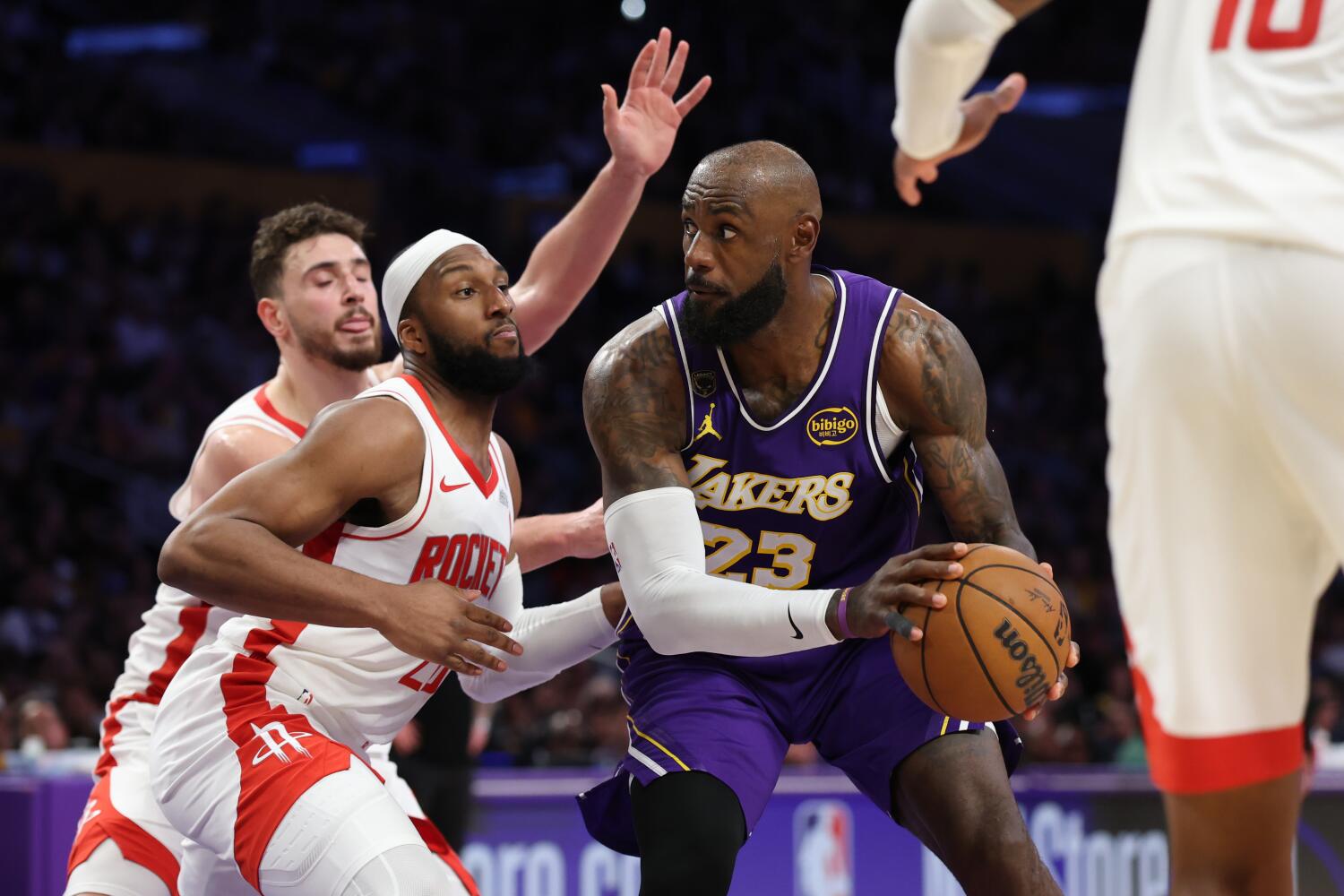
The scoreboard says the Houston Rockets forced a Game 6. The box score says Austin Reaves returned to a hero’s welcome. The pundits say we have a series on our hands.
They are all lying to you.
What happened on that floor wasn't a gritty survival story for Houston or a "tough break" for Los Angeles. It was a forensic deconstruction of the most overrated narrative in modern basketball. While every major outlet fawns over the emotional weight of Reaves stepping back onto the hardwood, they’re ignoring the tactical reality that his presence actually handcuffed the Lakers' defensive rotations and gave Ime Udoka exactly what he wanted: a target.
The Myth of the Savior Guard
The "lazy consensus" surrounding this game focuses on Reaves’s stat line and the "spark" he provides. It’s a feel-good story. It’s also basketball malpractice. When a player returns from injury directly into the high-intensity environment of a close-out playoff game, they aren't a spark; they are a leak.
Houston didn't win this game because of some magical "clutch gene" or a sudden surge in shooting luck. They won because they spent forty-eight minutes hunting the man the media spent forty-eight minutes praising. Every time the Lakers tried to hide Reaves on a weak-side shooter, the Rockets initiated a high-screen action to force the switch.
Watch the tape. Houston’s wings weren't looking for the open man; they were looking for the guy with the heavy lungs and the rusted lateral movement. By the middle of the third quarter, the Lakers’ defensive shell had completely collapsed because they were over-compensating for a player who shouldn't have been playing thirty-plus minutes in a high-leverage scenario.
Stop Valuing Effort Over Efficiency
We’ve reached a point in NBA analysis where "trying hard" is treated as a substitute for "playing well." Reaves is the poster child for this bias. He dives for loose balls. He grimaces. He draws fouls by flailing into defenders. This creates an optical illusion of impact.
The reality? Houston’s offensive rating skyrocketed specifically during the stretches where the Lakers went small to accommodate Reaves and D'Angelo Russell simultaneously. You cannot survive in the modern playoffs with two defensive liabilities in the backcourt against a team that plays with the downhill physical violence of the Rockets.
Ime Udoka is a disciple of the Gregg Popovich school of "find the weakest link and hit it until it breaks." He didn't care about the narrative of the return. He saw a player who couldn't stay in front of a heavy drive and he exploited it. If the Lakers want to actually win this series, they need to stop coaching based on sentimentality and start coaching based on physics.
The Alperen Sengun Problem Is Not a Fluke
While the world was busy watching the Lakers' backcourt, Alperen Sengun was busy rendering Anthony Davis’s defensive gravity irrelevant. The common take is that Davis "had an off night." That is a fundamental misunderstanding of how post-play works.
Sengun isn't just a "skilled big." He is a geometric nightmare. Most centers try to overpower Davis—a losing battle. Sengun uses Davis’s own aggressiveness against him, utilizing pivot entries and shoulder fakes that force AD to commit his feet early.
Why the Lakers’ Interior Defense Failed
- Verticality Traps: Sengun doesn't jump into the defender; he fades into the space the defender just vacated.
- The High-Post Hub: By pulling Davis away from the rim to respect the playmaking, the Rockets opened the "back door" for Amen Thompson and Jalen Green.
- Conditioning Gaps: Davis was gassed by the twelve-minute mark of the fourth. Why? Because defending a player who never stops moving is twice as exhausting as defending a player who just tries to dunk on you.
The Game 6 Fallacy
The narrative now shifts to "The Lakers are still in control." This is the same arrogance that saw them drop Game 5. When a young, hungry team like Houston realizes that a "Superteam" is actually just two superstars and a collection of fragile role players, the psychological advantage shifts.
Houston didn't just win a game; they solved a puzzle. They realized that LeBron James is still the best floor general in the world, but he cannot teleport. If you keep the ball moving and force the Lakers into three or four consecutive rotations, someone—usually the "returning hero" or an aging veteran—will miss their assignment.
The Rockets are playing a high-variance, high-velocity style that punishes the Lakers' lack of depth. This wasn't a fluke shooting night for Houston. It was a volume-based assault on a defense that is fundamentally too slow to keep up when the game turns into a track meet.
The Actionable Truth
If the Lakers start Reaves in Game 6 and give him the same workload, they are asking to go to a Game 7. And in a Game 7, the pressure isn't on the young Rockets; it’s on the legacy of the guys in Purple and Gold.
The smart move? Move Reaves to the bench. Limit his minutes to short bursts where he can provide offensive punch without being a defensive turnstile. Use bigger bodies on the wing to disrupt Houston’s rhythm. But the Lakers won't do that. They are married to the narrative. They are addicted to the "star power" of their role players.
Houston knows this. Udoka knows this.
The Rockets didn't "force" a Game 6. The Lakers’ coaching staff gifted it to them by prioritizing optics over adjustments. If you’re betting on the Lakers because of "playoff experience," you’re missing the fact that experience doesn't matter if your feet can't keep up with the guy blowing past you.
Stop watching the jersey names. Start watching the feet. The series isn't returning to Los Angeles because the Lakers played poorly; it’s returning because Houston found the glitch in the Lakers’ system, and his name was the biggest headline of the night.
Bench the sentimentality or get ready for an early vacation.