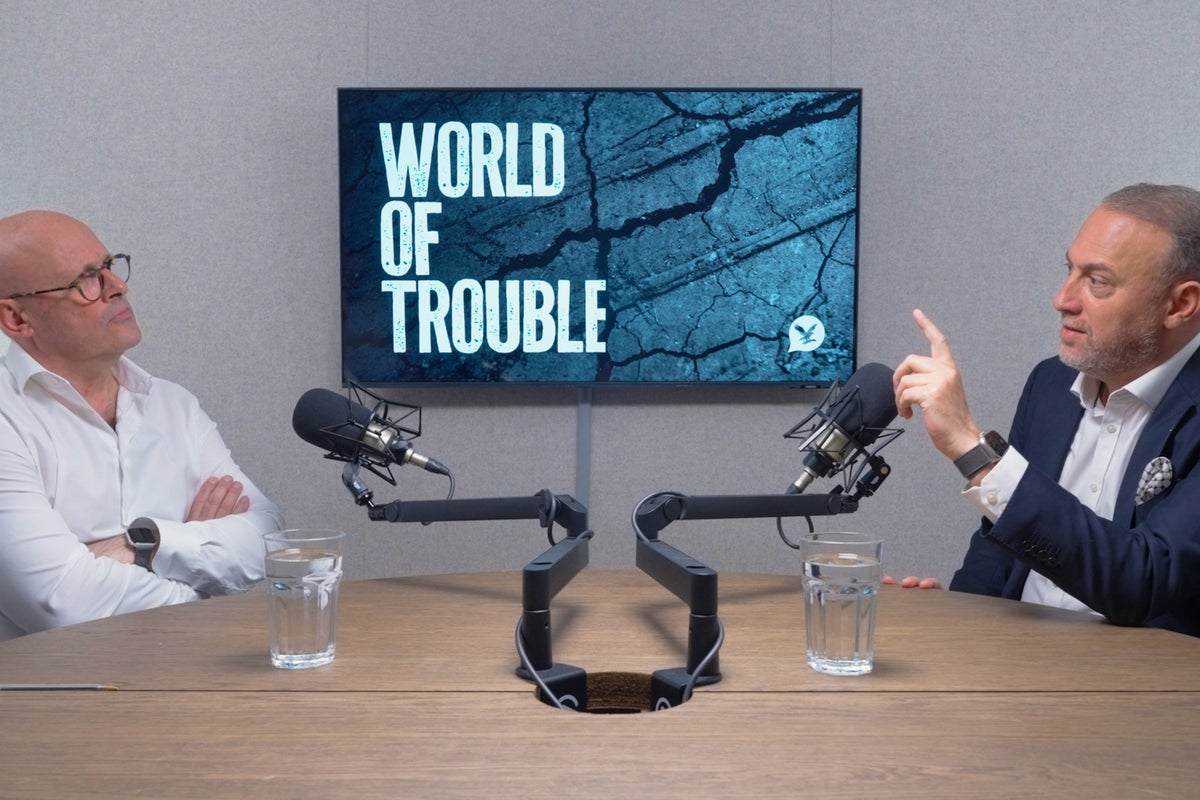
Husam Zomlot, the Palestinian Ambassador to the United Kingdom, is calling for a pivot that would fundamentally reshape the optics of the Middle East conflict. His demand is simple in phrasing but massive in execution: a global, mass movement of non-violent civil disobedience. This is not merely a request for more weekend marches through London or New York. Zomlot is signaling a shift toward a strategy of friction—using the sheer weight of international public opinion to create a "cost" for Israel’s military and political status quo.
The ambassador’s pivot arrives as traditional diplomacy remains locked in a cycle of stalled negotiations and failed ceasefires. By calling for non-violent resistance on a global scale, Zomlot is attempting to bypass the gridlock of the UN Security Council and the calculations of the White House. He is betting that the street can do what the suit cannot.
The Strategy of Friction
To understand Zomlot’s call, one must look past the idealism of peace protests. This is about leverage. In the eyes of Palestinian leadership in London, the current international response has been loud but ultimately toothless. Marches are easily ignored by policy makers once the crowds disperse and the streets are swept.
Civil disobedience, however, functions differently. It is designed to be inconvenient. It targets the machinery of daily life—ports, corporate headquarters, and government functions. The goal is to make the "business as usual" support for Israel's current policies impossible to maintain. When Zomlot speaks of mass non-violence, he is referencing the historical templates of the Indian independence movement or the American Civil Rights era.
He wants to move from expression to intervention.
This strategy carries significant risks. Non-violence only works as a political tool if it remains strictly non-violent and if the response from the state is seen as disproportionate. If protests devolve into chaos or property damage, the message is lost in the noise of security concerns. Zomlot is essentially asking a global audience to maintain a level of discipline that is historically difficult to sustain over long periods.
The Limits of Symbolic Diplomacy
For decades, the Palestinian cause has relied on two main pillars: local resistance and international legal appeals. The former often leads to devastating military retaliation, while the latter moves at the glacial pace of international courts. Zomlot’s frustration is palpable. As an envoy in one of the world's most influential capitals, he sees the gap between the rhetoric of "human rights" and the reality of weapon shipments.
The call for mass protest is an admission that the formal diplomatic channels are broken. If the British government or the US State Department will not shift their stance based on moral arguments, Zomlot believes they must be forced to shift based on domestic pressure. This is a cold calculation. It assumes that if enough voters make enough noise—and cause enough disruption—the political cost of supporting Israel will eventually outweigh the strategic benefits.
The Economic Pressure Point
A major component of this "mass movement" involves the Boycott, Divestment, Sanctions (BDS) framework. While Zomlot’s language focuses on "protest," the undercurrent is economic.
We are seeing a trend where activists are no longer just holding signs; they are targeting the supply chains of defense contractors. This is where the non-violent approach meets the hard reality of the global economy. By encouraging people to disrupt the flow of capital and goods, the Palestinian mission is trying to create a localized version of international sanctions from the bottom up.
It is a difficult needle to thread. In many Western nations, anti-boycott laws have been enacted to prevent exactly this kind of economic warfare. The legal landscape is increasingly hostile to the very tactics Zomlot is championing.
The Narrative War in the West
The battle isn't just on the ground in Gaza or the West Bank; it is in the media cycles of the Global North. Zomlot has become a fixture on British television, known for his refusal to accept the traditional framing of the conflict. His call for mass protest is an extension of this media strategy.
He understands that images of mass civil disobedience are more potent than any press release. A thousand people sitting down in a train station creates a "moment" that forces a conversation. It demands that the public choose a side, or at the very least, acknowledge the disruption.
However, there is a looming shadow over this plan: protest fatigue.
The public’s attention span is a finite resource. After months of headlines and social media saturation, the "shock" value of large gatherings begins to diminish. To stay relevant, movements often feel pressured to become more radical, which is exactly what Zomlot’s non-violent mandate seeks to avoid. If the movement becomes too disruptive, it risks alienating the "middle ground" of the public—the very people Zomlot needs to win over to influence government policy.
The Counter Argument and the Safety Valve
Critics of Zomlot’s approach argue that calling for "mass protest" from a comfortable embassy in London is a recipe for domestic instability in the UK and elsewhere. There are concerns about rising tensions between communities and the strain on policing.
From a security perspective, mass non-violent protests are a nightmare to manage. They require huge resources and often lead to confrontations that neither side is truly prepared for. There is also the question of whether these protests actually change the mind of the Israeli government. Historically, the Likud-led coalitions have shown a remarkable resilience to international "street" pressure, often framing such movements as proof of global bias rather than a reason to change policy.
Furthermore, the "non-violent" label is often contested. What one person calls a peaceful sit-in, another calls an illegal blockade. This semantic battle is where the movement’s fate will be decided. If the public perceives the protests as an attack on their own way of life, the sympathy for the Palestinian cause may erode.
Bridging the Gap Between Street and State
The real test of Zomlot’s vision will be whether these protests can translate into legislative change. In the UK, we have seen a shift in the tone of the Labour Party and the Conservative government, partly in response to the massive turnout at rallies over the last year. But "tone" does not equal a change in export licenses or a shift in voting patterns at the UN.
The ambassador is essentially trying to weaponize democracy against its own foreign policy. He is betting that the collective will of the people can override the long-standing geopolitical alliances of the state. It is an audacious plan. It ignores the reality of "Realpolitik," where national interests and intelligence sharing often carry more weight than the number of people in Trafalgar Square.
The Missing Middle of the Peace Process
While Zomlot focuses on the international stage, the domestic political situation in Palestine remains fractured. The Palestinian Authority, which Zomlot represents, faces significant criticism at home for its perceived inefficiency and lack of democratic mandate.
This creates a credibility gap. When an official from a government that hasn't held an election in nearly two decades calls for a "mass movement" for justice, some see a contradiction. For the call to be truly effective, it must be matched by a coherent, unified political front on the ground. Without that, the protests risk being a movement without a clear destination—a loud, passionate cry for help that lacks a specific, achievable political "ask" beyond the immediate cessation of hostilities.
The Role of the Digital Front
Social media has decentralized the Palestinian message. Zomlot’s call is being amplified by millions of individual creators who have no formal ties to his office. This is both a strength and a weakness.
The strength lies in the speed and reach. The weakness is the loss of control. A "mass non-violent movement" can be easily hijacked by extremist voices on the fringes of the internet. If the movement is seen as synonymous with the more radical slogans heard at some rallies, the ambassador’s goal of a broad-based, respectable international coalition will fail.
He is trying to steer a ship that has no rudder. The people he is calling to action are not his subjects; they are a loosely affiliated group of global citizens with varying motivations. Some are driven by humanitarian concern, others by anti-imperialist ideology, and others by religious solidarity. Keeping these disparate groups aligned with a strategy of "non-violence" is a monumental task.
The Internal Israeli Factor
One factor Zomlot rarely addresses in his public calls for international protest is the internal dynamic within Israel. Large-scale international pressure often has the unintended consequence of causing the Israeli public to "rally 'round the flag." When a nation feels it is being unfairly singled out by a global movement, it tends to move toward more hardline leadership, not less.
For non-violence to work in the Gandhian sense, it must eventually touch the conscience of the "opponent." If the international protests are seen as hostile to the very existence of the state, they will fail to create the domestic pressure within Israel necessary for a lasting political shift. Zomlot’s strategy focuses almost entirely on the outside world, leaving a vacuum where a strategy for engaging—or at least neutralizing—Israeli public opinion should be.
The Practical Mechanics of Disruption
What does Zomlot’s "mass disobedience" look like in practice?
It looks like port workers in Belgium refusing to load electronics. It looks like students in the United States camping on university lawns to demand divestment. It looks like a slow-motion grinding of the gears of international trade.
This isn't just about showing up; it’s about staying. The ambassador is calling for a level of commitment that goes beyond the performative. He is asking for a global "Intifada" (shaking off) that uses the tools of peace rather than the tools of war.
If this movement succeeds, it will be because it managed to make the status quo more expensive than the alternative. If it fails, it will likely be remembered as the last desperate plea of a diplomatic corps that had run out of options.
The move away from traditional diplomacy toward the "power of the street" is a high-stakes gamble. It assumes that the moral arc of the universe actually bends toward justice if enough people hang their weight on it. But in the cold world of international relations, the arc often bends toward the party with the most resilient alliances and the most robust economy. Zomlot is betting that he can break those alliances through the sheer, stubborn presence of millions of people who refuse to look away.
The coming months will show whether the world is ready to move beyond the banner and toward the barricade. Every sit-in, every blocked road, and every diverted shipment will be a data point in Zomlot’s experiment. He has thrown the gauntlet down, not to the governments of the world, but to their citizens. The response—or the lack of one—will define the next decade of the Palestinian struggle.
The transition from a conflict of armies to a conflict of identities and economies is nearly complete. By inviting the global public onto the battlefield of non-violent resistance, Zomlot is attempting to turn the world into a stakeholder in a way that can no longer be dismissed as "regional instability." He is forcing a global audit of the price of silence.
The friction is the point. The disruption is the message. The question remains whether the world’s appetite for disruption matches its rhetoric for peace.