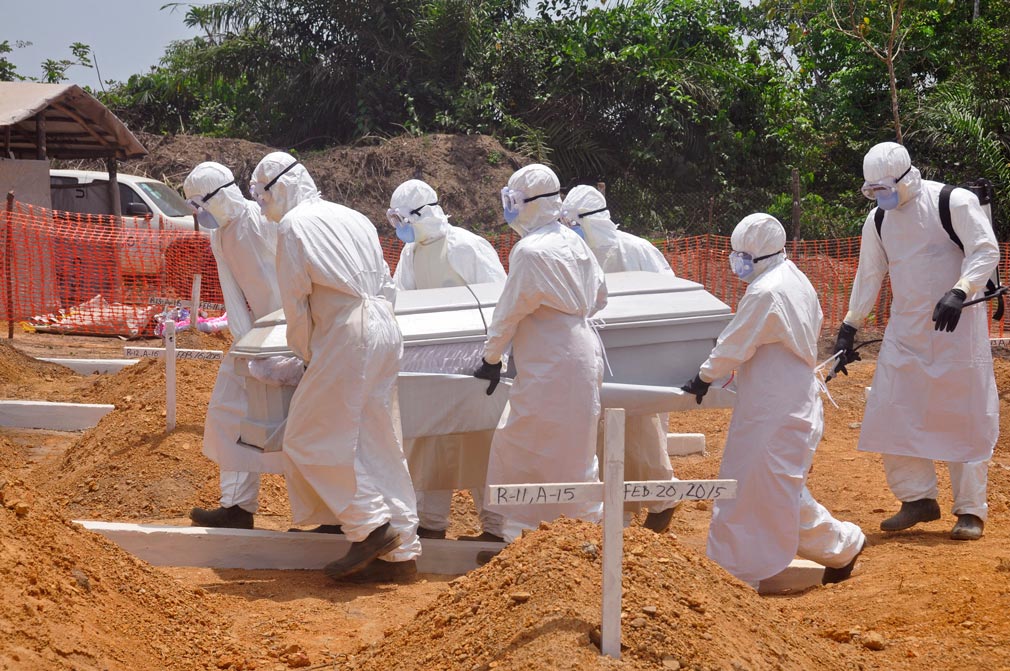
Uganda responded to a fatal, imported case of Ebola in Kampala by rolling out strict emergency measures, including targeted quarantines and border health screenings. The official narrative suggests a playbook in motion. Yet, the underlying reality is far more dangerous. The patient, a Congolese national who died in a Kampala hospital, was infected with the Bundibugyo virus. This rare variant of Ebola has no approved vaccine and no licensed therapeutic treatment.
While public health agencies issue reassuring statements about emergency protocols, the border between the Democratic Republic of the Congo and Uganda remains highly porous, driven by informal gold mining trade and displacement. The current response relies heavily on non-pharmaceutical interventions that are pushing local health systems to their absolute limits. The strategy on paper does not match the chaos on the ground.
The Blind Spot in Border Control
Surface-level reporting focuses on temperature checks at official border posts. These measures look disciplined, but they ignore the geographic reality of the region. The Ituri province in the DRC, where the current outbreak originated, shares a fluid frontier with western Uganda.
Thousands of people cross this border daily through unmonitored pathways. They are traders, miners, and families avoiding conflict zones. A standard border checkpoint cannot catch an asymptomatic individual who bypasses official infrastructure entirely.
The deceased patient managed to travel deep into Kampala before being admitted to a medical facility. This single fact exposes a massive gap in early detection. Posthumous testing confirmed the diagnosis, meaning the individual was highly infectious while moving through transit hubs and densely populated urban spaces. Contact tracing in a bustling capital city is notoriously difficult, turning the timeline of containment into a race against an invisible clock.
The Threat of an Untreatable Variant
The global health apparatus became comfortable during recent outbreaks because of Ervebo, a highly effective vaccine used against the Zaire strain of Ebola. That vaccine is completely useless here.
The Bundibugyo virus is genetically distinct. It has only caused two major recorded outbreaks in history: one in Uganda in 2007 and another in the DRC in 2012. Because it appears so rarely, pharmaceutical companies have had little commercial incentive to fund expensive clinical trials for targeted vaccines or monoclonal antibody treatments.
Ebola Strains and Vaccine Efficacy
┌───────────────────┬──────────────────────────────────┐
│ Ebola Strain       │ Available/Effective Vaccine      │
├───────────────────┼──────────────────────────────────┤
│ Zaire virus       │ Ervebo (Highly Effective)        │
│ Sudan virus       │ Experimental Candidates Only     │
│ Bundibugyo virus  │ None                             │
└───────────────────┴──────────────────────────────────┘
Medical personnel on the ground are forced to rely entirely on supportive care. This means balancing electrolytes, managing blood pressure, and treating secondary infections. When an outbreak hits an area with limited basic medical supplies, supportive care quickly degrades into mere isolation.
The Africa Centres for Disease Control and Prevention openly stated that leadership is operating in panic mode due to a lack of immediate medicines. The global community treats Ebola as a solved problem because of past victories against the Zaire strain, leaving Central Africa vulnerable to this forgotten variant.
High Contact Mobility Meets Fragile Infrastructure
Mongwalu and Rwampara, the epicenters in the neighboring DRC, are dominated by informal gold mining. This economic sector creates a highly transient, young population that moves rapidly between mining camps, informal settlements, and trading towns across the Ugandan border.
Classic quarantine models assume stable communities where individuals can be monitored for the standard 21-day incubation period. In an active mining zone or a crowded urban transit corridor, tracking down every contact becomes an logistical nightmare.
Local health facilities in these remote areas often lack basic personal protective equipment. When a patient arrives presenting with a fever, health workers without proper gloves or running water become the first victims. Nosocomial transmission—infection spreading inside the clinic itself—can turn a local medical center into a super-spreader site within days.
The Politics of Global Health Declarations
The World Health Organization declared this outbreak a Public Health Emergency of International Concern. This designation is intended to unlock international funding and accelerate regulatory pathways for experimental treatments. History shows that these declarations often yield underwhelming results.
During the 2024 mpox outbreak, a similar emergency declaration did little to speed up the delivery of diagnostic tests and therapeutics to the African continent. The global supply chain remains heavily skewed toward Western nations, leaving African public health officials to handle continental emergencies with empty hands.
Western countries frequently view these outbreaks through a lens of self-protection rather than systemic support, ramping up domestic airport screenings while failing to supply basic infection-control tools to the actual source of the crisis.
True containment will not be achieved by erecting barriers at official border gates or issuing top-down directives from Geneva. It requires decentralized laboratory capacity capable of running rapid diagnostics at the village level, alongside a guaranteed, continuous supply of basic medical equipment to rural clinics. Until the international community addresses the structural neglect of rare pathogens like the Bundibugyo variant, emergency measures will remain a reactive posture rather than a cure.