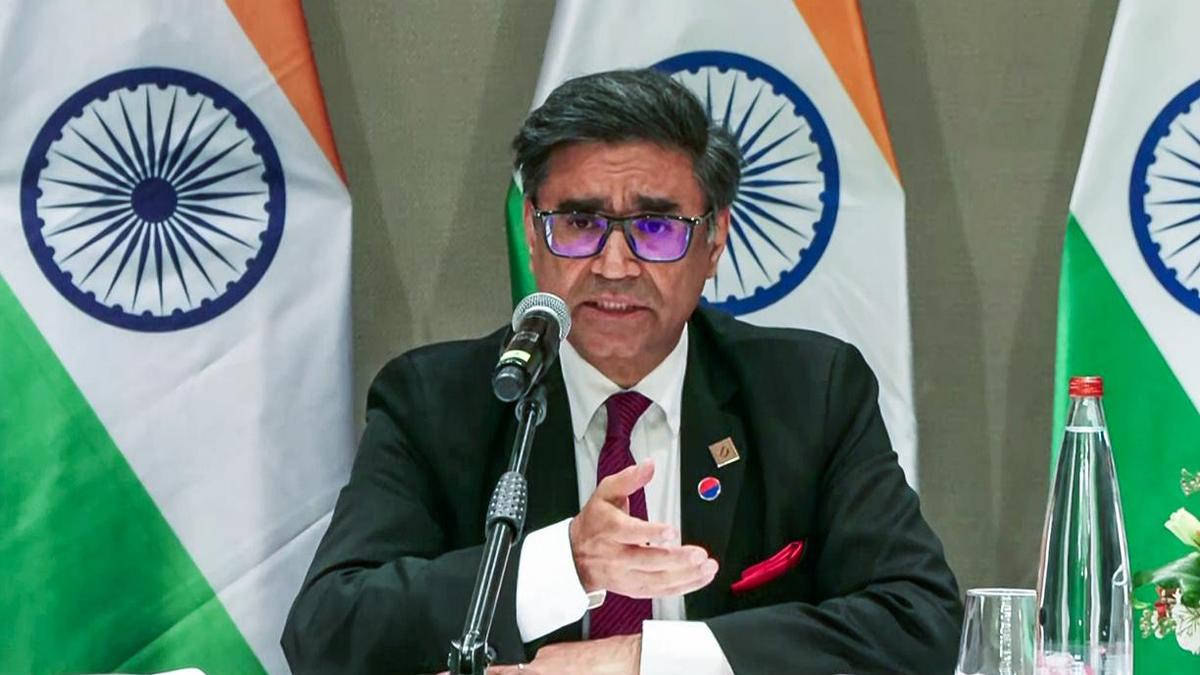
Foreign Secretary Vikram Misri just landed in Berlin for the India-Germany Foreign Office Consultations. It sounds like another dry diplomatic meeting on paper. It isn't. This visit marks a significant shift in how New Delhi and Berlin view each other. While the world focuses on flashpoints in Eastern Europe or the Middle East, this specific dialogue in Germany is where the real groundwork for the next decade of Eurasian trade and security is being laid.
You have to look at the timing. Misri’s arrival isn't a random calendar event. It happens as Germany is desperately trying to "de-risk" its economy from China while India is looking for high-end technology that isn't tied to American political whims. They need each other. Germany has the engineering. India has the scale. It's a match that should have worked decades ago, but it’s only now getting the urgency it deserves.
Why This Berlin Visit Actually Matters for You
Most people ignore these consultations because they think it's just about handshakes and vague press releases. That's a mistake. When Misri sits down with his German counterparts, they’re talking about the Green and Sustainable Development Partnership. This isn't just "greenwashing" or talk about the weather. It’s about €10 billion in German commitments.
If you’re in the tech sector or the energy industry, this matters because it dictates where the investment flows. We’re talking about hydrogen hubs and manufacturing supply chains that bypass traditional bottlenecks. Germany is looking at India as its primary partner in the Indo-Pacific. They’ve realized that relying on a single large neighbor to the east was a strategic blunder. Now, they're course-correcting.
The Defense Shift Nobody Is Talking About
For a long time, Germany was hesitant to sell weapons or high-end defense tech to India. There were too many strings attached. That’s changing. Fast. You can bet Misri is discussing the P-75 India submarine project. Germany’s ThyssenKrupp Marine Systems is a massive player here.
India wants to build six advanced conventional submarines. Germany wants the contract. This isn't just a sale; it’s a strategic pivot. If Germany becomes a major defense supplier to India, it breaks the old reliance on Russian hardware. It also gives India a European partner that doesn't lecture as much as the others might. It's practical. It's cold. It's about power.
Labor Mobility and the Brain Gain
Germany has a massive problem. Its population is aging, and its industry is starving for skilled workers. India has the opposite—a surplus of young, highly trained professionals. During these consultations, the Migration and Mobility Partnership Agreement is always on the table.
We aren't just talking about software engineers. We're talking about vocational training, healthcare workers, and specialized technicians. The goal is to make it easier for Indians to work in Germany and vice versa. It’s a win-win that actually has legs. If you've noticed more German companies recruiting on Indian campuses, this meeting is the reason why.
Breaking the Trade Deadlock
Let's be honest. The India-EU Free Trade Agreement (FTA) has been stuck in the mud for years. Germany is the engine of the EU. If Misri can convince Berlin to push harder on specific clauses, the whole deal moves forward.
India is stubborn about its dairy and spirits markets. Germany is stubborn about its automotive standards. But there’s a growing sense that they can't afford to be stubborn anymore. The global economy is fragmenting. You either build a trade bloc with people you trust, or you get left behind. Berlin is Misri’s best shot at cracking the European market open.
The Russia Ukraine Elephant in the Room
You can't go to Berlin in 2026 and not talk about Ukraine. Germany has been through a massive internal struggle regarding its energy security and its stance on Russia. India has maintained a "multi-aligned" position that often frustrates Western capitals.
I suspect these private talks are much more candid than the public statements suggest. India isn't going to change its stance overnight, but Misri is likely explaining the nuances of India's energy needs. Meanwhile, Germany is explaining why a Russian victory is an existential threat to the European order. They might not agree, but they're finally listening to each other. That's progress.
Clean Energy Is the New Currency
Germany is obsessed with Green Hydrogen. India wants to be the world's largest exporter of it. The math is simple. India has the land and the sunlight. Germany has the electrolyzer technology.
During these consultations, expect a lot of talk about the "Hydrogen Task Force." This isn't just lab work. They’re looking at building massive infrastructure to ship green ammonia from Indian ports to Hamburg. It's an ambitious plan that could redefine global energy maps. It makes both countries less dependent on Middle Eastern oil and gas.
What Happens When the Cameras Turn Off
The real work happens in the sub-committees. These groups deal with the nitty-gritty of cyber security, counter-terrorism, and maritime safety in the Indian Ocean. Germany is increasingly sending its navy into the Indo-Pacific. They aren't doing it for fun. They're doing it because their trade routes depend on those waters staying open.
India is the natural policeman of that region. By aligning their maritime strategies, Berlin and New Delhi are creating a secondary layer of security that doesn't rely solely on the US-China rivalry. It’s about "strategic autonomy," a phrase both countries love to use.
How to Track the Real Results
Don't just read the joint statement when this wraps up. Look for the following specific indicators over the next six months. If these things happen, the Berlin trip was a success.
- Direct Investment Jumps: Watch for announcements from German "Mittelstand" companies (the mid-sized ones that are the backbone of their economy) opening plants in Pune or Bengaluru.
- Visa Processing Times: If Germany streamlines the national visa process for Indian tech workers, the mobility talks worked.
- Submarine Deal Progress: Any movement on the P-75I project is a huge tell for the defense relationship.
- Green Corridors: Look for specific MoUs between Indian states and German states (like Bavaria or Baden-Württemberg) regarding renewable energy.
This isn't just another trip for Foreign Secretary Misri. It's a calculated move to ensure India has a solid anchor in the heart of Europe. Berlin knows it needs a partner that can match its scale. New Delhi knows it needs a partner that can match its ambition. Stop looking at this as "consultation" and start looking at it as a restructuring of the global hierarchy.
The next few months will show if the talk turns into steel and silicon. Pay attention to the export numbers. That’s where the truth is hidden.