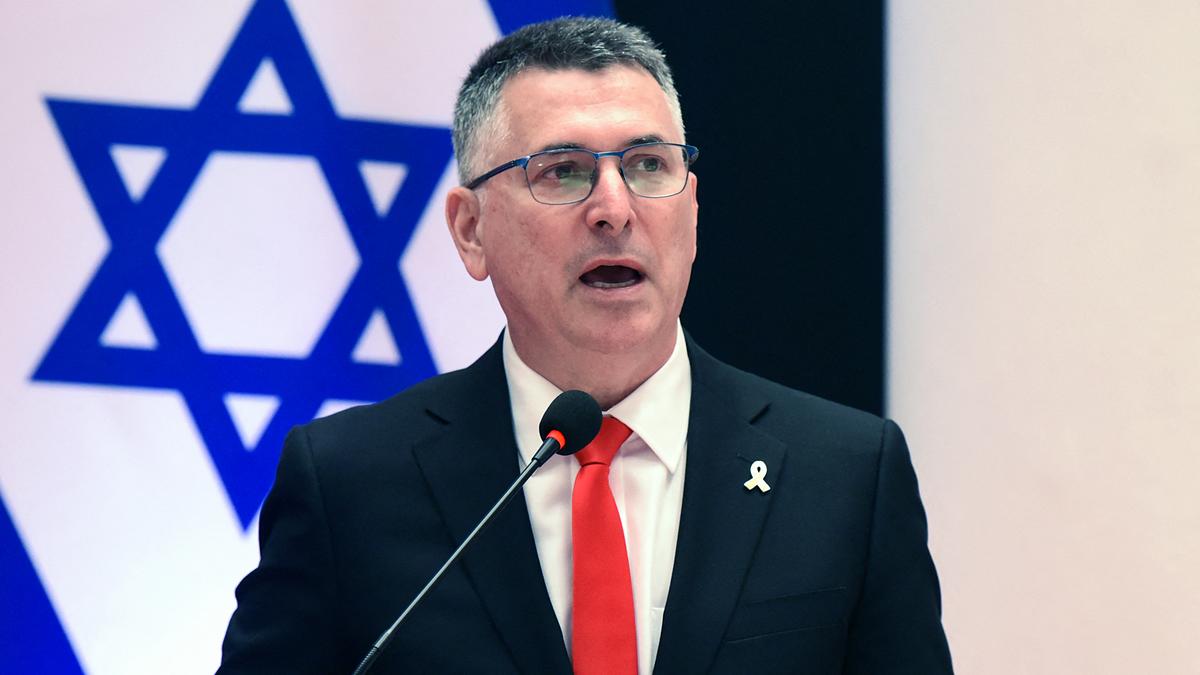
When Israeli Foreign Minister Gideon Sa'ar landed in New Delhi recently, he wasn't just there for a photo op. He arrived with a blunt message: Israel stands together with India in the fight against terrorism. This isn't your standard diplomatic script. It’s a partnership forged in the shared experience of being democracies surrounded by volatile neighborhoods.
If you’ve been watching the news, you know this relationship has shifted from a quiet handshake in the 90s to a full-blown "Special Strategic Partnership" as of February 2026. The real story isn't just about politicians shaking hands; it’s about how these two nations are practically merging their security brains. From drone tech to real-time intelligence on cross-border threats, the India-Israel bond has become a cornerstone of global stability that most people are still underestimating. Read more on a connected subject: this related article.
The Zero Tolerance Pact
The latest meetings between Gideon Sa'ar and India’s External Affairs Minister S. Jaishankar sent a clear signal. They aren't just talking about "cooperation"—they're talking about zero tolerance. During the 10th Joint Working Group on Counter-Terrorism in February 2026, both sides were remarkably specific. They didn't just condemn generic "terror"; they specifically called out the October 7 attacks in Israel and the 2025 attack in Pahalgam, Jammu and Kashmir.
This isn't just rhetoric. It’s a shared doctrine. Both countries deal with "proxy" warfare—groups funded and directed by neighboring states to cause chaos without a formal declaration of war. By naming these specific events, the two nations are essentially saying, "Your enemy is my enemy." Further journalism by The New York Times highlights related perspectives on the subject.
Intelligence Sharing in the Age of AI
One of the biggest shifts lately is the focus on how terrorists use technology. We’re past the era of just monitoring radio signals. Today, the threat comes from:
- Weaponized commercial drones.
- AI-driven radicalization on social media.
- Crypto-financing for sleeper cells.
India and Israel are now sharing "best practices" on how to jam these signals and track these funds. Israel’s Unit 8200 expertise is basically the gold standard for this, and India’s massive tech talent pool is helping scale these solutions.
From Buyer and Seller to Co-Creators
For years, the narrative was simple: Israel sells weapons, India buys them. That’s dead. The relationship is now about "Make in India." Take the Drishti-10 Starliner, for example. It’s an Indian-made version of Israel’s Hermes 900 drone, built through a joint venture between Adani and Elbit.
The Indian Navy is using these drones to watch the Indian Ocean, which is more important than ever given the recent Houthi attacks on shipping lanes. When the Israeli FM says they stand with India, he’s also talking about protecting the trade routes that keep both economies alive.
The Special Strategic Partnership of 2026
When Prime Minister Modi visited Israel in February 2026, the relationship was officially upgraded. This "Special Strategic Partnership for Peace, Innovation, and Prosperity" is the highest level of diplomatic engagement India offers. It covers:
- Cybersecurity: A new Cyber Centre of Excellence in India.
- Semiconductors: Ensuring the chips that power our missiles and phones aren't controlled by hostile powers.
- Defense Co-production: Moving away from just importing parts to building entire systems together.
The Geopolitical Big Picture
Why does this matter to you? Because the world is splitting into new blocs. On one side, you have the I2U2 group—India, Israel, the UAE, and the US. This "West Asian Quad" is working on projects like the India-Middle East-Europe Economic Corridor (IMEC).
This corridor is a direct competitor to China’s Belt and Road Initiative. It’s a way to move goods from Mumbai to Haifa and then to Europe 40% faster. Terrorism is the biggest threat to this project. If a port or a rail line gets hit, the whole economic engine stalls. That’s why the counter-terrorism talks aren't just about "security"—they're about "economy."
Why the Bond is Unshakeable
Honestly, the most interesting part of this isn't the hardware. It's the public sentiment. Surveys consistently show that Indians are among the most pro-Israel people in the world, and Israelis return the favor. This "people-to-people" tie gives the politicians the cover they need to sign massive defense deals without much domestic blowback.
Israel was one of the few countries that didn't jump to condemn India after its 1998 nuclear tests. It sent intelligence and ammo during the Kargil War when others were hesitant. India hasn't forgotten that.
Moving Forward
If you're looking at where this goes next, keep an eye on the Free Trade Agreement (FTA) negotiations that kicked off in early 2026. Security is the foundation, but trade is the house they’re building on top of it.
Expect to see:
- More Indian workers in Israel's tech and construction sectors.
- Joint ventures in "deep tech" like quantum computing.
- Increased naval cooperation in the Indian Ocean to secure the IMEC routes.
The message from the Israeli FM is clear: the era of "hiding" this relationship is over. It’s out in the open, it’s high-tech, and it’s arguably the most important security axis in Asia right now. If you want to understand the future of counter-terrorism, don't look at the UN—look at the line between New Delhi and Jerusalem.