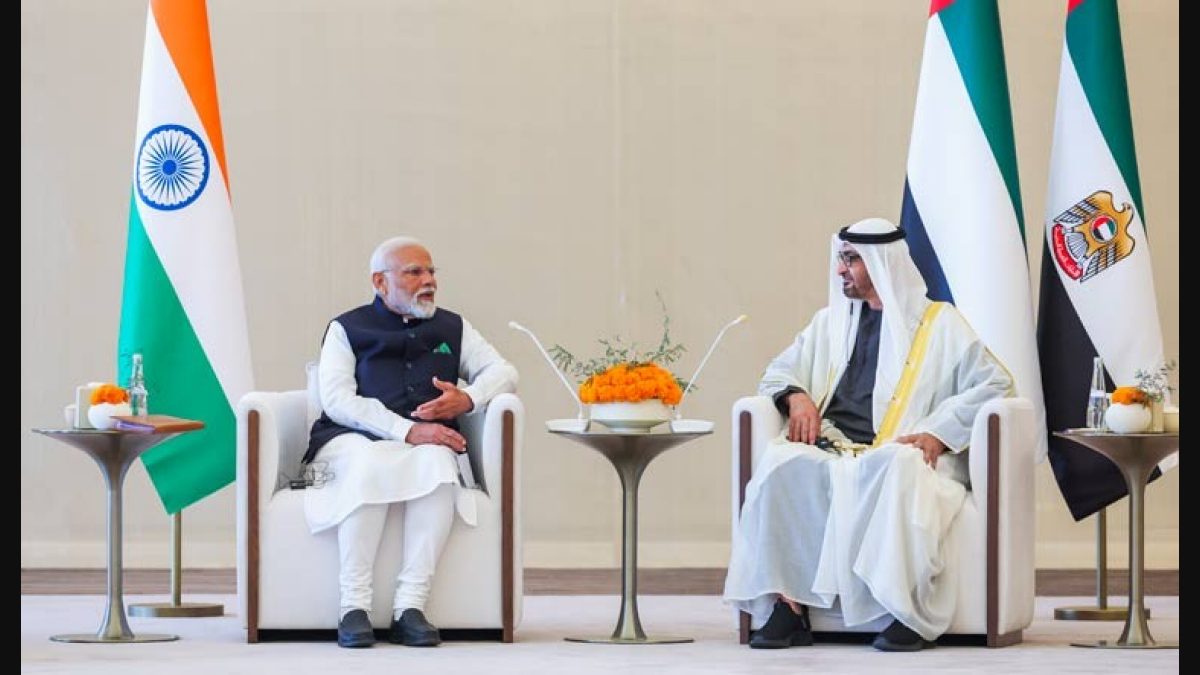
External Affairs Minister S. Jaishankar just wrapped up another high-stakes visit to the United Arab Emirates, and it's clear this isn't your standard diplomatic photo op. While most headlines focus on the formalities, the real story lies in how India is aggressively securing its interests in a region that's currently a powderkeg. Jaishankar didn't just show up to shake hands. He arrived with a very specific message from Prime Minister Narendra Modi, expressing deep gratitude for how the UAE treats the Indian diaspora. We’re talking about 3.5 million people. That's a massive chunk of India's soul living abroad, and their safety is a non-negotiable priority for New Delhi.
But there’s more to this than just saying thanks. India is signaling that it has major stakes in regional stability. If the Middle East destabilizes, India feels the heat instantly. Energy prices spike. Remittances drop. Shipping lanes get risky. By reaffirming these stakes, Jaishankar is telling the world that India is no longer a passive observer in Gulf geopolitics. It’s an active stakeholder that expects a seat at the table when the future of the region is discussed.
The Diaspora Factor is India’s Greatest Soft Power
You can’t talk about India-UAE relations without looking at the sheer scale of the Indian community there. They aren't just workers; they're the backbone of the UAE’s infrastructure, healthcare, and tech sectors. During his meeting with UAE Foreign Minister Sheikh Abdullah bin Zayed Al Nahyan, Jaishankar made it a point to highlight the welfare of these citizens. It’s a smart move. It keeps the domestic audience in India happy while reminding the UAE leadership that their economic success depends heavily on Indian hands and minds.
The gratitude from PM Modi isn't just polite talk. It’s a reflection of a massive shift in how India protects its people abroad. Gone are the days when the government only stepped in during a crisis. Now, there’s a constant, high-level dialogue about living conditions, legal rights, and professional growth for Indians in the Emirates. This creates a feedback loop of trust. When the UAE treats Indians well, India opens more doors for Emirati investment. It’s a classic win-win that many other nations struggle to replicate because they lack this deep, human connection.
Why Regional Stability is a Domestic Issue for New Delhi
When Jaishankar talks about "major stakes" in regional stability, he isn't being dramatic. He’s being a realist. The Middle East is currently navigating a maze of conflicts, from the Red Sea crisis to the broader tensions involving Iran and its neighbors. India can’t afford a major war in the Gulf. Period.
Think about it this way. India imports a huge percentage of its oil and gas from this part of the world. Any disruption in the Strait of Hormuz or the Bab el-Mandeb strait hits the Indian economy within hours. It’s not just about fuel, either. The India-Middle East-Europe Economic Corridor (IMEC) depends entirely on a stable UAE. Without peace, this massive trade route becomes a pipe dream. Jaishankar's visit confirms that India is willing to put its diplomatic weight behind de-escalation efforts, even if it means playing a delicate balancing act between rival regional powers.
Breaking Down the High-Level Dialogue
What actually happens in these meetings? Jaishankar and Sheikh Abdullah didn't just exchange pleasantries. They reviewed the Comprehensive Economic Partnership Agreement (CEPA), which has been a total whirlwind since it launched. Trade is booming. We’re seeing more Indian startups setting up shop in Dubai and more Emirati sovereign wealth funds eyeing Indian infrastructure projects.
They also touched on the I2U2 grouping, which brings together India, Israel, the UAE, and the US. Even with the current regional tensions, this platform remains a vital way for India to integrate itself into the high-tech and food security initiatives of the Middle East. It’s about building a web of interests so tight that nobody wants to break it.
The Strategy Behind the Gratitude
Some might wonder why a Prime Minister would bother sending a formal thank you for diaspora welfare. It sounds simple, but it’s actually a brilliant piece of diplomatic chess. By publicly thanking the UAE leadership, India creates a sense of obligation. It’s a way of saying, "We see the good you’re doing, and we’re going to remember it."
This builds a level of personal chemistry between leaders that is rare in modern politics. The relationship between PM Modi and UAE President Sheikh Mohamed bin Zayed Al Nahyan is legendary for its warmth. That’s not an accident. It’s a cultivated asset. When crises happen—and they always do—having that direct line and a foundation of mutual gratitude makes solving problems much faster.
Security is the New Frontier
Let’s be real. The UAE and India are doing way more than just trading spices and electronics. They’re increasingly aligned on defense and counter-terrorism. Jaishankar’s mention of regional stability wasn't just a nod to trade. It was a nod to security. Both nations face similar threats from extremist ideologies and non-state actors who want to disrupt the status quo.
We’re seeing more joint military exercises. We’re seeing intelligence sharing that was unthinkable twenty years ago. India’s navy is now a regular presence in the Gulf, and that’s a big change. It shows that the UAE trusts India to be a security provider, not just a customer. This trust is the real "secret sauce" that makes the relationship so resilient.
Managing the Competition
India isn't the only player in town. China has been making massive inroads into the Gulf, too. Jaishankar’s frequent visits are a clear sign that India isn't going to let its traditional sphere of influence be overshadowed. By focusing on the diaspora and shared history, India has an advantage that China simply can't match. You can build all the ports you want, but you can't build a shared culture overnight.
The Indian government knows that its strength in the UAE comes from its people. That’s why the welfare angle is so central. It’s the ultimate "sticky" factor. Even if economic conditions change, the human ties remain. This gives India a level of influence that is deep-rooted and very hard to dislodge.
What This Means for the Average Citizen
If you're an Indian living in the UAE or thinking about moving there, this visit is great news. It means your government has your back. It means there’s a direct channel for your concerns to reach the highest levels of power in both countries.
For businesses, it means the regulatory environment is likely to keep getting smoother. The CEPA was just the beginning. Expect more ease-of-doing-business initiatives, more digital integration between the two economies, and more opportunities for cross-border investment.
Moving Beyond Traditional Diplomacy
This Jaishankar trip confirms that India-UAE relations have graduated from a buyer-seller relationship to a true strategic partnership. They are thinking ten, twenty, thirty years ahead. They are talking about green hydrogen, space exploration, and AI.
The focus on diaspora welfare and regional stability are two sides of the same coin. You can’t have one without the other. By doubling down on both, India is securing its future in a region that is vital for its growth. The world should pay attention. This isn't just about two countries getting along; it's about a new power center emerging in the Indo-Pacific and the Middle East that could redefine global trade and security for a generation.
Keep an eye on the upcoming bilateral meetings. The next steps will likely involve more concrete agreements on maritime security and a deeper integration of digital payment systems between the two nations. This is diplomacy in action, and it’s happening at a record-breaking pace.