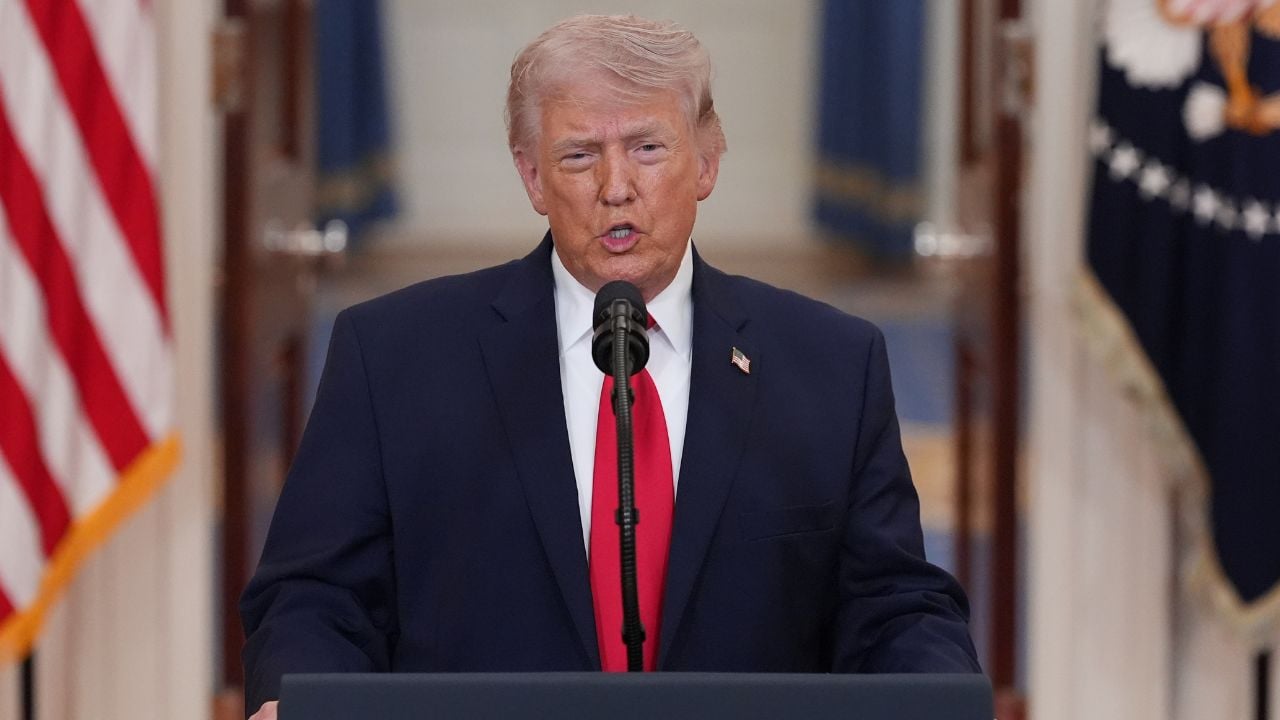
The diplomatic elite are clutching their pearls again. A former envoy breaks cover to warn that India shouldn't be "collateral damage" in the American domestic circus. They see a social media repost or a stray comment from the Trump camp and treat it like a structural fracture in the world order.
They are wrong.
In fact, being "collateral damage" is exactly where India wants to be. If you aren't being used as a rhetorical weapon in a US election, you don't matter. The panic over "offensive remarks" ignores the cold reality of realpolitik: offense is a retail commodity; leverage is a wholesale asset.
The Myth of the Sacred Relationship
Diplomats love to talk about "shared values" and "strategic partnerships" as if they are fragile glass sculptures. They aren't. The US-India relationship is a marriage of necessity built on the hard bedrock of the China challenge and technology transfers. It is not a Victorian romance that can be ruined by a crude joke or a spicy meme.
When a former diplomat argues that India shouldn't be "collateral damage," they are operating on an outdated 1990s playbook. They want a world where foreign policy is conducted in hushed tones over expensive scotch. That world is dead. Today, policy is forged in the furnace of populist outrage.
If a US presidential candidate uses India as a talking point—even a negative one—it confirms India’s arrival as a global pole. You don’t see candidates bickering over the domestic policies of Belgium or Thailand. They fight over the ones that move the needle.
The Currency of Offense
Let’s look at the "offensive remark" in question. Whether it’s about immigration, trade, or outsourcing, these comments are designed for a specific demographic in Ohio or Pennsylvania. They are not policy white papers.
I have watched C-suite executives and high-ranking officials freeze because a tweet went viral. It’s a waste of energy. The "lazy consensus" suggests that every public insult requires a formal demarche.
Actually, the smartest move is to lean into the friction.
When India is attacked for its trade stance or its "Buy India" initiatives, it signals to the world that India is no longer a compliant junior partner. It is a protectionist, self-interested, rising power. That is a position of strength, not weakness.
The Misunderstanding of "Dignity"
The envoy’s argument hinges on national dignity. But in the 21st century, dignity is a luxury for stagnant nations. Growth is messy.
- The Error: Believing that American public opinion dictates bilateral trade.
- The Reality: The Pentagon and the Department of Commerce care about supply chains, not social media sentiment.
India’s role in the US election is a testament to its scale. When Trump or any other candidate brings India into the mix, they are acknowledging that India is a variable that can win or lose them an election. That is called leverage.
Stop Asking for Permission
The "People Also Ask" sections of the internet are filled with anxieties: Will a change in US administration hurt India? Will H-1B visas be slashed? These questions are built on a flawed premise. They assume India is a passive recipient of American whim.
I’ve seen this play out in boardrooms from Mumbai to Palo Alto. The companies that wait for "regulatory clarity" from Washington get left behind. The ones that treat US domestic volatility as a noise floor—and keep building—are the ones that win.
India should stop acting like a sensitive teenager worried about what the popular kids are saying at lunch. The goal isn't to avoid being collateral damage; the goal is to be so integral to the American economy that any damage to India is damage to the US itself.
The Geopolitical Arbitrage
There is a massive opportunity in the chaos of a US election cycle. While the "envoy class" is busy writing op-eds about hurt feelings, the "builder class" should be looking at the gap between rhetoric and reality.
- Defense Ties: These are baked in. No matter who wins, the US needs India to counter-balance the CCP.
- Tech Decoupling: Every time a US politician screams about "bringing jobs back," it accelerates the need for a non-China manufacturing hub. That hub is India.
- The Diaspora: The Indian-American community is no longer a monolith. It is a sophisticated, split-ticket voting bloc that uses its influence to ensure the relationship survives any single administration.
If India is "collateral damage" in a debate about immigration, it forces a conversation about the value of Indian talent. It brings the issue to the forefront. Silence is the real enemy of progress.
The High Cost of Being Liked
Nations that prioritize "not being offensive" or "maintaining a clean image" are usually the ones being bullied in trade negotiations. Look at the countries the US ignores. They have great reputations. They also have zero influence.
India’s friction with the US is a sign of maturity. It means the two countries are finally dealing with real issues—intellectual property, data sovereignty, and energy security—rather than just exchange programs and cultural festivals.
The former envoy’s concern is a relic. It’s the anxiety of a generation that grew up seeking American approval. That era is over.
The New Playbook
Forget the apologies. Ignore the reposts. Stop checking the temperature of the Washington Post’s editorial board.
If you want to understand the future of the Indo-US relationship, look at the capital flows, not the Twitter feeds. Look at the semiconductor MoUs, the jet engine deals, and the massive infrastructure bets.
The US election is a circus. India is one of the main acts.
In a world of noise, being the center of the storm isn't a disaster—it’s the only place where you have any real control. The moment America stops arguing about India is the moment India should start worrying. Until then, enjoy the spectacle.
Don't fix the relationship. Use the volatility.
Stop trying to be the friend. Start being the necessity.