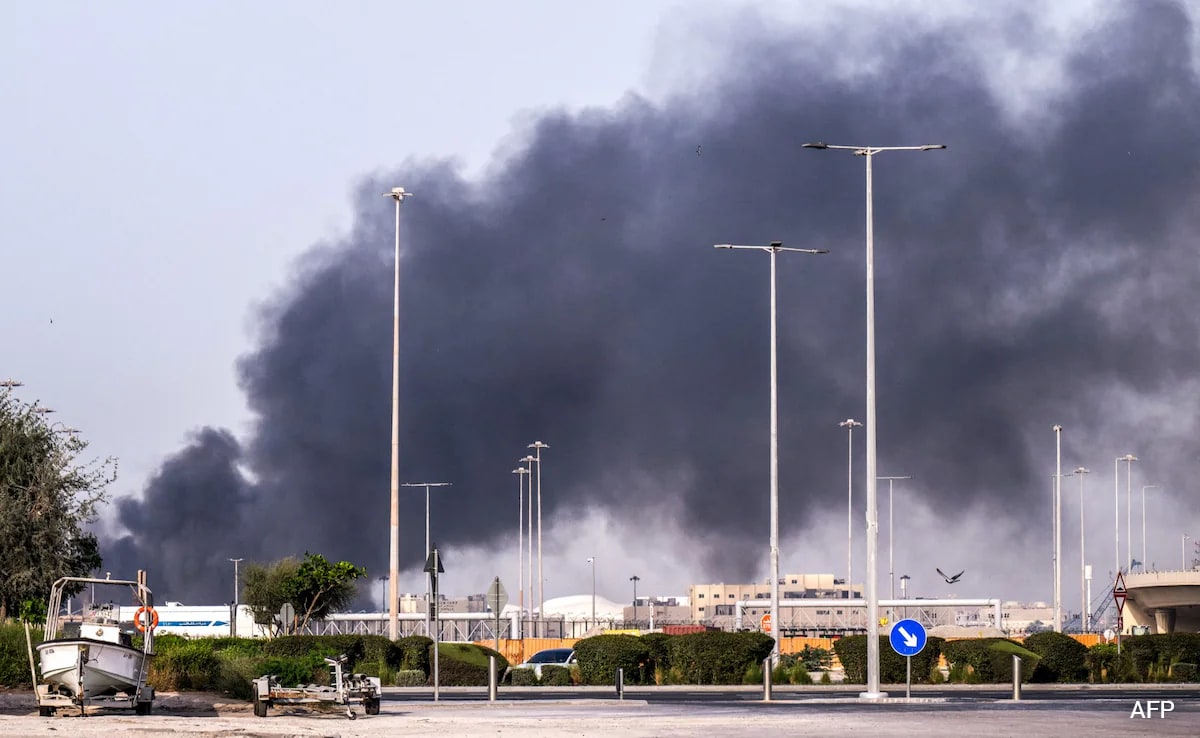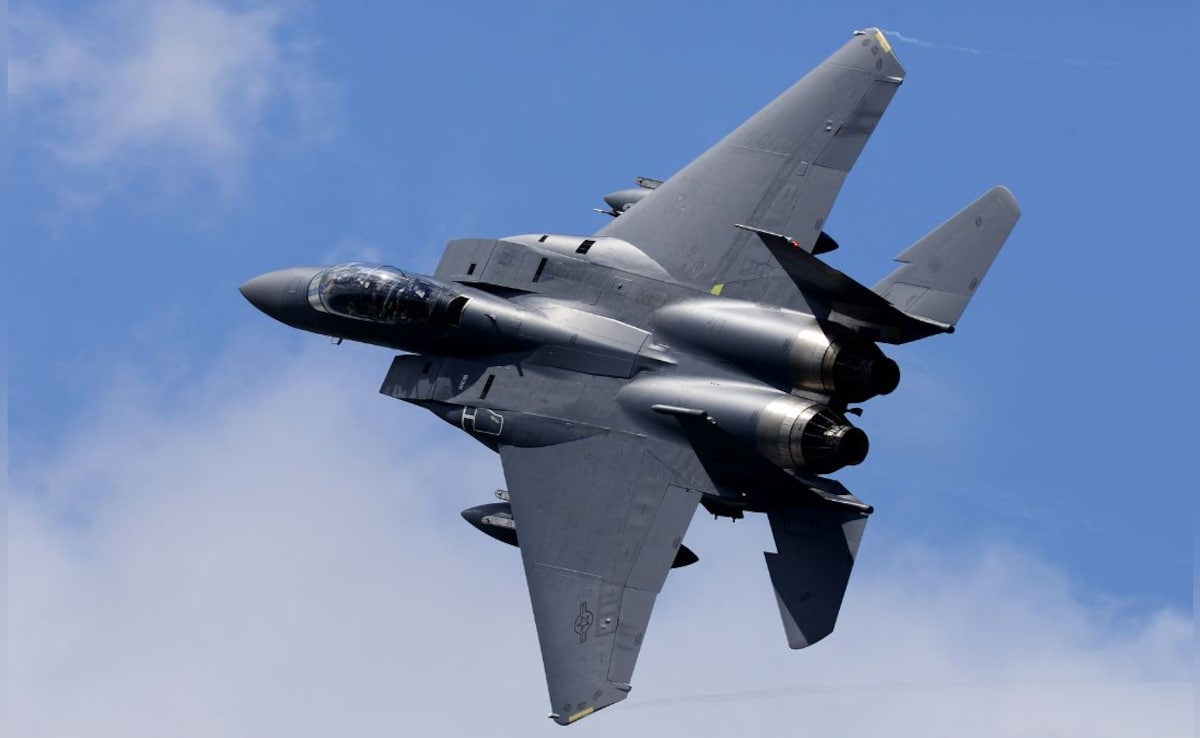
The friction between state-sponsored narrative construction and verifiable military outcomes reaches its peak in the Persian Gulf, specifically within the tactical bubble of the Strait of Hormuz. When Iranian media outlets circulate claims regarding the downing of a U.S. F-15 Eagle, they are rarely reporting a terminal ballistic event. Instead, they are deploying a psychological maneuver designed to test regional sensor networks and domestic morale. Analyzing these claims requires a cold decomposition of the "Kill Chain of Information," where the gap between a reported impact and a physical wreck reveals the specific strategic objectives of the actor.
The discrepancy between the Iranian claim and the subsequent U.S. fact-check is not a simple "he-said, she-said" binary. It represents a clash of two distinct operational doctrines: Asymmetric Narrative Saturation versus Institutional Verification Rigor.
The Architecture of a False Positive
To understand why an F-15 "shoot-down" claim surfaces without physical debris, one must examine the electronic and psychological environment of the Hormuz transit. The Iranian Revolutionary Guard Corps (IRGC) operates under a doctrine of "Passive Ambiguity." In this framework, success is not measured by the destruction of a multi-role fighter, but by the forced reallocation of Western intelligence, surveillance, and reconnaissance (ISR) assets to debunk the claim.
The anatomy of these claims usually follows a three-stage sequence:
- The Sensory Trigger: Iranian coastal radar or electronic support measures (ESM) track a high-value target (HVT) like an F-15. If the target maneuvers or "notches" the radar, creating a momentary track break, this is internally logged as a "potential engagement."
- The Narrative Propagation: State-aligned media outlets, such as Fars or Tasnim, bypass standard military verification. They convert a "track break" or a routine flare deployment into a "confirmed hit." This satisfies domestic consumption and forces the opponent to respond.
- The Verification Lag: The U.S. Department of Defense (DoD) operates on a centralized release authority. The time it takes for Central Command (CENTCOM) to verify the status of every airframe in the theater creates a "latency window." In this 2-to-6-hour window, the Iranian narrative remains the only available data point, allowing it to go viral across social platforms.
The F-15 Eagle is a specific target for these narratives because of its symbolic status as a dominant air-superiority platform. Since its introduction, the F-15 has maintained a legendary combat record with zero losses to air-to-air combat. Targeting its reputation is a calculated attempt to erode the perception of Western technological overmatch.
Mechanisms of Electronic Deception and Misinterpretation
In the crowded electromagnetic spectrum of the Gulf, technical errors frequently masquerade as combat successes. Several physical phenomena can lead a ground-based observer or a radar operator to believe a jet has been hit:
- Chaff and Flare Deployment: During routine patrols or when sensing a radar lock, pilots may deploy countermeasures. To a distant observer or a low-resolution camera, a magnesium flare burning at over 1,000 degrees Celsius can appear as an engine fire or an onboard explosion.
- Supersonic Transitions: The "sonic boom" produced when an F-15 exceeds Mach 1 creates a visible vapor cone (the Prandtl-Glauert singularity) and a massive acoustic signature. In a high-tension environment, this is easily misidentified by ground troops as the detonation of a surface-to-air missile (SAM).
- Radar Notching and Ground Clutter: If a pilot performs a high-G maneuver to disappear from an interceptor's radar—effectively "hiding" in the ground clutter—the operator sees the target vanish instantly. Without secondary confirmation, this is often reported up the chain as a "target destroyed."
The cost of an F-15EX or even an older C/D variant exceeds $80 million per unit, excluding the sunk cost of pilot training and the geopolitical fallout of a loss. The U.S. Air Force does not "hide" these losses because the logistics of a missing airframe—families to notify, search and rescue (SAR) missions to launch, and debris to secure—are too massive to conceal in a digital age.
The Mathematical Improbability of an Unverified Downed Jet
When a modern fighter jet is lost, it creates a specific "Logistical Signature" that is impossible to mask. If the Iranian claims were accurate, several secondary indicators would be mandatory:
- Combat Search and Rescue (CSAR) Surges: The loss of an F-15 would trigger an immediate and massive deployment of HC-130J Combat King II aircraft and HH-60G Pave Hawk helicopters. Satellite imagery would show these assets moving from bases like Al Udeid or Muwaffaq Salti.
- Emergency Guard Frequency Traffic: Pilots in distress utilize the "Guard" frequency (243.0 MHz). This frequency is monitored by civilian and military stations globally. A shoot-down involves a burst of emergency transmissions that are almost always intercepted by independent SIGINT (Signals Intelligence) hobbyists or third-party nations.
- NOTAM Expansions: The FAA and regional authorities would issue "Notices to Air Missions" (NOTAMs) to cordoning off the crash site for safety and recovery.
The absence of these signatures renders the Iranian media claims statistically void. The U.S. fact-check is not merely a verbal denial; it is supported by the continued, observable presence of the aircraft on transponders and the lack of emergency logistical shifts.
The Cognitive Dissonance of State-Run Media
The primary failure of the competitor's coverage is the assumption that the Iranian media is attempting to report "truth" and failing. This is a misunderstanding of their objective. Within the IRGC’s media wing, the objective is Perception Management.
The "Cost-Benefit Ratio" of a false claim is highly favorable for Iran. The cost of publishing a tweet or a short article claiming a hit is near zero. The benefit includes:
- Internal Cohesion: Bolstering the image of the Iranian military as a force capable of challenging the "Great Satan."
- Adversarial Fatigue: Forcing U.S. officials to constantly expend energy and credibility answering low-quality rumors.
- Algorithmic Gaming: Creating a permanent digital record that, despite being debunked, continues to surface in search results for "F-15 shot down," eventually muddying the historical record for less-informed audiences.
This creates a "Firehose of Falsehood" model. By the time the U.S. issues a formal fact-check, the Iranian media has already moved on to the next claim, leaving the correction to trail behind in a cycle of diminishing returns.
Strategic Response Requirements
To counter this asymmetric information threat, the U.S. and its allies cannot rely solely on reactive fact-checking. A structural shift is required to close the latency window.
First, the integration of unclassified, real-time flight tracking data into public-facing military communications would allow for instant debunking. If the public can see the "downed" jet still on station via an ADS-B transponder, the Iranian narrative dies in the cradle. However, this poses an operational security (OPSEC) risk, as it reveals the exact location of combat assets to the adversary.
Second, the use of "Pre-bunking" strategies is essential. This involves educating the regional audience on the specific visual signatures of flares and sonic booms before an incident occurs. By lowering the "novelty" of these visual events, the military reduces the likelihood that a civilian witness will misidentify a routine maneuver as a combat loss.
Third, the international community must apply "Narrative Sanctions." When a state-aligned media outlet repeatedly publishes verifiably false combat reports, their credentials within international press pools and their visibility on global social platforms should be downgraded based on a "Reliability Metric."
The conflict in the Strait of Hormuz is as much about the control of the electromagnetic and cognitive spectrum as it is about the physical waterway. As long as the Iranian state views information as a kinetic weapon, the "shoot-down" of phantom F-15s will remain a recurring feature of the regional landscape. The only effective defense is a high-speed, data-backed verification system that prioritizes logistical evidence over rhetorical assertions.
The next tactical evolution will likely involve the use of deepfake or AI-generated imagery to support these claims. When the Iranian media can produce a high-fidelity video of an F-15 exploding in mid-air, the current U.S. strategy of simple verbal denial will be insufficient. The military must prepare for a "Verification-at-Speed" environment where digital forensics and cryptographic signatures of flight data are made public within minutes of a false claim's emergence.