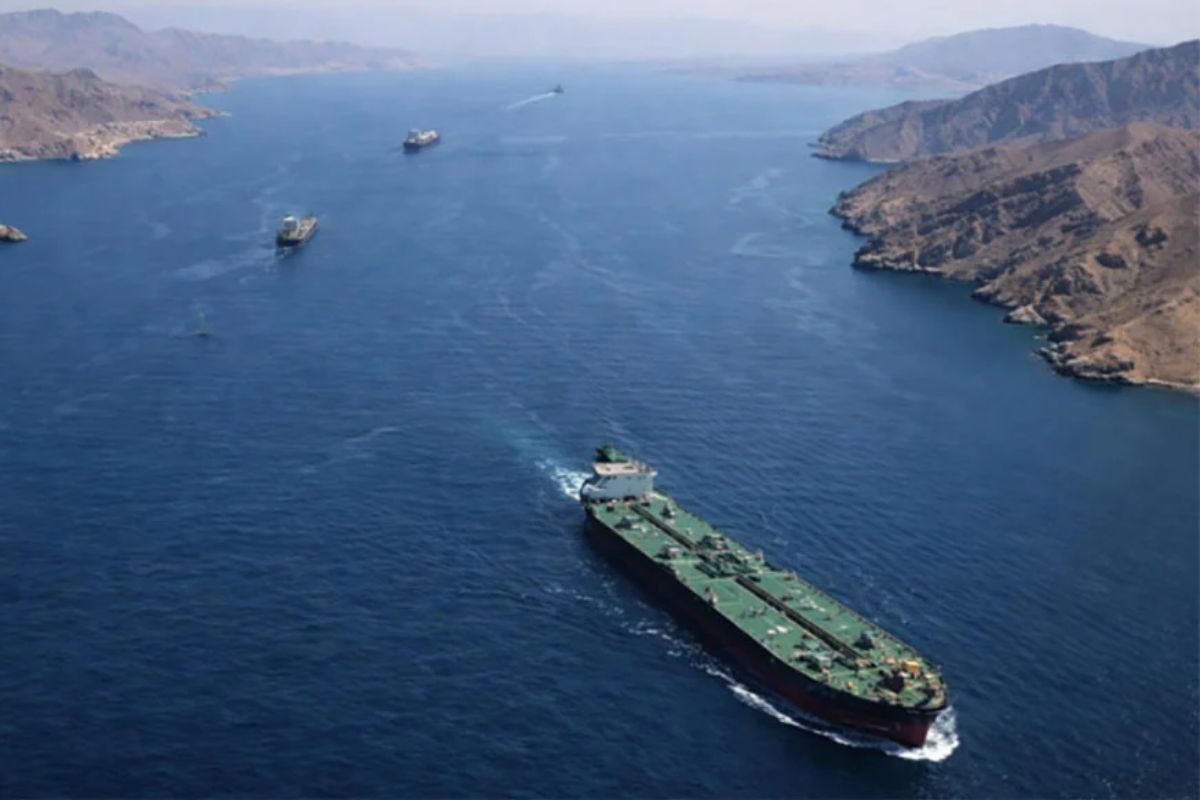
A single rusty tanker sits low in the water, its hull scarred by salt and years of sun. To the crew on deck, the Strait of Hormuz is a narrow ribbon of blue between jagged cliffs and desert sands. To the rest of the world, it is a jugular vein. If it constricts, the global heart skips a beat. If it closes, the lights go out in cities thousands of miles away.
For months, the tension in these waters has been a physical weight. Shipping companies have watched insurance premiums climb like a fever. Captains have adjusted their routes, eyes glued to radar screens for the telltale signature of a drone or a fast-attack craft. Now, as the whispers of a ceasefire begin to take shape, a new question emerges from the spray. It isn't just about whether the ships can pass safely. It is about who holds the clipboard at the gate.
The Toll of the Deep
Every gallon of fuel in your car and every plastic component in your laptop likely has a ghost story rooted in this twenty-one-mile-wide passage. Currently, the "fee" for moving goods through this corridor isn't paid in a simple transaction at a booth. It is paid in risk. It is paid in the $50 million increase in insurance for a single voyage.
Consider a hypothetical logistics manager in Mumbai or Hamburg. Let's call him Elias. Elias doesn't care about the geopolitics of the coastline; he cares about the bottom line. When the Strait is "volatile," Elias has to tell his board that shipping costs have tripled. He has to explain why a cargo of liquefied natural gas is sitting idle while a naval escort is negotiated.
When a ceasefire finally stabilizes the region, the chaotic, invisible tax of war risk premiums will begin to evaporate. But something else will take its place. A more structured, more permanent system of "service fees" is surfacing in recent reports. The question of who collects this money—and under what authority—is the secret engine driving the next decade of maritime law.
The Sovereign Hand on the Lever
International law suggests that the Strait of Hormuz consists of territorial waters belonging to Iran and Oman. Under the United Nations Convention on the Law of the Sea, ships enjoy the right of "transit passage." This means they can move through as long as they do so quickly and without threatening the coastal states.
However, the reality on the water is often more complex than the ink on a treaty. If a ceasefire holds, the regional powers will seek to recoup the costs of "securing" the channel. This isn't just about protection; it's about infrastructure.
Imagine the Strait as a high-traffic highway. Someone has to maintain the "lights"—the sophisticated navigational buoys and GPS-linked beacons that keep a 300,000-ton vessel from grounding itself on a reef. Someone has to provide the emergency response teams for oil spills. Someone has to manage the air traffic control equivalent for the sea.
Reports indicate that regional authorities are looking to formalize these costs. If you are the coastal state providing the security and the technology that prevents a global environmental disaster, you want to be paid. This is where the tension lies. Is it a "fee" for services rendered, or is it a "toll" for access to a global commons?
The Digital Shadow
We often think of maritime power as steel and cannons. In 2026, it is increasingly about data. The entity that "collects the fee" will be the one that controls the digital monitoring systems.
Modern shipping relies on the Automatic Identification System (AIS). When a ship enters the Strait, it broadcasts its identity, position, and cargo. But AIS can be spoofed. It can be turned off. To truly manage the Strait, a nation needs high-resolution satellite imagery and land-based radar that can see through the thickest desert haze.
The investment in this technology is astronomical. If a ceasefire leads to a formalization of "escort services" or "environmental monitoring fees," the winner will be the state that can prove it has the most eyes on the water. They will argue that the fee isn't a political statement; it’s a subscription to safety.
The Ripple Effect on the Grocery Aisle
Why should a family in a suburban home care about a maritime fee collected in the Middle East? Because the economy is a series of dominoes.
When a ship pays an extra $100,000 in transit fees, that cost is never absorbed by the shipping line. It is divided. A fraction of a cent is added to the price of a gallon of milk. A few dollars are added to the cost of a new television. When you multiply those fractions by the billions of tons of cargo passing through the Strait every year, you realize that the "fee collector" is essentially tapping into a global tax.
If the ceasefire allows for a dominant regional player to monopolize these fees, they aren't just gaining revenue. They are gaining leverage. They become the accountants of global trade.
The Fragility of the Calm
Peace is a beautiful thing, but in the world of high-stakes commodity trading, it is also a restructuring event. A ceasefire doesn't mean the Strait becomes "free" in the sense of costing nothing. It means the nature of the cost changes from unpredictable violence to predictable bureaucracy.
The invisible stakes are found in the fine print of maritime insurance contracts. These documents are the true barometers of global peace. As long as the "War Risk" box remains checked, the money flows to London-based insurers. If the "Service Fee" box becomes the new standard, that money stays in the region, flowing into the treasuries of the coastal states.
This shift represents a massive transfer of wealth and influence. It is a transition from the era of the gunboat to the era of the invoice.
The Sentinel at the Door
The sun sets over the Musandam Peninsula, casting long, purple shadows across the water. A supertanker, three football fields long, glides through the narrowest point of the Strait. On the bridge, the navigator isn't thinking about the grand sweep of history or the shift in global financial power. He is looking at a screen, waiting for a signal that his passage has been cleared, and his fees have been processed.
The Strait of Hormuz remains a place where the world’s most basic needs meet the world’s most complex politics. A ceasefire may silence the sirens, but it will not stop the calculation. The gate is opening, but the gatekeeper is standing ready with an open hand, and the world has no choice but to pay.