The coffee in your mug this morning didn't just appear. Neither did the fuel in the tank of the rideshare car idling outside or the plastic casing of the phone currently resting in your palm. We live in a world held together by a translucent, greasy thread of ancient organic matter that travels across vast, unforgiving oceans before it ever reaches our lives.
For decades, the global psyche has been haunted by a single, jagged geography: the Strait of Hormuz. It is a narrow choke point, a literal neck of the world through which twenty percent of the globe's petroleum must squeeze. To look at a map is to see a vulnerability. On one side sits Iran, poised with the power to tighten the grip. On the other, a global economy that gasps for breath the moment the flow stutters.
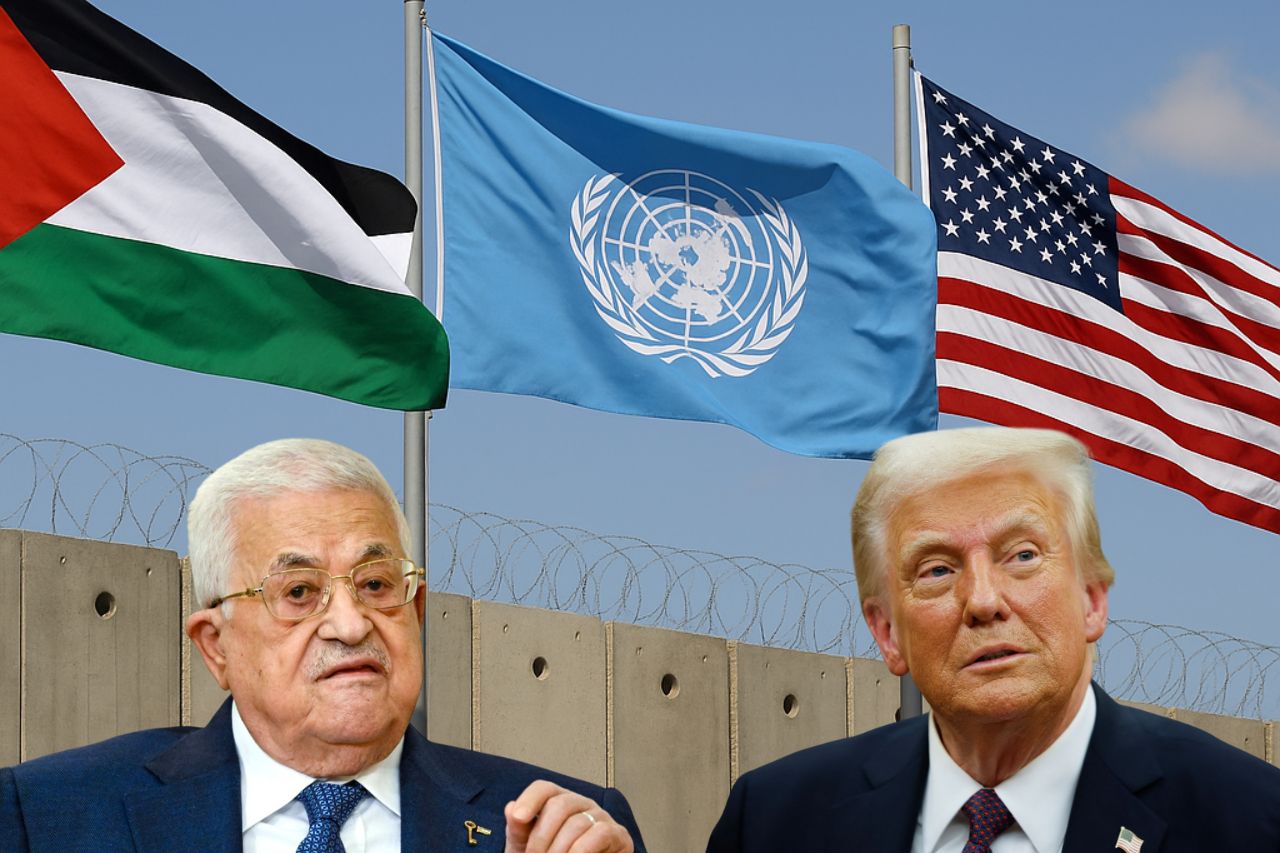
Donald Trump recently stood before the cameras to address this exact anxiety. His message was blunt, stripped of the usual diplomatic cushioning. He claimed that the oil will flow. Quickly. With or without Iran.
It sounds like a boast. To many, it sounds like an impossibility. But beneath the rhetoric lies a shifting tectonic plate in how energy, power, and survival are being recalculated in the modern age.
The Ghost of the Tanker War
Imagine a merchant sailor named Elias. He isn't a politician. He doesn't care about election cycles. He cares about the depth of the water and the silhouette of a fast-attack craft on the horizon. In the 1980s, during the "Tanker War," men like Elias watched the horizon with genuine terror. Back then, if the Strait of Hormuz closed, the lights went out in cities thousands of miles away.
The threat was absolute. If Iran blocked that narrow passage, the world plunged into a dark age of rationing and economic collapse. This historical trauma is why every headline involving Tehran and the Strait sends a shudder through the stock market. We are conditioned to believe that Hormuz is the only artery that matters.
But the world Elias sails in today is not the world of 1984.
When Trump asserts that the oil will move regardless of Iranian interference, he is pointing toward a new reality of redundancy. The United States is no longer the desperate customer waiting at the end of the line. It is the producer. The shale revolution changed the chemistry of global power. It turned a nation that used to beg for stability into a nation that can now dictate it.
The Alternative Routes of Ambition
If you block a door, people find a window. If you block a window, they dig a tunnel.
The narrative of a "shut" Strait of Hormuz assumes that the oil has nowhere else to go. This is a fallacy of the old world. Saudi Arabia and the United Arab Emirates have spent billions of dollars on "the tunnels." Massive pipelines now cut across the desert, bypassing the treacherous waters of the Gulf entirely. They carry the lifeblood of the East to ports on the Red Sea and the Gulf of Oman.
These are not just pipes. They are insurance policies against chaos.
When the talk turns to "with or without Iran," the subtext is a massive, industrial pivot. Trump’s confidence rests on the fact that the logistical monopoly of the Strait is crumbling. The oil is finding new veins. It flows through the sands of the Empty Quarter. It moves through expanded terminals that face the open ocean, far from the reach of coastal batteries and naval mines.
Consider the sheer scale of this engineering. We are talking about thousands of miles of steel, protected by drone surveillance and rapid-response teams, designed for the sole purpose of making the Strait of Hormuz irrelevant. It is a silent, expensive war of positioning that happens long before a single shot is fired.
The Human Cost of the Bluff
Statistics are cold. Rhetoric is loud. But the reality is felt in the gut.
Behind every threat to "close the Strait" is a gamble with the lives of ordinary people. When tensions rise, the cost of shipping insurance skyrockets. Those costs don't stay on the balance sheets of multinational corporations. They migrate. They show up in the price of a liter of milk in Mumbai or the cost of heating a home in London.
The invisible stakes are the millions of families whose stability is tied to a commodity they can neither see nor control.
By declaring that the oil will flow "quickly," the administration is attempting to devalue Iran’s greatest geopolitical currency. If the world believes the oil can bypass the Strait, then the threat of closing the Strait loses its sting. It’s a high-stakes game of psychological poker. If you tell the bully that his fists no longer hurt, you change the nature of the confrontation.
But the danger of this narrative is the assumption of perfection.
Pipelines can be sabotaged. Redundant routes can be overwhelmed. The "human element" isn't just the consumer; it's the technician standing in a desert heat of 120 degrees, trying to maintain a pressure valve that keeps an entire economy from exploding. It is the diplomat trying to keep a "quick" flow of oil from turning into a slow, agonizing conflict.
The New Map of Power
We have spent fifty years looking at the Middle East through a very specific lens: one of scarcity and dependence. Trump’s recent comments are an attempt to shatter that lens entirely.
The message is clear: The age of the choke point is ending.
This isn't just about ships and barrels. It’s about the psychological liberation of the West from a specific kind of blackmail. If the United States and its allies can truly move the world’s energy without permission from Tehran, the entire map of the 21st century is rewritten. The "Invisible Vein" becomes a web, intertwined and impossible to sever with a single blow.
But maps are paper, and reality is salt and iron.
As the sun sets over the Gulf tonight, hundreds of ships are still navigating those narrow waters. The crews are drinking bitter coffee, watching the radar, and wondering if the bold words spoken in Washington will protect them if the horizon suddenly turns red.
The oil might flow with or without Iran. The pipelines might hold. The shale might keep the prices steady. But as long as we rely on a single, combustible liquid to power our existence, we are all sailors in the Strait, waiting to see who blinks first.
The true story isn't the oil. It’s the terrifying fragility of the world we’ve built around it. A world where a few miles of water can still determine the fate of a billion lives, no matter how fast we claim the current is moving.