The global energy commentary class has officially lost its mind.
For days, a cozy, lazy consensus has formed around the sudden, near-total freeze of waterborne crude oil exports from Iran’s Kharg Island. Mainstream analysts and market trackers are rushing to microphones to claim that a random pipeline leak or a rogue tanker dumping contaminated ballast water is the primary reason behind the 28-day paralysis of Iranian crude shipments. They look at satellite images showing a 45-square-kilometer gray slick in the Persian Gulf and confidently declare that a mechanical accident did what a superpower’s military machine could not. Learn more on a similar subject: this related article.
This is a dangerous misreading of how physical energy infrastructure and geopolitical warfare interact.
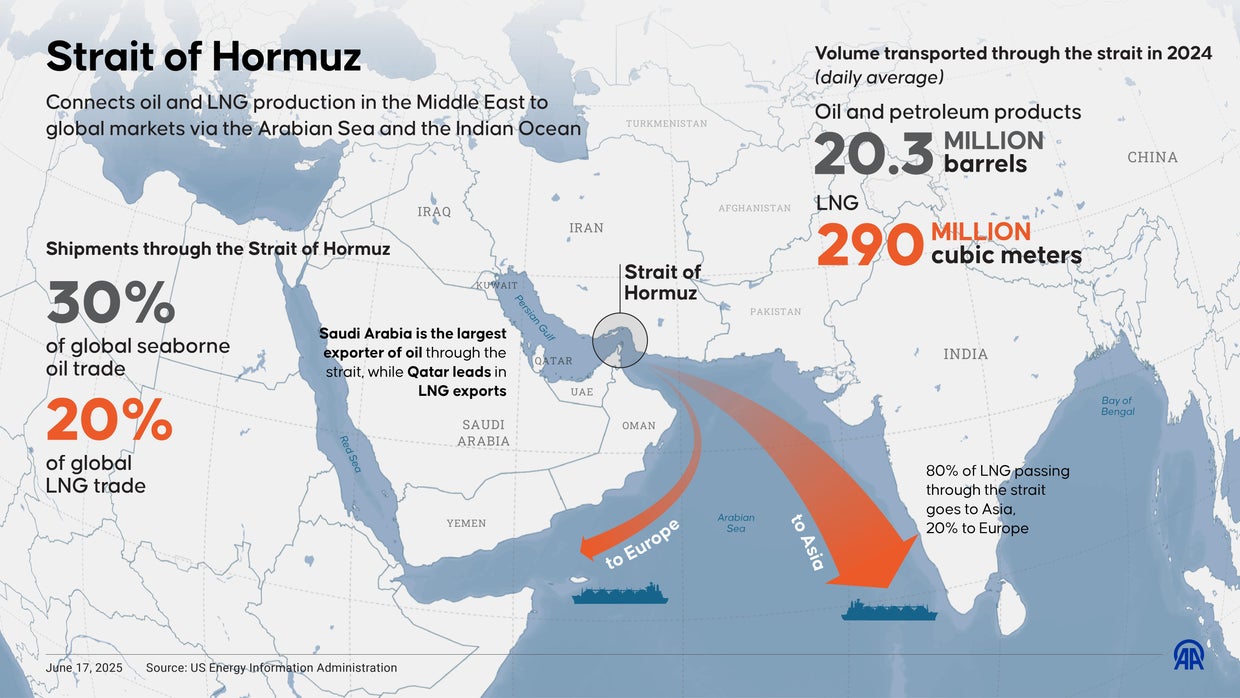
To believe that a routine operational mishap or an accidental spill is the master variable shutting down 90% of Iran's oil export capacity requires a willful blindness to the reality on the water. I have watched energy desks and intelligence firms mistake symptoms for causes for over fifteen years. Let’s be entirely direct: Iran's crude oil flows have not been choked off by an accident. They have been strangled by a relentless, grinding U.S. naval blockade that has spent the last month fundamentally breaking the Islamic Republic’s logistics. The spill isn't an isolated mishap; it is a direct, predictable consequence of a system under catastrophic pressure. Further journalism by The Motley Fool highlights related perspectives on the subject.
The Lazy Consensus Exploded
The current narrative, popularized by maritime intelligence firms like TankerTrackers.com, points to European satellite imagery from the Copernicus Sentinel network. The data is clear on one point: major tankers have not successfully loaded or departed Kharg Island since early May. From this, analysts have deduced that operations are suspended because of environmental and safety concerns related to the slick.
This is classic linear thinking. It ignores the compounding friction of a blockade zone.
When a naval blockade restricts a country’s primary maritime export artery, you do not just get empty ports; you get systemic infrastructure failure. Consider the mechanics of an oil export terminal under siege. Before the blockade commenced, Iran was moving roughly 1.8 million barrels of crude per day by sea. When the U.S. Navy began turning back tankers, that volume did not magically vanish. It was backed up into onshore storage tanks and trapped inside a floating armada of aging, poorly maintained supertankers.
Imagine a scenario where a massive municipal water main is capped at the exit point while the pumps at the reservoir keep running at full throttle. The pressure does not dissipate; it migrates to the weakest joints in the system.
That is exactly what we are witnessing at Kharg Island. Iran’s onshore storage capacity—variously estimated between 40 million and 80 million barrels by firms like Kpler and FGE—is rapidly hitting its absolute physical limits. When storage fills up, operators face a brutal technical dilemma: shut down production wells or force the infrastructure to hold fluid beyond its design tolerances. Shutting down a mature oil well isn't like turning off a kitchen faucet. It alters reservoir pressure, causes scale precipitation, triggers wax deposition, and can permanently destroy the ultimate recovery of an entire oil field.
To avoid permanently damaging their reservoirs, Iranian engineers are playing a desperate game of musical chairs with aging infrastructure. They are forcing oil into corroded pipelines, overfilling ancient storage facilities, and scrambling to recommission retired vessels like the 30-year-old supertanker Nasha to act as impromptu floating storage.
When you push a heavily sanctioned, poorly maintained midstream network past its breaking point to evade a naval perimeter, things crack. Valvular failures occur. Seals fail. Ballast water gets intentionally dumped by panicking captains trying to manipulate vessel buoyancy or clear space. The visible slick near Kharg Island is not an exogenous accident that paused the flows; it is the physical manifestation of an energy infrastructure system blowing its gaskets under the immense pressure of an airtight economic siege.
Dismantling the Premier Myths of the Blockade
To understand the full scope of this miscalculation, we must confront the flawed premises dominating the "People Also Ask" sections of global energy desks.
"Is the U.S. naval blockade failing because some refined petroleum products are still leaking out?"
This question fundamentally misunderstands the objective of modern economic warfare. Critics point to the fact that smaller tankers carrying refined fuel cargoes have managed to slip past the blockade lines toward Pakistan or India, concluding that the perimeter is porous.
This is an analytical error. The U.S. Treasury's Office of Foreign Assets Control (OFAC) and naval commanders are explicitly prioritizing crude oil over refined products for a simple structural reason: leverage. Crude oil represents the massive, concentrated revenue engine of the regime. Tracking and blocking a 2-million-barrel Very Large Crude Carrier (VLCC) is a high-yield operation. Chasing down fragmented, small-scale shipments of refined products yields diminishing strategic returns and risks escalating local regional conflicts unnecessarily. The suppression of crude exports has been near-total for 28 days. Arguing that the blockade is ineffective because a few low-margin fuel barges got away is like saying a dam is broken because it sprays a fine mist.
"Can't Iran just use its 'Ghost Armada' to spoof signals and bypass the naval perimeter indefinitely?"
This is the favorite talking point of tech-fetishists who believe global geopolitics can be solved with a software patch. Yes, the shadow fleet excels at switching off Automatic Identification System (AIS) transponders, swapping flags, and executing ship-to-ship (STS) transfers in deep water.
But spoofing only works when you have open ocean to hide in. It is utterly useless when a conventional navy has established a physical, visual, and radar interdiction line across a narrow geographical chokepoint like the northern Persian Gulf. You cannot "go dark" when a destroyer is sitting five miles off your loading dock. A 300-meter-long supertanker sitting deep in the water with two million barrels of crude cannot disguise its physical mass, its wake, or its thermal signature. The shadow fleet’s tricks work against bureaucratic sanctions; they fail miserably against a kinetic naval blockade.
The True, Hidden Cost: Reservoir Destruction
The real story that the financial press is missing isn't the immediate loss of daily revenue—though Argus Media estimates that hit at a staggering $4.8 billion since mid-April. The real story is the long-term, irreversible destruction of Iran's underlying energy assets.
The table below breaks down the reality of what happens when an oil-dependent state is forced to halt waterborne exports while attempting to maintain production to save face.
| Operational Phase | Physical Manifestation | Long-Term Economic Consequence |
|---|---|---|
| 1. Export Interdiction | Tankers turn back; loading arms at Kharg Island go idle. | Immediate cash flow crisis; accumulation of un-monetized inventory. |
| 2. Storage Max-Out | Onshore tanks hit 100% capacity; older vessels (Nasha) mobilized for floating storage. | Extreme operational risk; infrastructure pushed beyond safety tolerances. |
| 3. Infrastructure Stress | Pipeline leaks, valve blowouts, intentional contaminated ballast dumping (The "Accident"). | High environmental remediation costs; localized logistical paralysis. |
| 4. Well Shut-Ins (Forced) | Production fields (Gachsaran, Ahvaz) forced to reduce flow rates. | Reservoir Damage: Permanent loss of reservoir pressure; water encroachment into oil-bearing zones. |
The consensus views the Kharg Island slick as a temporary pause. In reality, it is a leading indicator that Iran is transitioning from Phase 3 to Phase 4 of an infrastructure collapse.
Every day that tankers sit idle near the Pakistani coast or hover inside the blockade zone because they cannot discharge cargo is a day that the pressure inside Iran’s fields builds. If the blockade continues for another month, the choice will no longer be about losing billions in monthly sales. The choice will be whether to permanently sacrifice 10% to 20% of Iran's total ultimate oil recovery capacity through chaotic, unplanned well closures.
The Catch-22 of Counter-Intuitive Analysis
There is a distinct downside to adopting this contrarian view, and it is one that hawkish policymakers consistently ignore. If you accept that the spill is a symptom of systemic failure rather than an accident, you must also accept that the U.S. strategy is rapidly approaching its point of maximum danger.
When a regime is backed into an engineering corner where its primary multi-generational asset—its oil reservoirs—is about to be permanently ruined, its behavior shifts from calculated resistance to existential panic. Iran's parliamentary leadership has already signaled this, noting that their math dictates "one oil well equals four oil wells." They are hinting at asymmetric retaliation against regional energy infrastructure.
By treating the halt at Kharg Island as an "accident" or a "leak," Western analysts give themselves a comforting, false sense of security. They lull the markets into believing that the current lack of a global oil price shock is due to a lucky break or a temporary maintenance issue. It isn’t. The market is trading on a countdown clock.
Stop looking at the gray slick on the satellite maps as a random piece of bad luck for Tehran. It is the sound of an entire energy sector cracking under a vice grip. The system is redlining, the storage is full, and the next thing to break won't be a pipeline—it will be the fragile geopolitical peace holding the entire Persian Gulf together.