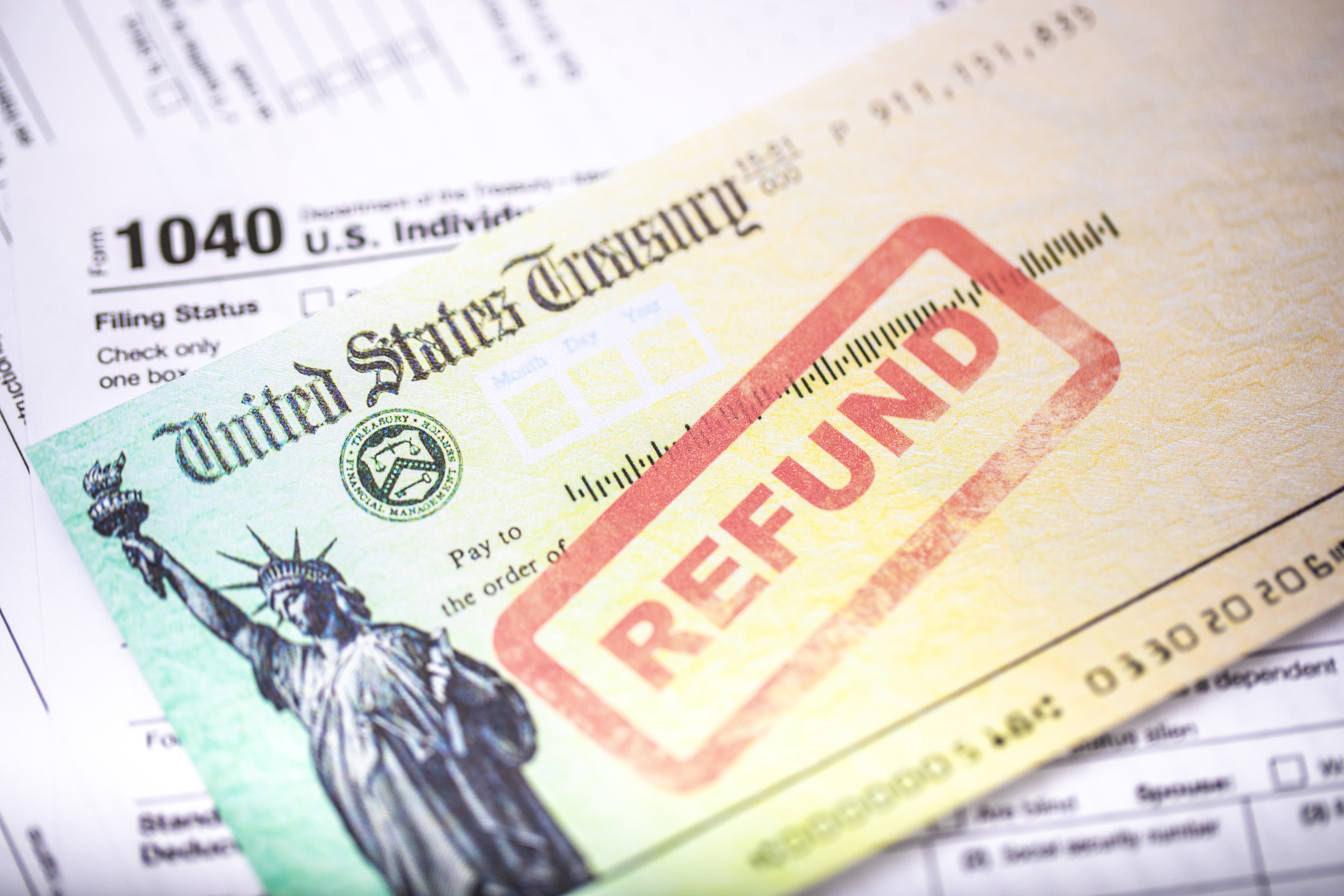
The 11% increase in average tax refund values reported in the latest IRS filing cycle is not a random fluctuation of fiscal luck; it is the mathematical result of three specific structural shifts in federal tax administration and taxpayer behavior. While surface-level reporting focuses on the "extra cash" in consumer pockets, a rigorous analysis reveals that this surge is driven by the expiration of pandemic-era legislative anomalies, a strategic recalibration of IRS processing speeds, and the lagged effect of inflation-indexed bracket adjustments. To understand this shift, one must deconstruct the refund into its component parts: over-withholding, refundable credit eligibility, and the velocity of bureaucratic throughput.
The Triad of Refund Growth Drivers
The current data reflects a stabilization of the tax ecosystem following years of extreme volatility. The 11% jump represents an average refund of $3,182 compared to $2,878 in the previous year. This delta originates from a specific set of variables that dictate the net position of the American taxpayer at the end of the fiscal year.
1. The Realignment of Withholding Tables
The primary mechanism for any refund is the gap between the tax liability incurred and the tax withheld by employers. In recent years, the IRS adjusted withholding tables to account for the Tax Cuts and Jobs Act (TCJA) and subsequent adjustments for inflation. When inflation remains high, as it did through the previous fiscal period, the IRS makes significant "cost-of-living" adjustments to standard deductions and tax brackets.
For the current filing year, the IRS increased standard deductions by approximately 7%. If a taxpayer’s income growth did not outpace these bracket shifts, their effective tax rate dropped while their withholding—often based on outdated W-4 settings—remained high. This creates a mechanical surplus. The 11% increase in refunds suggests that a significant portion of the workforce is effectively over-lending to the government due to a failure to optimize withholding in the face of aggressive bracket indexing.
2. Legislative Sunset Effects and Credit Velocity
During the pandemic, various credits like the Child Tax Credit (CTC) and the Earned Income Tax Credit (EITC) were modified, expanded, and then returned to baseline levels. The previous year’s data was depressed because many taxpayers had already received portions of their credits through advanced payments or had seen their eligibility narrowed after temporary expansions expired.
The current 11% increase indicates a "return to the mean." Taxpayers are now claiming the full weight of these credits at the time of filing rather than receiving them in piecemeal installments throughout the year. This consolidation of credit value into a single lump sum creates the perception of a windfall, though the total annual tax benefit may remain relatively static compared to the previous three-year average.
3. Operational Throughput and the Backlog Variable
The IRS received a massive infusion of funding via the Inflation Reduction Act, specifically targeted at modernization and staffing. The "11% higher" figure is partially a measurement of efficiency rather than just value. In previous cycles, massive backlogs in paper returns and flagged accounts meant that high-value, complex refunds were stuck in "suspense" accounts.
With the deployment of improved Scanning Functions and the hiring of thousands of new processing agents, the IRS has increased the velocity of refund issuance. High-value refunds that previously might have drifted into the subsequent reporting period are now being cleared within the 21-day window. The reported increase is, in part, an optical result of the IRS simply doing its job faster, capturing a larger "volume of value" in the early-season data snapshots than in previous years.
The Economic Friction of the Zero Interest Loan
From a data-driven perspective, an 11% increase in refunds is not an unalloyed success; it is a sign of systemic capital inefficiency. A tax refund is, by definition, a zero-interest loan from the taxpayer to the federal government. In a high-interest-rate environment, the opportunity cost of this capital is non-trivial.
If the average refund is $3,182, and that money was withheld evenly over 12 months, the taxpayer lost the ability to deploy that capital into high-yield savings accounts (HYSA) or debt reduction. With interest rates hovering near 5%, the "cost" of receiving a $3,000 refund instead of accurate withholding is approximately $75 to $100 in lost interest or avoided debt service costs.
The Psychology of Windfall vs. Utility
The "refund as a savings vehicle" is a documented behavioral economic phenomenon. Many taxpayers intentionally over-withhold as a forced savings mechanism. However, this strategy is structurally flawed when analyzed against inflationary pressure. The purchasing power of $3,000 withheld in January of the tax year is significantly higher than the purchasing power of that same $3,000 returned in April of the following year. The 11% increase in refund size barely keeps pace with the cumulative inflation of the past 24 months, meaning that in real terms, the "larger" refund may actually purchase fewer goods and services than the smaller refunds of the pre-inflationary era.
Structural Bottlenecks in the Filing Ecosystem
While the IRS has improved its internal processing, the ecosystem faces new bottlenecks that could dampen the impact of these higher refunds.
- Heightened Fraud Filters: The IRS has integrated more sophisticated AI-driven identity theft filters. While these protect the Treasury, they increase the "false positive" rate for legitimate taxpayers. A refund that is "11% higher" is of little utility if it is trapped in a 60-day identity verification cycle.
- The Complexity Gap: As the tax code becomes more granular, the reliance on professional tax prep and software increases. This creates a "toll booth" effect where a portion of the increased refund is immediately captured by the compliance industry through higher filing fees.
- State-Level Decoupling: Many states have not updated their tax codes to match federal changes. A taxpayer seeing an 11% increase at the federal level might see a stagnant or even diminished state refund, creating a net wash in total liquidity.
The Mechanics of Refund Allocation
Data suggests that the majority of these increased refunds are directed toward three specific "sinks": debt retirement, essential services (utilities/insurance), and immediate retail consumption.
Debt Retirement and the Interest Rate Spread
For households carrying high-interest credit card debt (averaging 20-25%), the $3,182 refund represents a critical deleveraging tool. Using a refund to pay down a $3,000 balance saves the taxpayer roughly $600 in annual interest. This is the most efficient use of the capital.
Consumption and the Velocity of Money
Retailers traditionally see a "refund spike" in late Q1 and early Q2. However, with the cost of durables (automobiles, appliances) having risen sharply, the 11% increase in refund value often fails to bridge the gap for major purchases. We are seeing a shift where refunds are being used for "maintenance capital"—replacing tires, repairing HVAC systems, or catching up on backdated medical bills—rather than discretionary upgrades.
Strategic Correction for the Next Fiscal Cycle
To move beyond the cycle of the "spring windfall" and toward a model of optimized capital management, taxpayers and financial advisors must treat the 11% increase as a signal to recalibrate.
1. Immediate W-4 Recalculation
The IRS Tax Withholding Estimator should be utilized to adjust allowances. The goal is to reach a "Net Zero" position where the refund is as close to $0 as possible, allowing the taxpayer to capture the time-value of money.
2. High-Yield Diversion
For those who prefer the forced savings of a refund, a more efficient alternative is the automated diversion of a portion of each paycheck into a dedicated, high-yield account. This replicates the "hands-off" nature of withholding while allowing the taxpayer to keep the interest.
3. Liability Forecasting
Taxpayers with diverse income streams (1099, dividends, rental income) should analyze the "Safe Harbor" rules. If the refund is consistently high, they are likely overpaying estimated taxes. The target should be to pay exactly 100% (or 110% for high-income earners) of the prior year's tax to avoid penalties while retaining as much liquidity as possible throughout the year.
The increase in average refunds is a symptom of a stabilizing tax system and a lagging adjustment to inflation. It provides temporary relief but masks the underlying reality of inefficient capital distribution. The most sophisticated move is not to celebrate the 11% increase, but to eliminate it entirely by aligning withholding with actual liability.