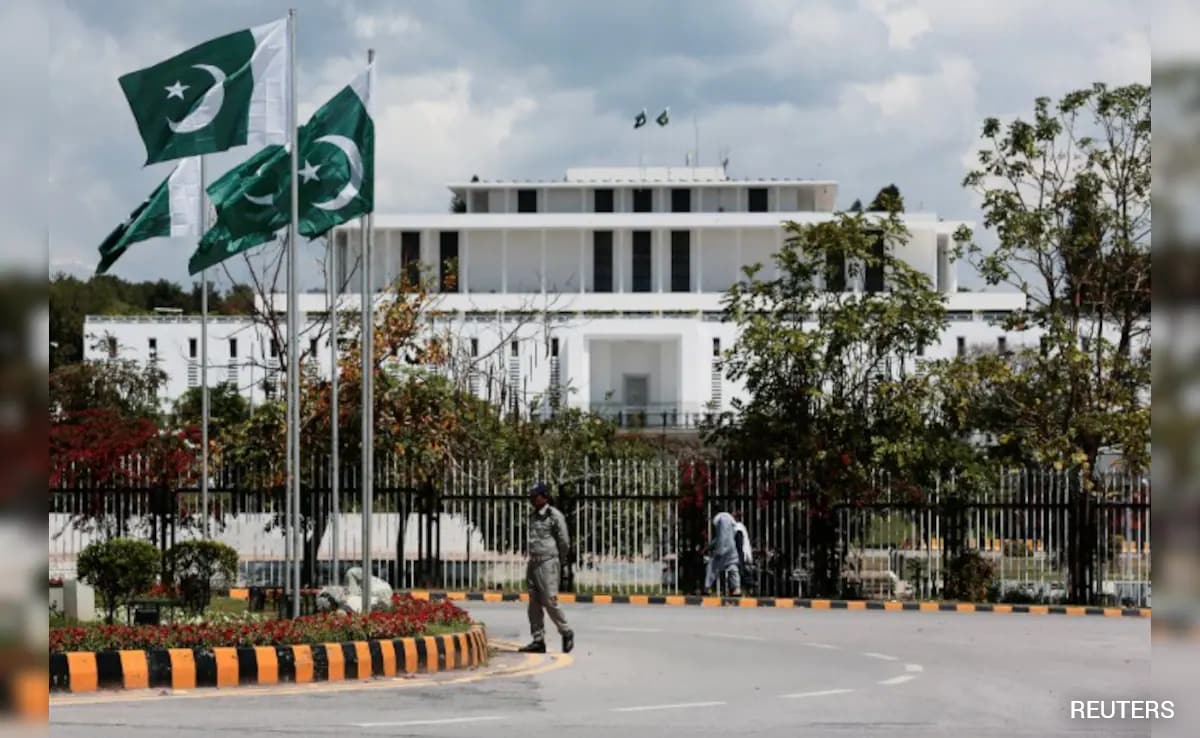
The initiation of direct negotiations between Washington and Tehran in Islamabad on April 10, 2026, represents a fundamental shift from kinetic engagement to a high-stakes diplomatic auction. After six weeks of high-intensity conflict that disrupted 20% of global oil transit, the transition to the Serena Hotel summit is not a pivot toward peace in the traditional sense, but rather a reconfiguration of the theater of operations. The "Islamabad Framework" functions as a temporary cessation of hostilities designed to test the elasticity of each side’s ultimate red lines under the pressure of a strictly defined 14-day expiration window.
To understand the trajectory of these talks, one must analyze the structural mechanics of the negotiation, which are governed by a fragile tri-lateral mediation system and a set of non-negotiable maritime and nuclear constraints.
The Tri-Mediator Architecture: Pakistan, Egypt, and Turkiye
Unlike previous failed attempts at European-led diplomacy, the Islamabad summit is built on a regional mediation tripod. Pakistan serves as the physical host and primary conduit for military-to-military communications, while Egypt and Turkiye provide the geopolitical guarantees required by Tehran and Washington, respectively.
This architecture solves the "trust deficit" by utilizing guarantors who have a direct economic stake in the reopening of the Strait of Hormuz. For Pakistan, the mediation is a bid for regional centrality and debt relief; for Egypt, it is a desperate move to restore Suez Canal transit volumes which plummeted during the hostilities. The structural limitation of this model is that the guarantors possess the authority to facilitate dialogue but lack the enforcement mechanisms to penalize a return to kinetic warfare if the April 22 deadline is breached.
The Symmetric Constraint Model
The negotiations are being conducted through two competing blueprints: the American 15-Point Proposal and the Iranian 10-Point Counter-Proposal. By mapping these documents, we can identify the three "Zero-Sum Zones" where the talks are most likely to fracture.
1. The Maritime Security Bottleneck
The American side, led by Vice President JD Vance and Steve Witkoff, has positioned the unconditional reopening of the Strait of Hormuz as the non-negotiable precursor to any permanent settlement. The US demand is binary: the total restoration of "free and clear" navigation.
In contrast, the Iranian delegation, led by Mohammad Bagher Ghalibaf, views maritime closure not as a tactical error, but as their primary strategic leverage. Tehran’s counter-proposal demands international recognition of Iranian sovereignty over the Strait, effectively attempting to codify their ability to tax or restrict transit as a permanent geopolitical right.
2. The Nuclear Inventory Red Line
The Trump administration’s 15-point plan demands the "total surrender" of Iran’s enriched uranium stockpiles. This is a qualitative shift from the 2015 JCPOA, which focused on monitoring and caps. The current US objective is the physical removal of the inventory from Iranian soil.
Iran’s response is a "Dilution-for-Deregister" strategy. Tehran has offered to dilute its 60% enriched uranium back to 3.67%, but only in exchange for the immediate and permanent removal of all primary and secondary sanctions dating back to 1979. This creates a valuation gap: the US sees uranium removal as a security necessity, while Iran sees it as a high-value commodity to be traded for total economic reintegration.
3. The Reparation Variable
A significant cause-and-effect relationship missed by standard analysis is the role of "War Reconstruction" in the Iranian logic. For the first time, Tehran is demanding formal war reparations for the destruction of energy infrastructure during the February and March strikes.
- US Perspective: Reparations are a political impossibility in a MAGA-doctrine administration.
- Iranian Perspective: Without reconstruction funds, the domestic political cost of a "peace deal" is terminal for the current leadership.
The Cost Function of Failure
The current ceasefire is a "double-sided" pause with an explicit expiration of April 22, 2026. This creates a specific "Time-Value of Diplomacy." As the clock approaches the deadline, the incentive for a "breakout" strike increases if the negotiations appear stalled.
If the Islamabad talks collapse, the return to hostilities will likely skip the previous "graduated escalation" phase. The US has already positioned a second aircraft carrier in the Persian Gulf and erected UHF-Band long-range surveillance assets in Qatar. Conversely, Iran has hardened its power plants and bridges, signaling that the next phase of conflict would target the entirety of the Gulf’s energy export capacity.
Strategic Forecast and Recommendation
The most probable outcome is not a "Grand Bargain," but a "Rolling Truce." Neither side is currently prepared to concede on the sovereign control of the Strait of Hormuz or the total surrender of nuclear material.
The tactical move for regional stakeholders and energy markets is to price in a 20-day extension of the ceasefire, likely mediated by China or Oman if the Islamabad round produces a "framework for further discussion" without a final signature. Analysts should monitor the movement of Iranian Parliament Speaker Ghalibaf; his early departure from Islamabad would serve as the primary indicator of a breakdown in the maritime security protocol. Investors and logistics firms should maintain a "Strait-Alternative" posture until at least the third quarter of 2026, as any agreement signed in Islamabad will require months of verification before global insurance premiums for Gulf transit return to pre-war baselines.