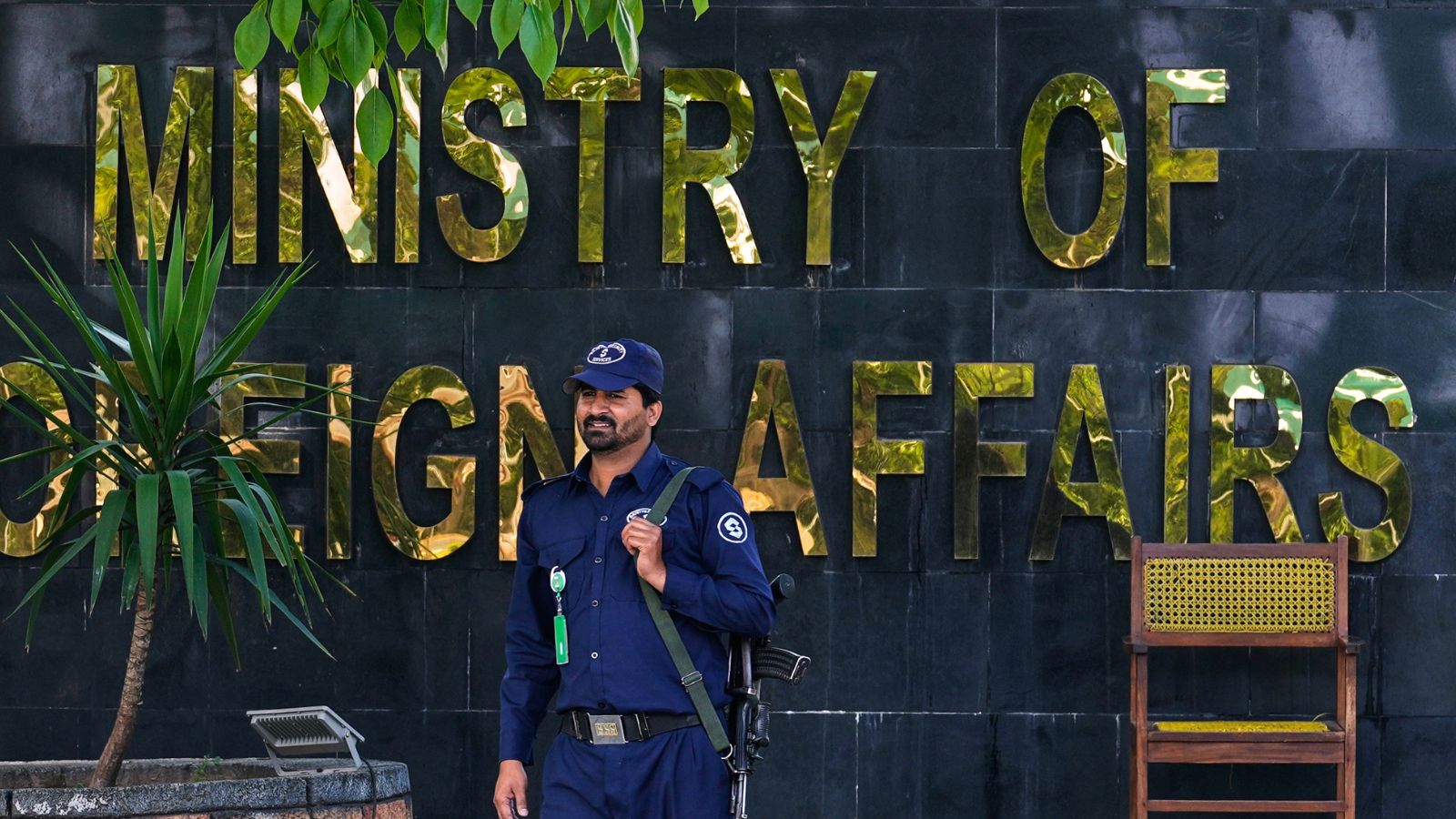
The luxury Serena Hotel in Islamabad is currently a fortress, surrounded by steel shipping containers and elite commandos. This weekend, the Pakistani capital is attempting to pull off the impossible by hosting Vice President JD Vance and a wary Iranian delegation to formalize an end to a war that has nearly collapsed global energy markets. However, the diplomatic mission is already gasping for air. While Washington and Tehran agreed to a 14-day ceasefire on Tuesday, a massive loophole has emerged in the form of Lebanon. Israel continues to hammer Hezbollah positions with unprecedented intensity, claiming Lebanon is a separate theater, while Iran maintains that a truce which excludes its primary proxy is no truce at all.
This mediation effort is not a gesture of goodwill; it is an act of desperate survival for every party involved. For the United States, the goal is to reopen the Strait of Hormuz, where an Iranian blockade has sent oil prices to heights that threaten the American economy. For Iran, it is about halting a direct military campaign that killed its Supreme Leader six weeks ago and decimated its nuclear infrastructure. For Pakistan, the host, it is a high-stakes play to prevent regional spillover that could ignite its own restless border provinces.
The Field Marshal and the President
The path to Islamabad was paved by an unlikely alliance between President Donald Trump and Pakistan’s Army Chief, Field Marshal Asim Munir. In a reversal of decades of frostiness, the Trump administration has leaned heavily on the Pakistani military establishment to serve as the backchannel to Tehran. Munir, whom Trump has publicly referred to as his "favorite field marshal," is leveraging Pakistan’s unique position as a nuclear-armed state with deep historical and religious ties to Iran.
Pakistan’s motivation is grounded in cold reality. The prospect of a fragmented Iran, potentially under Israeli or Western influence, is a nightmare for Islamabad. Such a power vacuum would almost certainly embolden separatist movements in Balochistan, where the Baloch Liberation Army is already a lethal threat. By acting as the bridge, Pakistan is attempting to secure its own borders as much as it is seeking regional peace.
The Lebanon Loophole
The primary obstacle to a definitive deal is a fundamental disagreement over geography. Iran’s foreign ministry spokesman, Esmaeil Baqaei, has been clear: participation in the Islamabad talks is contingent on the U.S. "adhering to its ceasefire commitments on all fronts," specifically Lebanon.
Israel, however, does not see itself as bound by a deal struck between the U.S. and Iran. Prime Minister Benjamin Netanyahu has ordered his cabinet to pursue a separate track with the Lebanese government, one focused on the total disarmament of Hezbollah. The logic from Tel Aviv is simple: a ceasefire with Iran is a strategic pause, but Hezbollah remains an existential threat that must be addressed regardless of what happens in Islamabad.
The Biden-era distinction between different conflict zones has persisted into the current administration. Washington maintains that the truce applies only to direct strikes between the U.S./Israel and Iran. This leaves a massive grey zone. If Israel continues to kill hundreds in Lebanon—as it did in the strikes following the ceasefire announcement—Iran’s hardliners, including the Revolutionary Guards, face immense pressure to retaliate, potentially by closing the Strait of Hormuz again.
Economics of the Strait
The blockade of the Strait of Hormuz is the "gun to the head" of these negotiations. Roughly 20% of the world’s oil supply passes through this narrow chokepoint. While the Revolutionary Guards have signaled they have not launched new attacks during the ceasefire, the blockade remains in place.
Trump’s rhetoric has remained characteristically blunt. He has threatened to "erase a whole civilization" if the passage is not safely and immediately opened. This isn't just a threat of force; it's a reflection of the domestic political pressure in the U.S., where energy costs are a primary driver of public sentiment. The Iranian proposal, which Trump called a "workable basis," likely involves a swap: the lifting of crippling sanctions and recognition of Iranian maritime influence in exchange for the permanent unblocking of the strait and a freeze on nuclear enrichment.
The Serena Hotel Standby
As of Friday evening, the arrival of the Iranian delegation remains a "will they, won't they" scenario. The Pakistani government has declared a two-day public holiday, turning Islamabad into a ghost town to ensure the security of the delegates. The streets are empty, the pavements have been freshly painted, and the world is waiting on a signal from Tehran.
The "Islamabad Gamble" rests on whether JD Vance can offer enough guarantees regarding Israeli restraint in Lebanon to keep the Iranians at the table. If the talks fail, the ceasefire will likely evaporate before the 14-day window expires. We are not looking at a traditional peace process. This is a frantic attempt to stop a regional wildfire that has already consumed the previous geopolitical order.
Success in Islamabad wouldn't mean peace in the Middle East. It would merely mean that the two primary combatants have decided they cannot afford to keep hitting each other directly. The proxy wars in Lebanon, Yemen, and Syria will continue, but the hope is that they can be decoupled from the threat of a global economic meltdown. The coming 48 hours in Pakistan will determine if the world gets a reprieve or if the "shootin' starts" on a scale never seen before.