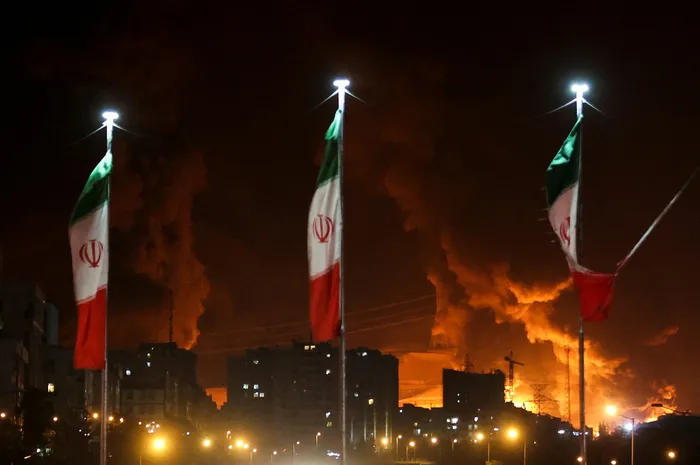
Don’t hold your breath for a diplomatic breakthrough in Pakistan this week. While the White House is busy spinning a narrative of "consequential" progress, the reality on the ground—and at sea—is far more jagged. Iran just signaled it’s likely skipping the next round of US-led peace talks in Islamabad, and frankly, I can’t say I’m surprised. You can’t expect a nation to sit at a negotiating table while its cargo ships are being blown open in international waters.
The two-week ceasefire, which was supposed to be a cooling-off period, has felt more like a regrouping phase for the next explosion of violence. With the Wednesday deadline looming, the "last chance" for peace feels like a scripted prelude to a much larger war. If you’re watching your gas prices or your portfolio, you should be very concerned about the next 48 hours.
The Touska Incident and the Death of Diplomacy
The breaking point wasn't a policy disagreement; it was kinetic. On Monday, the USS Spruance intercepted the Iranian vessel Touska. According to President Trump’s own social media posts, the destroyer "blew a hole in the engine room" after the ship allegedly ignored warnings to stop.
From Washington’s perspective, they're enforcing a blockade to starve Tehran into submission. From Tehran’s perspective, this is "maritime piracy" and a blatant violation of the ceasefire terms. Iran’s Foreign Ministry spokesperson, Esmaeil Baqaei, didn't mince words today. He stated point-blank that Iran has "no plans" for the next round of talks.
When one side is talking about "blowing up the whole country" (Trump’s recent words on Fox News) and the other is vowing "swift retaliation" for seized tankers, the diplomatic track isn't just stalled—it’s incinerated.
Israel’s Operation Eternal Darkness
While the US handles the naval blockade, Israel isn't exactly playing the role of the silent partner. Operation Eternal Darkness has seen an incredible tempo of strikes—reportedly 100 airstrikes in just 10 minutes at its peak—targeting Hezbollah assets across Lebanon.
The disconnect here is massive.
- The US and Israel maintain that Lebanon was never part of the original ceasefire agreement.
- Iran and Pakistan (the mediator) insist that it was.
This isn't just a semantic debate. It’s a fundamental breakdown in the "rules of engagement" for this conflict. Israel has made it clear that they won't stop until Hezbollah’s missile infrastructure is neutralized, ceasefire or no ceasefire. For Iran, seeing their primary regional proxy dismantled while they’re told to "negotiate" is a non-starter.
Why the Strait of Hormuz is the Only Metric That Matters
If you want to know if there will be peace, stop listening to the politicians and start looking at the Strait of Hormuz. It’s the ultimate choke point, and right now, it’s a no-go zone.
Trump has tied the lifting of the blockade directly to a signed peace deal. Iran has countered by demanding international recognition of their sovereignty over the Strait as part of their 10-point plan. We’re seeing a classic "unstoppable force meets immovable object" scenario.
Tehran is losing an estimated $500 million a day because of the blockade. That kind of economic pain usually leads to one of two things: total surrender or total escalation. Given the rhetoric coming out of the Supreme Leader’s office and the recent death toll—which Iran now puts at over 3,300 people—I'd bet on escalation.
The "Last Chance" Trap
There’s a pattern to how these negotiations have played out since February. We see a massive escalation, a sudden "ceasefire" announcement that looks more like a PR stunt, and then a return to the status quo of strikes and counter-strikes.
Trump’s delegation, led by JD Vance and Jared Kushner, is already heading to Islamabad. By sending such high-profile figures, the administration is trying to put the "onus of failure" entirely on Iran. If Iran doesn't show up, the US gets a "justification" for the "oblivion" Trump has been promising on cable news.
It's a high-stakes game of chicken where the "peace talks" are actually a tactical tool used to set the stage for the next phase of the war.
What You Should Watch for Next
The ceasefire officially expires this Wednesday, April 22. Here is the most likely sequence of events:
- The Islamabad "Empty Chair": Iran officially boycotts the talks or sends low-level officials with no power to sign anything, citing the Touska attack.
- The Trump Ultimatum: Expect a late-night social media blitz declaring the "peace deal" dead because of Iranian "obstruction."
- The Power Plant Strategy: Trump has already threatened to hit "every single power plant and bridge" in Iran. If the Wednesday deadline passes without a signature, the air campaign will likely shift from military targets to national infrastructure.
- Oil Market Volatility: If the Strait remains blocked and the war expands to Iranian domestic infrastructure, $150-a-barrel oil isn't just a possibility; it’s an inevitability.
If you’re waiting for a diplomatic "happily ever after," you’re looking at the wrong map. The "peace" in Islamabad is a ghost. The real story is being written by destroyers in the Arabian Sea and fighter jets over Beirut. Brace for a very loud Thursday.