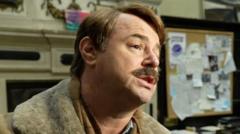
The success of the first season of Rivals on Disney+ was not a fluke of nostalgia. It was a calculated strike on a specific gap in the streaming market that had grown cold and sterile. By leaning into the decadent, high-friction world of 1980s independent television, the production team tapped into a primal desire for scripted drama that prioritizes human impulse over moral lecturing. Now, as the production gears up for its second outing, the pressure has shifted from proving the concept to sustaining a brand that must remain shocking to survive.
Season two isn't just a continuation. It is a massive financial gamble designed to cement the "Cooper-verse" as a permanent fixture in the global content machine. The stakes involve more than just ratings; they involve the viability of high-budget, adult-oriented satire in an era of cautious corporate oversight.
The Economics of Excess
Production insiders suggest the budget for the upcoming episodes has ballooned. This isn't merely to pay for more champagne or faster cars on set. The true cost lies in the scale of the world Jilly Cooper built in her Rutshire Chronicles. To capture the sheer density of her social webs, the production has had to expand its physical footprint, moving beyond the initial country estates into more complex, multi-layered environments that reflect the shifting power dynamics of the late eighties.
The business logic is simple. Disney+ needs "sticky" content that keeps subscribers from churning once they finish a Marvel series or a Star Wars spin-off. Rivals provides a different kind of glue. It appeals to a demographic that remembers the original source material while capturing a younger audience hungry for the "retro-sleaze" aesthetic.
Maintaining this momentum requires a delicate balance. If the show becomes too polished, it loses the gritty, sweat-stained authenticity that made the first season a word-of-mouth hit. If it stays too small, it risks stagnation. The producers are currently betting that bigger is indeed better, pouring resources into elaborate set pieces that aim to dwarf the infamous boardroom battles of the debut season.
Decoding the Bonkier Mandate
The term "bonkier" has been tossed around by cast members in early press junkets, but for an industry analyst, that word is code for narrative escalation. In the world of Rivals, sex and scandal are not just window dressing; they are the primary currency. They are the tools characters use to negotiate mergers, destroy reputations, and secure broadcasting licenses.
The writers face a unique challenge in season two. The shock value of the first season was rooted in its unapologetic embrace of 1980s social mores. To top that, the new episodes must dig into the darker corners of the Rutshire elite. We aren’t just looking at more frequent physical encounters. We are looking at more transactional ones. The power struggle between Rupert Campbell-Black and Tony Baddingham is moving past petty jealousy into the realm of scorched-earth corporate warfare.
The Rupert Campbell-Black Evolution
The protagonist’s journey is the most dangerous element of the new script. In the books, Rupert is a man of contradictions—a predatory charmer who occasionally stumbles into decency. The first season established his magnetism. The second must examine his vulnerability without neutering the character.
Audiences don't want a reformed Rupert. They want a Rupert who is backed into a corner and forced to use every dirty trick in his arsenal to stay on top. The production team knows this. Early reports from the set indicate that the character's personal life will become inextricably linked with his professional survival, making every romantic entanglement a potential liability.
Technical Ambition and the Period Aesthetic
Capturing the 1980s is an expensive exercise in precision. It is very easy to slide into parody. Most period dramas fail because they look like a costume party, with neon lights and shoulder pads acting as a substitute for actual atmosphere. Rivals avoided this trap by focusing on the textures of the era—the heavy wood paneling, the thick smoke in the bars, and the analog hum of the television studios.
For season two, the cinematography is reportedly pivoting toward a more cinematic, wide-angle approach. This is intended to showcase the isolation of the characters within their massive wealth. As the plot moves toward the climax of the franchise's central rivalry, the visual language will likely become more aggressive. Expect sharper contrasts and a color palette that moves away from the warm autumnal tones of the countryside toward the cold, sharp blues of the emerging digital age.
The Casting Gamble
Expansion requires new blood. Introducing new characters into an established ensemble is a high-risk maneuver that can often dilute the chemistry of the lead actors. However, the Rutshire universe is vast, and the second season is expected to bring in figures from Cooper’s other novels to broaden the scope.
The casting department is looking for actors who can handle the "Cooper-esque" dialogue—a specific blend of high-society wit and gutter-level insults. This isn't Shakespeare, but it requires a similar level of theatricality. If the new additions can’t match the intensity of the existing cast, the show risks becoming a soap opera. The difference between a prestige drama and a soap is often just the quality of the delivery.
Resistance to the Clean-Up Trend
One of the most significant "why" factors behind the show's development is its refusal to modernize the past. There is a growing trend in historical fiction to retroactively apply 21st-century sensibilities to characters from the 1900s. Rivals rejects this. It allows its characters to be bigots, snobs, and narcissists.
This authenticity is the show’s greatest asset. By refusing to sanitize the 1980s, the creators have made a world that feels more real than its contemporaries. This grit is what will drive the second season. The conflict isn't just about who owns the TV station; it’s about a clash of egos in a world where there were no HR departments to mitigate the fallout.
The Strategy of the Second Season
The goal here is long-term franchise viability. If season two succeeds, Disney+ has a multi-year property that can spawn spin-offs based on other Jilly Cooper titles like Polo or The Man Who Made Husbands Jealous.
To achieve this, the new episodes must double down on the stakes. The rivalry between Campbell-Black and Baddingham cannot remain a stalemate. There must be a winner and a loser, or at the very least, a shift in the status quo that leaves the audience breathless. The production is currently filming in locations that suggest a move toward more international settings, hinting that the battle for the airwaves is no longer confined to the rolling hills of the English countryside.
The real brilliance of the Rivals adaptation lies in its understanding of power. It recognizes that in the upper echelons of society, there is no distinction between the bedroom and the boardroom. Every move is a gambit. Every relationship is a contract. As the series moves forward, the "bonkier" elements will serve as the engine for a much more cynical exploration of how the modern media landscape was built on the wreckage of these personal wars.
Stop looking for a moral center in this story. There isn't one. The show is an autopsy of ambition, performed with a gold-plated scalpel.
Keep your eyes on the ratings for the first three weeks of the launch. If the numbers hold, we aren't just looking at a successful sequel; we are witnessing the birth of a new era of unapologetic, high-octane adult drama that proves audiences are tired of being told what to think and are ready to simply watch the world burn in a very expensive, very stylish fire.