Twelve people sit in a wood-paneled room in rural Louisiana. The air conditioner hums, a low, persistent rattle that fills the silences between arguments. On the table sit photographs of a crime scene, a stack of forensic reports, and twelve yellow legal pads. These people—teachers, mechanics, retirees—hold a man’s life in their hands.
For decades in Louisiana, the math of justice was different than almost everywhere else in America. If ten of those people thought you were guilty, you went to prison. It didn't matter if two people in the room were screaming that the evidence didn't add up. It didn't matter if those two dissenters saw a hole in the prosecution’s story that the others missed. In the eyes of the state, ten was enough.
That changed with a gavel strike in Washington D.C.
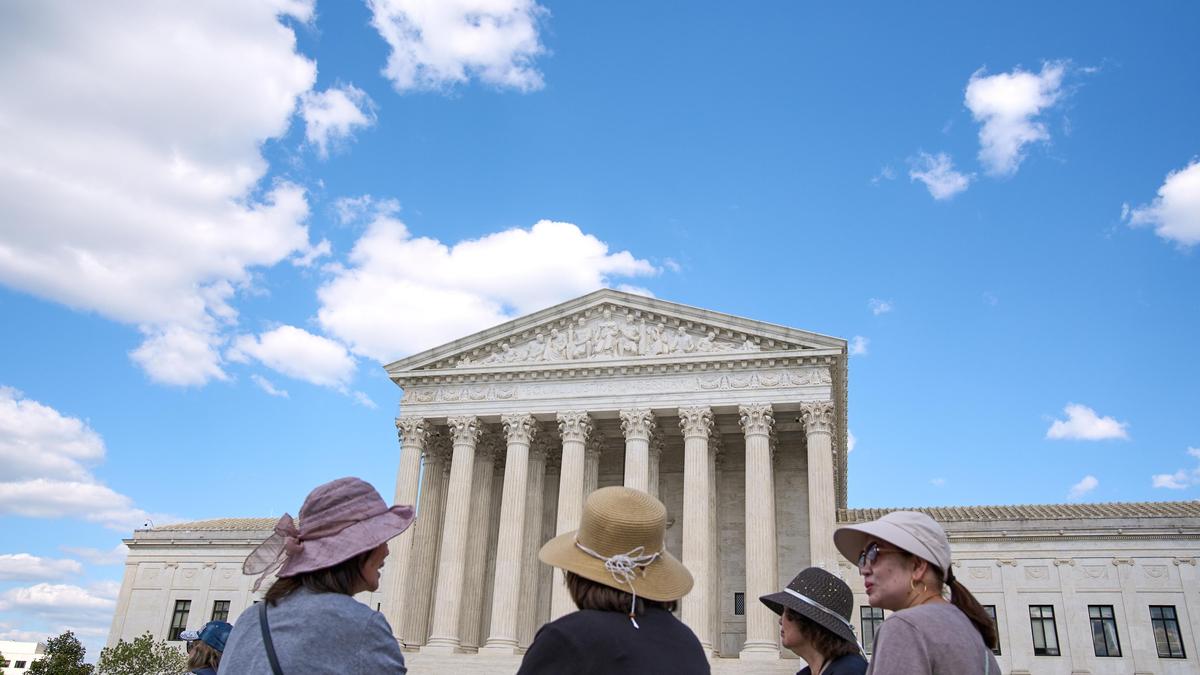
When the U.S. Supreme Court handed down its decision in Ramos v. Louisiana, it didn't just tweak a legal technicality. It dismantled a century-old engine designed to silence doubt. To understand what the Court changed, you have to understand the weight of a single voice.
The Ghost in the Jury Room
Imagine a man named Elias. He is hypothetical, but his story is the story of thousands of Louisianians. Elias was accused of a robbery he insisted he didn't commit. At his trial, the evidence was shaky—a blurry security feed and a witness who seemed unsure. In the jury room, two jurors saw the gaps. They refused to vote guilty. They pointed out the inconsistencies.
Under the old rules, their voices were ghosts. The foreman simply knocked on the door, handed the deputy a slip of paper that read 10-2, and Elias was sentenced to life without parole.
This wasn't an accident of history. The non-unanimous jury system was a relic of the 1898 Louisiana Constitutional Convention. The stated goal of that convention was to "perpetuate the supremacy of the white race." By allowing a 10-2 or 9-3 verdict, the state ensured that even if a few Black citizens made it onto a jury, their votes could be functionally erased. If they disagreed with the majority, the majority could simply outvote them.
The Supreme Court looked at this history and saw a violation of the Sixth Amendment. The right to a jury trial, the Court argued, has always implied a unanimous jury. Anything less isn't a jury trial at all; it’s a headcount.
The Massive Tidal Wave of Retroactivity
The first thing the Court changed was the future. From the moment the Ramos decision was signed, every new criminal trial in Louisiana required all twelve jurors to agree. If one person has a reasonable doubt, the state cannot convict. This restored the "burden of proof" to its highest peak. Prosecutors can no longer play the odds, hoping to convince just enough people to "get the win." They have to convince everyone.
But the real earthquake happened when the conversation turned to the past.
Louisiana found itself staring at a mountain of old cases. Thousands of men and women were sitting in cells at Angola and Hunt Correctional Center because of 10-2 or 11-1 verdicts. Some had been there for forty years.
The legal system hates looking backward. It prizes "finality." Judges and politicians argued that reopening every non-unanimous case would overwhelm the courts, traumatize victims who would have to testify again, and create chaos. But the human cost of "finality" is measured in birthdays missed and funerals unattended by those who might be innocent.
The Divided Path of Justice
The Supreme Court eventually ruled in a subsequent case, Edwards v. Vannoy, that the Ramos decision did not require states to apply the new rule retroactively to cases that were already "final" on direct appeal.
This created a heart-wrenching divide.
If your case was still in the middle of an appeal when Ramos was decided, you got a new trial. You got a second chance at life. But if your appeals had run out a week before the decision, you were out of luck. You remained in prison under a conviction that the highest court in the land had essentially declared unconstitutional in principle, but not in practice.
Louisiana's lawmakers and local district attorneys were left to decide: Do we stick to the letter of the law, or the spirit of justice?
In New Orleans, the District Attorney’s office began a massive review of old non-unanimous verdicts. They didn't wait for a mandate from Washington. They realized that a conviction won by silencing dissent is a conviction built on sand. Across the state, hundreds of people have since been released or granted new trials.
What a Vote is Worth
The shift in Louisiana isn't just about the people in orange jumpsuits. It's about the people in the jury box.
When you know your vote can be ignored, you participate differently. You might speak less forcefully. You might give in to the majority sooner because you feel your dissent is a waste of breath. The Supreme Court's intervention changed the psychology of the room. It gave every juror a veto.
It forced citizens to talk to one another. You can no longer ignore the person at the end of the table who thinks the police got the wrong guy. You have to listen to them. You have to answer their questions. You have to engage with their doubt.
That process—the messy, slow, frustrating process of reaching a consensus—is the only thing that separates a democracy from a mob.
The Residual Silence
Despite the progress, the change remains incomplete for many. There are still hundreds of individuals in Louisiana prisons serving sentences handed down by non-unanimous juries whose cases don't qualify for the "retroactive" window. They are the leftovers of an era the state has admitted was flawed.
For them, the Supreme Court changed the law, but it didn't change their reality. They watch from behind bars as others walk free on the exact same legal grounds. It is a haunting disparity.
The air in those courtrooms is clearer now. The math is simpler. Twelve equals twelve. No more fractions. No more ghosts. But the legacy of the old way still lingers in the halls of the state's oldest prisons, a reminder that while the law can change in an afternoon, the scars it leaves take generations to heal.
The door to the jury room swings shut. The hum of the air conditioner continues. But now, every person inside knows that if they stand their ground, the world has to stop and listen.