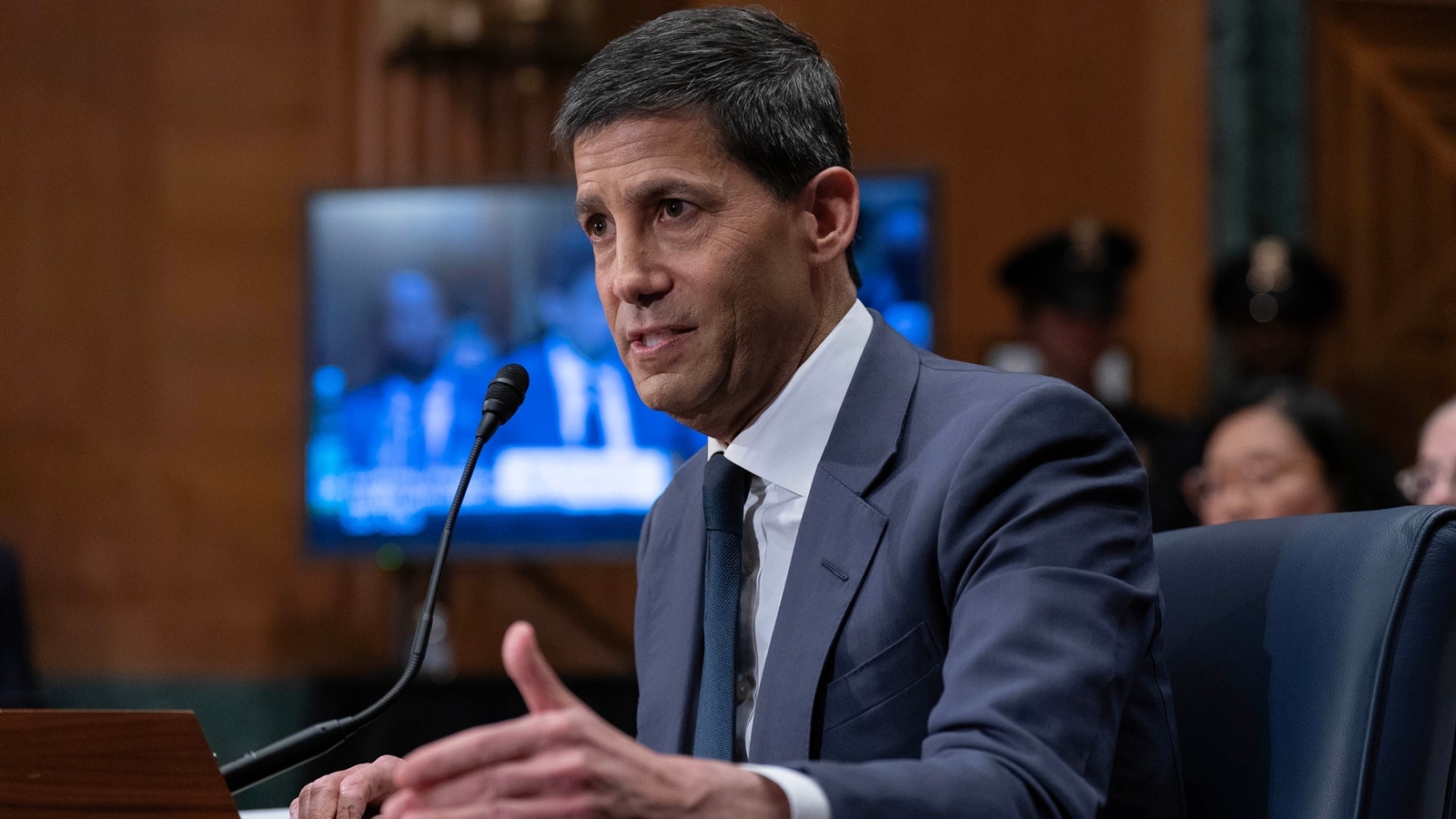
The Senate Banking Committee just rubber-stamped Kevin Warsh’s path to the Federal Reserve chair, and the financial press is busy swooning over his "impeccable credentials." They see a smooth transition. They see a steady hand. They are completely blind to the fact that Warsh isn’t arriving to steer the ship; he’s arriving to scuttle it.
The consensus narrative is that Warsh represents a return to "rules-based" policy. It sounds boring. It sounds safe. In reality, it is a frontal assault on the discretionary power that has allowed the Fed to play God with the global economy since 2008. If you think this is just another change in leadership, you haven't been paying attention to the plumbing of the bond market.
The Myth of the Neutral Fed Chair
Most analysts treat the Fed Chair like a neutral umpire calling balls and strikes. That’s a fantasy. Every Chair brings a specific philosophy of power. Jerome Powell and Ben Bernanke believed in the "Whatever It Takes" school of thought—a philosophy that treated the balance sheet like an infinite credit card to paper over structural fiscal rot.
Kevin Warsh is the antithesis of this. I’ve sat in rooms with macro traders who have been betting on this shift for years, and the fear is palpable. Why? Because Warsh actually believes in market signals. For the last two decades, the Fed has told the market what to think. Warsh wants the market to tell the Fed what to do.
This isn't a "pivot." It’s a regime change.
The media focuses on the Senate vote count. They should be focusing on the Taylor Rule. If Warsh forces the Fed to adhere to a strict mathematical formula for interest rates, the "Fed Put"—that invisible safety net that saves investors from their own stupidity—evaporates overnight.
Why the Senate Hurdles Were a Distraction
The political theater in the Senate was a smokescreen. Critics pointed to Warsh’s hawkishness during the Great Recession, claiming he "got it wrong" on inflation. This is the ultimate lazy take. Warsh wasn't wrong about the risks; he was right about the incentives.
He understood that once you start Quantitative Easing (QE), you can’t stop. It’s a drug. The "hurdle" he cleared in the Senate wasn't about his fitness for the job; it was about whether the political class is ready to accept a Fed that stops printing money to fund their deficits.
By confirming him, the Senate has inadvertently signed a death warrant for the era of easy fiscal spending. You cannot have a Warsh-led Fed and a $2 trillion annual deficit simultaneously without causing a massive spike in real yields. One of them has to break. My bet is on the Treasury.
The Hidden War on the Dual Mandate
The Fed is legally obligated to pursue "maximum employment and stable prices." This is the "Dual Mandate." In practice, it’s been an excuse to prioritize employment at the cost of destroying the dollar’s purchasing power.
Warsh has been a vocal critic of this mission creep. He views the Fed as a lender of last resort, not a central planner of the labor market. Expect him to aggressively narrow the Fed’s focus.
- The Status Quo: The Fed tries to micromanage unemployment down to the decimal point.
- The Warsh Disruptor: The Fed focuses exclusively on price stability and financial plumbing, letting the labor market find its own equilibrium.
This is the nuance the "Mainstream Media" misses. They think he’s a "hawk." He’s actually a "structuralist." He believes that by trying to fix everything, the Fed eventually fixes nothing and breaks the price discovery mechanism of capitalism itself.
The $35 Trillion Elephant in the Room
Let's talk about the math that nobody in Washington wants to touch. The US national debt is a runaway train. For years, the Fed has been the "buyer of last resort" for Treasuries, keeping interest costs manageable.
Warsh has signaled that he is not interested in being the Treasury's piggy bank. This is the most dangerous game in global finance. If the Fed stops suppressing yields, the interest on the debt will quickly become the largest line item in the US budget, surpassing defense and social security.
Imagine a scenario where the Treasury holds an auction and nobody shows up because the Fed isn't there to backstop the bid. That’s the "Warsh Reality." It forces a level of fiscal discipline that Washington hasn't seen since the 1990s.
Stop Asking About "Rate Cuts"
The most common question on Wall Street is: "When will Warsh cut rates?"
You are asking the wrong question.
The right question is: "When will Warsh stop manipulating the yield curve?"
The obsession with the "dots" on the Fed's plot chart is a distraction. Warsh’s real impact will be on the balance sheet. Shrinking the balance sheet (Quantitative Tightening) is how you actually drain the swamp of excess liquidity. It’s painful. It causes volatility. It makes the "everything bubble" pop.
I’ve seen portfolios liquidated in minutes when the liquidity tide goes out. Warsh is the guy who turns off the tap.
The Credibility Trap
The Fed’s credibility is at an all-time low. They called inflation "transitory" until it nearly burned the house down. They’ve become a political football.
Warsh knows this. His strategy is to restore credibility through transparency and predictability. But there is a massive downside: the market hates predictability when it involves pain.
The transition from a discretionary Fed to a rules-based Fed is like a patient going off high-dose morphine. The withdrawal symptoms include:
- De-leveraging: High-growth tech companies that rely on cheap debt will face a reckoning.
- Asset Re-pricing: Real estate and equities will have to be valued on actual cash flows, not "liquidity premiums."
- Bank Failures: Small and medium-sized banks that haven't managed their interest rate risk will be exposed.
Warsh won’t save them. He’s spent a decade writing about why "Too Big to Fail" is a cancer. If a bank goes under because it made bad bets, a Warsh Fed is likely to let it fail to "purify" the system.
The Volatility of Truth
The Senate didn't just confirm a nominee; they invited a wrecking ball into the Eccles Building.
The "lazy consensus" says Warsh is a safe, Republican-leaning economist who will play nice with the administration. This ignores his entire intellectual history. He is a man who values the integrity of the price signal above the stability of the S&P 500.
For the last 15 years, the Fed has been the primary driver of wealth inequality by inflating asset prices. Warsh is the first nominee in a generation who seems willing to prioritize the long-term health of the currency over the short-term gains of the donor class.
The confirmation hurdle was the easy part. The hard part is what happens when the market realizes the "Fed Put" is dead and buried.
Prepare for a world where the central bank doesn't care about your 401(k).
Sell your illusions. The era of the "God-Complex" Fed is over.
The demolition has begun.