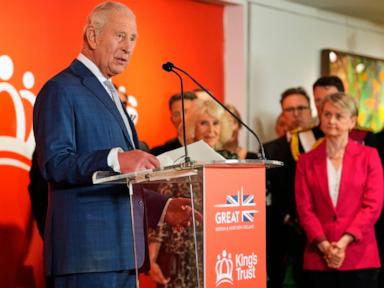
Fifty years ago, a young Prince of Wales used his Navy severance pay to fund a small group of community projects. He didn't just write a check. He bet on the idea that young people facing "hopeless" circumstances—poverty, prison records, or homelessness—actually just needed a bridge to the workforce. Today, that bet has paid off for over a million people. The Prince’s Trust recently took its 50th-anniversary celebration to New York City, proving that the King’s vision for youth employment has outgrown the borders of the United Kingdom.
The NYC gala at Casa Cipriani wasn't just a glitzy party for socialites. It was a strategic move to cement the global reach of a charity that has quietly become one of the most effective employment engines in the world. While critics often dismiss royal patronages as mere ribbon-cutting exercises, the data tells a different story. The Trust has a track record of returning nearly $4 in social value for every $1 spent. That’s a return on investment most hedge funds would envy.
Why the NYC Gala Matters for Global Jobs
Moving the spotlight to New York marks a shift in how the organization views the global labor market. It’s no longer just about British kids in post-industrial towns. The Trust International is now active in over 20 countries, including the US, where the wealth gap and youth unemployment rates create a volatile mix.
The gala attracted a mix of Hollywood royalty and business titans. Idris Elba, who famously received a £1,500 grant from the Trust to join the National Youth Music Theatre, often speaks about how he wouldn’t have a career without it. His presence in New York serves as a living case study. When a kid from Hackney can become a global icon because of a small grant, it proves the system works.
Lionel Richie and Edward Enninful were also there, highlighting the charity's deep ties to the creative industries. But the real focus was on the "Team" program and the "Get Into" initiatives. These aren't just workshops. They’re intensive, industry-specific training modules developed with partners like Amazon, HSBC, and Marks & Spencer. The NYC event was designed to woo American corporate partners to adopt this model.
The Reality of Helping the Hardest to Reach
Helping someone who already has a degree get an internship is easy. That’s not what the Trust does. They go after the "NEETs"—those Not in Education, Employment, or Training. These are the people society has largely written off.
The Enterprise Program
This is where the magic happens for young entrepreneurs. Since 1983, the Trust has supported over 90,000 start-ups. I’ve seen how these programs work on the ground. They don’t just hand over cash. They provide a mentor for up to three years. Most small businesses fail because the founder doesn't have a safety net or a sounding board. The Trust provides that net.
The Get Into Program
This is a four-to-six-week program that gives young people the skills they need to find work in specific sectors like retail, hospitality, or tech. It’s a direct response to the "no experience, no job" paradox. By partnering with major employers, the Trust ensures that there is a real job waiting at the end of the training. It’s a pragmatic, non-nonsense approach to social mobility.
Debunking the Myths of Royal Charities
Some people think these organizations are just about PR for the monarchy. That’s a lazy take. If you look at the governance of The Prince’s Trust, it’s run like a high-performance corporation. They track outcomes with clinical precision. They know how many of their participants are in sustained employment six months after leaving a program.
The King has always been ahead of the curve on social issues. He was talking about plastic pollution in the 70s and urban regeneration in the 80s. His focus on youth unemployment was equally prophetic. He understood that a generation without work is a recipe for social unrest. The NYC gala celebrated 50 years, but it also highlighted the fact that the work is harder now than it was in 1976.
Digital transformation and AI are shifting the goalposts for entry-level jobs. The Trust is pivoting to meet this. They’re moving into green jobs and tech-heavy roles, ensuring that the young people they help aren't just getting jobs that will be automated away in five years.
The Economic Impact You Can't Ignore
Let's talk numbers. Youth unemployment costs the global economy billions in lost productivity and increased social spending. By moving a young person from benefits into a tax-paying job, the Trust changes the fiscal trajectory of a community.
- Over 1 million young people supported since 1976.
- Operations in 20+ countries across the Commonwealth and beyond.
- Three out of four young people on Trust programs move into work, education, or training.
These aren't just "feel-good" stats. They represent a fundamental shift in how we approach social welfare. Instead of a handout, it’s a hand up. It sounds like a cliché, but when you see the results in person, it’s hard to argue with the logic.
What Businesses Can Learn from the Trust Model
American companies looking to improve their DEI (Diversity, Equity, and Inclusion) numbers should pay attention. The Trust doesn't just talk about diversity; it builds the pipeline. They find talent in zip codes that recruiters usually ignore.
The NYC gala was a call to action for the US private sector. The model is proven. The results are audited. The only thing missing is wider adoption across the States. If you're a business leader, the next step isn't just donating to a gala. It's looking at your entry-level hiring practices.
If you want to get involved, don't just look for the next Ivy League grad. Look for the organizations that are training the "hidden" workforce. Support programs that offer mentorship, not just a one-off seminar. The Prince’s Trust has spent 50 years perfecting this. Use their blueprint. Stop complaining about the talent gap and start building the bridge yourself. Go to the Prince’s Trust website, look at their corporate partnership tiers, and see how your company can provide "Get Into" placements. It's the most direct way to impact the future of the workforce.