The Russian state has abandoned the old playbook of heavy-handed television propaganda to reach its youngest citizens. Instead, a sophisticated, well-funded infrastructure is transforming teenagers into a decentralized volunteer force of digital influencers. This is not merely a collection of patriotic social media posts; it is a systematic integration of the state’s military objectives into the lifestyle content of Gen Z. By utilizing the logic of the attention economy, Moscow is attempting to manufacture a grassroots consensus for a protracted war, bypassing traditional media filters that youth have long since learned to ignore.
The strategy hinges on a simple realization. A teenager will swipe past a government spokesperson in seconds, but they will watch a three-minute vlog from a peer who happens to be visiting a "reconstructed" city in occupied Ukraine or unboxing military-themed streetwear. This "soft" mobilization leverages the existing aesthetics of TikTok and Telegram to make the war feel like a background element of daily Russian life rather than a catastrophic geopolitical event.
The Architecture of the State Managed Feed
The engine behind this movement is a network of government-aligned "NGOs" and media incubators, most notably groups like the Internet Development Institute (IRI). This organization alone has received hundreds of millions of dollars in recent years to fund "socially significant" content. The goal is to move away from the "Z-blogger" archetype—angry, middle-aged men in fatigues—toward a demographic that looks and sounds like the audience it targets.
They are building a talent pipeline. Young creators are identified in regional competitions, brought to Moscow for workshops, and taught how to optimize their reach. The carrot is not usually a direct paycheck for a specific pro-war video. It is access. For a 17-year-old in a remote Siberian town, the promise of followers, professional equipment, and invitations to high-profile forums in the capital is a powerful incentive. They are given the tools to grow their personal brands, provided that their content remains "patriotic" in its broader orientation.
This creates a self-censoring ecosystem. These influencers don’t need to be told exactly what to say; they understand the boundaries of the sandbox. They produce content that emphasizes national pride, the heroism of the military, and the supposed "rebuilding" of territories, all while maintaining the high production value and fast-paced editing that their peers expect.
Aesthetics as a Weapon of War
The visual language of this campaign is crucial. It borrows heavily from Western streetwear culture and gaming aesthetics. We see influencers participating in "patriotic flashmobs" that look more like music videos than political rallies. The war is presented through the lens of a "lifestyle choice."
The Gamification of Combat
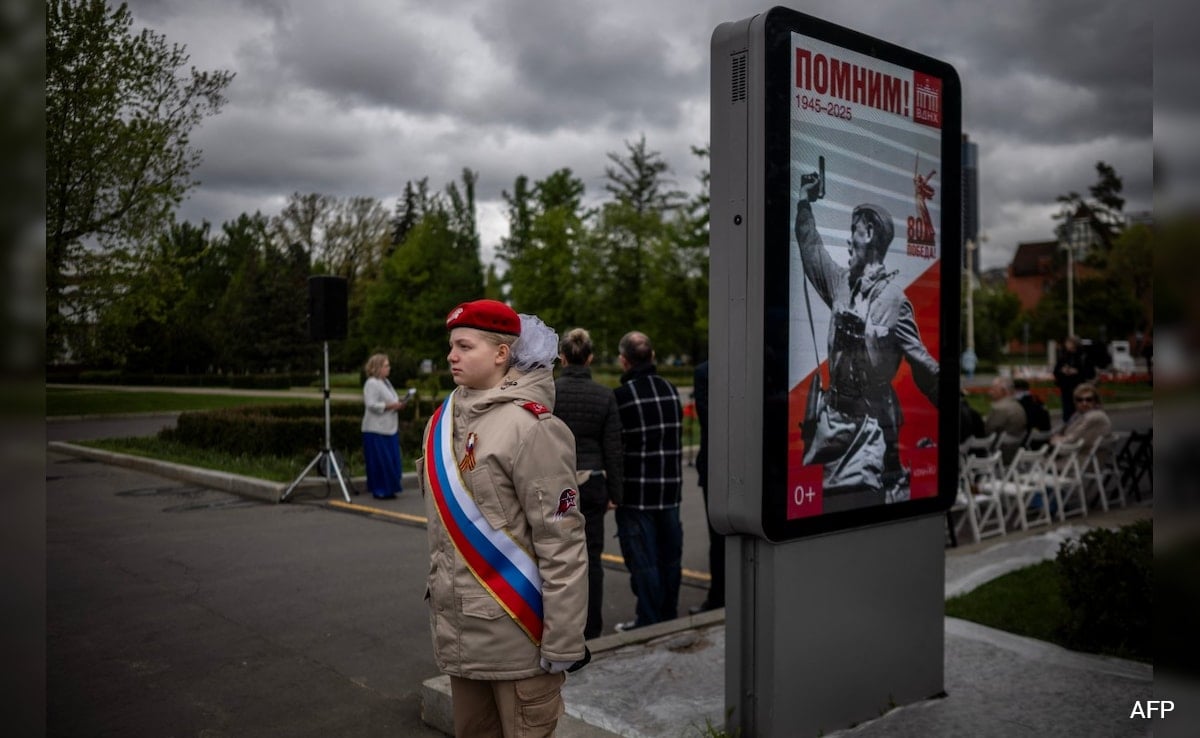
One of the most effective tactics is the blending of military training with gaming. Youth organizations like Yunarmiya (the Young Army) utilize high-tech simulators and drone piloting courses. On social media, these activities are framed as cool, tech-forward hobbies. When an influencer posts a video of themselves mastering a drone simulator, they are not just showing off a skill; they are normalizing the technology of modern warfare.
The Myth of the Rebuilt City
A significant portion of this digital effort focuses on the occupied regions of Ukraine. Influencers are frequently sent on "humanitarian" tours to cities like Mariupol. Their content focuses on new apartment blocks, shiny playgrounds, and local youth "grateful" for Russian intervention. By focusing on these curated snapshots of normalcy, the influencers provide a domestic audience with an alibi for the destruction that preceded the construction. It is a form of selective reality that works because it mimics the standard "travel vlog" format.
Bypassing the Western Tech Shield
Despite the exit of many Western tech giants from the Russian market and the blocking of platforms like Instagram and Facebook, the Russian digital draft remains resilient. The domestic platform VK (formerly VKontakte) has been transformed into a closed-loop ecosystem. After being brought under the control of state-affiliated entities, VK has aggressively pushed its "Clips" feature to rival TikTok.
The algorithm on VK is not neutral. It is tuned to amplify content that aligns with national interests. When a young creator produces a video that fits the state narrative, they receive an artificial boost in views, leading to genuine organic growth. This creates a feedback loop where "correct" political stances are rewarded with social capital.
Telegram remains the Wild West of this information war. It is where the more explicit, hard-edged content resides. Here, teen-oriented channels act as bridges between the sanitized world of VK and the brutal reality of the front lines. They repost "heroic" footage from the trenches alongside memes and pop culture news, blurring the line between entertainment and indoctrination until the distinction disappears entirely.
The Erosion of the Counter Narrative
For years, the Russian opposition relied on YouTube to reach the youth. The high-production investigations of the late Alexei Navalny were a masterclass in using digital tools to challenge power. However, the state has learned. They have moved from defensive blocking to offensive saturation.
The current strategy is to drown out dissent with sheer volume. For every one video criticizing the war, there are now a hundred videos of attractive, energetic teenagers talking about the "new opportunities" in a sovereign Russia. The state is not trying to win an argument; it is trying to change the subject. They want to make the war feel inevitable, boring, and ultimately, part of the scenery.
The Psychological Toll of Virtual Mobilization
We must consider the long-term impact on a generation raised in this digital hall of mirrors. When your social status and career prospects are tied to the promotion of a state-sanctioned reality, the capacity for critical thought is systematically degraded. This is not the "brainwashing" of the 20th century, which relied on isolation. This is something more modern: the hijacking of the dopamine hit.
The influencers themselves are often victims of the system they serve. They are encouraged to tether their identity to a political moment that may eventually collapse. If the winds change, these teenagers will find themselves on the wrong side of history with a digital trail that lasts forever. But for now, the allure of the "like" button is stronger than the fear of the future.
The Flaw in the Machine
Despite the massive investment, the Kremlin’s digital army faces a fundamental problem: authenticity. Genuine influence is built on trust, and the more the state’s hand becomes visible, the more the content loses its power. There is a growing subculture of "offline" resistance among Russian youth—teenagers who are simply opting out of the digital ecosystem altogether or using sophisticated VPN networks to maintain a connection to the global information space.
The state can buy views, and it can buy high-quality cameras, but it cannot buy the genuine enthusiasm of a generation that sees its future being traded for a nineteenth-century territorial land grab. The digital draft is a massive experiment in psychological engineering, but like all top-down social projects, it struggles to account for the unpredictability of human nature.
Strategic Realities for the West
The West’s response to this digital mobilization has been largely reactive. Sanctions on individuals do little to stop a decentralized movement of teenagers. To counter this, there needs to be a shift in focus toward supporting independent Russian-language content creators who can operate outside the Kremlin’s reach.
It is not enough to fact-check Russian propaganda. Fact-checking is an intellectual exercise that rarely reaches the emotional core of the audience. The counter-narrative must be as aesthetically compelling and culturally relevant as the state’s output. It must offer a vision of the future that is more attractive than the militarized nostalgia being sold by the Kremlin.
The battle for the Russian digital soul is not being fought in parliament buildings or on conventional news sets. It is being fought in the comments sections and the short-form video feeds of millions of smartphones. If the state succeeds in making the war a permanent feature of the Russian youth's identity, the consequences will be felt for decades, long after the current conflict has reached its conclusion.
Watch the background of the next viral video coming out of Moscow. Don't look at the person talking; look at what they are normalizing. The most dangerous propaganda doesn't look like a speech. It looks like a lifestyle.
Identify the creators, map the funding, and recognize that in the current era, the most effective soldier isn't the one carrying a rifle—it's the one holding the ring light.