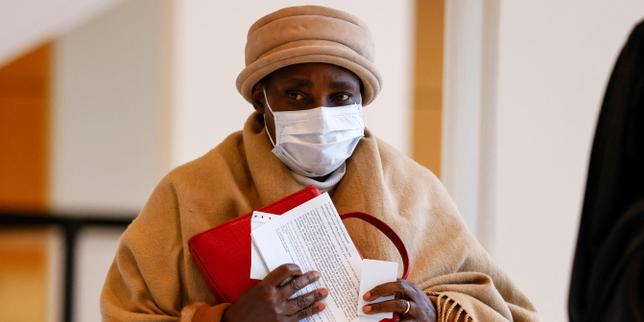
Agathe Habyarimana isn't just a widow of a fallen president. For decades, the woman often called the "Kanjogera" of Rwanda has lived in a legal gray area in France, neither extradited nor prosecuted, despite being a central figure in the 1994 genocide against the Tutsi. That changed when the Paris Court of Appeal threw out a previous decision to drop the case. The court didn't just disagree with the lower judges; it essentially tore up the script that had allowed her to evade a trial for years.
The investigative judges originally claimed the evidence was too thin. They argued that because so much time had passed, the trail had gone cold. They pointed to the "total lack of material evidence" and suggested that witnesses were either dead or unreliable. It looked like the end of the road for the victims seeking justice. But the Court of Appeal saw things differently. It ruled that the investigation was "incomplete" and "premature." This isn't just a procedural hiccup. It's a fundamental shift in how the French judiciary views its responsibility toward the darkest chapter of Rwandan history.
Why the Non-Lieu Was a Legal Failure
A "non-lieu" is basically a judge saying there’s no case to answer. In Habyarimana’s situation, the initial judges seemed exhausted by the complexity. They argued that since she wasn't physically seen holding a machete, she couldn't be held responsible for the million lives lost. That’s a dangerously narrow view of how genocides work. They don't happen because of a few lone actors. They happen because of a "Power" structure—the Akazu.
The Court of Appeal’s ruling highlights that being at the heart of the inner circle matters. You don't need to stand at a roadblock to be a primary architect of mass murder. The judges noted that the previous investigation ignored the psychological and political influence she wielded. She was the backbone of the regime. Ignoring her role in the extremist Hutu Power movement is like trying to explain the mechanics of a car while ignoring the engine.
The Evidence the Court Wants Re-examined
The appellate judges were specific about what was missing. They didn't just say "try harder." They pointed to specific gaps that look less like accidental omissions and more like a lack of will.
- The Akazu Network: The court wants a deeper look into the "Little House," the inner circle of Hutu extremists. Witnesses have long claimed Agathe was the strategist of this group. The investigation needs to map out how orders flowed from her residence.
- The Media Influence: The role of the RTLM radio station isn't a secret. The court is interested in how the Habyarimana inner circle funded and directed the broadcasts that told people to "clear the tall trees."
- Witness Credibility: The lower court dismissed several witnesses because their testimonies varied over twenty years. The Court of Appeal reminded everyone that trauma and time affect memory, but they don't automatically make a witness a liar.
The judges are demanding a confrontation of facts. You can't just say "it was a long time ago" when the survivors are still standing right there.
France's Complicated Relationship with Justice
France has been a sanctuary for many figures of the old Rwandan regime. It's an uncomfortable truth. For years, the diplomatic ties between Paris and the Habyarimana government created a shield. When Agathe fled to France in April 1994, she was welcomed. She was even given a "gift" of money from the French government to help her settle.
That history makes this recent ruling even more heavy. The court is finally signaling that political convenience shouldn't trump international law. The refusal to grant her asylum—which happened years ago—already proved the French state knew she was "suspected of having participated" in crimes against humanity. The fact that she was allowed to stay in a legal "no-man's land" for so long is a stain on the system. This new ruling starts to scrub that stain away.
What Happens to the Defense Strategy Now
Her lawyers are doing exactly what you'd expect. They're crying foul. They argue that Agathe is an old woman being persecuted for her name. They claim the Rwandan government is pulling the strings of the French courts. It's a classic distraction technique.
But the "delay" argument is their strongest card. They say a fair trial is impossible after thirty years. Honestly, they have a point about the difficulty, but they’re wrong about the impossibility. Modern international law, from Nuremberg to the ICTY, is built on the idea that some crimes don't have an expiration date. If the French investigators actually follow the Court of Appeal's instructions, they’ll find that the documentary evidence from 1994 hasn't disappeared. It's just sitting in archives, waiting for someone with the guts to read it.
The Real Impact on Survivors
For the Collectif des Parties Civiles pour le Rwanda (CPCR), this wasn't just a win. It was a lifeline. Imagine watching the person you believe planned your family's murder live a quiet life in the suburbs of Paris for three decades. The psychological toll of that "non-lieu" was massive. It felt like the French state was saying the victims didn't matter enough to justify a long trial.
The appellate ruling validates their pain. It says the law sees them. It recognizes that complicity isn't just about who pulled the trigger, but who paved the way. The court’s insistence on "going to the end" of the investigation means that even if she’s never convicted, the facts will finally be put on the record in a way that can't be ignored.
What to Watch for in the Coming Months
The case is back in the hands of the investigative judges, but they’re under a microscope now. They can't just sit on the file. Expect to see:
- New Depositions: Investigators will likely head back to Kigali or use video links to re-interview key witnesses who were previously dismissed.
- Focus on the Habyarimana Foundation: Analysts will be looking at financial records to see how money was moved just before the genocide began.
- Pressure on Extradition: While France rarely extradites to Rwanda, this ruling makes the "trial in France" option much more likely than a total dismissal.
This isn't about revenge. It's about the integrity of the judicial system. You don't get to retire from a genocide. If the French court follows through on what this ruling prescribes, we’re looking at one of the most significant trials in the history of universal jurisdiction.
Stop waiting for a "perfect" time for justice. There isn't one. The evidence is there, the witnesses are ready, and the highest court has spoken. The next step is for the prosecutors to actually do their jobs without looking at the political calendar. Justice delayed is justice denied, but justice eventually is better than a lie.