The ink on a map is never just ink. To the people sitting in the high-backed chairs of the Florida State Capitol, a line is a mathematical necessity, a tactical boundary, a way to secure a future for a party. But for a woman like Sarah—a hypothetical resident of a North Florida neighborhood that has voted together for thirty years—that line is a scalpel. It moves silently through her street, separating her house from the community center where she votes, the church where she organizes, and the neighbors who share her specific local concerns.
When the Florida legislature approved a new congressional map designed to favor one side of the aisle, they weren't just moving borders on a screen. They were re-engineering the very concept of a "community of interest." Expanding on this theme, you can also read: Maritime Interdiction Logic and the Geography of Denial in the Eastern Mediterranean.
History doesn't repeat, but it certainly rhymes. Florida has long been the theater for these dramas, a state where a few thousand votes can swing the destiny of the nation. In this most recent session, the tension wasn't just between Democrats and Republicans; it was a struggle over the definition of fairness in a state that had previously passed "Fair Districts" amendments. Those amendments were supposed to act as a shield, preventing politicians from picking their voters. Yet, the new map arrived with a clear intent: to maximize the seat count for the GOP in a looming midterm election.
Politics is often a game of geometric chess. Analysts at TIME have shared their thoughts on this matter.
Consider how a district is shaped. You can "pack" voters of one persuasion into a single, oddly shaped blob, ensuring they win that one seat by 90% while losing every surrounding area. Or you can "crack" them, splitting a cohesive community into three or four different districts so their voice is diluted to a whisper in each one. The new Florida map leans into these strategies with a boldness that caught even seasoned observers off guard.
The human cost of this geometry is a sense of political displacement. When a district is drawn to be "safe" for one party, the primary becomes the only election that matters. The general election—the moment where candidates usually have to reach across the fence to talk to their neighbors—becomes a formality.
In a world of safe districts, the incentive to compromise evaporates. Why talk to someone with a different view when your job depends entirely on pleasing the most extreme wing of your own base?
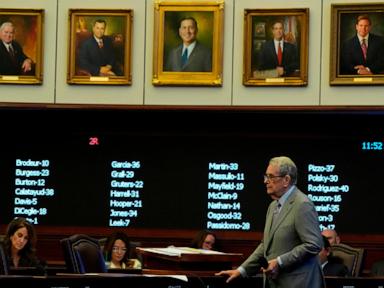
The debate in Tallahassee was loud, filled with procedural protests and impassioned speeches about representation. At its heart was the dismantling of a specific district in North Florida that had historically allowed Black voters to elect a candidate of their choice. To the map-makers, this was a move toward "compactness" and a colorblind approach. To the people living there, it felt like being erased from the ledger of influence.
Imagine standing on your porch and realizing that the person representing you in Washington D.C. no longer has any reason to visit your street. Your problems—maybe a local flooding issue or a specific need for a bridge repair—are now secondary to the larger, partisan goals of a district that stretches hundreds of miles away into a completely different cultural landscape.
The numbers tell one story.
The GOP stood to gain significantly, potentially picking up several seats that would help tip the scales of the national House of Representatives. In the cold language of political strategy, this is a masterstroke. It is a way to ensure that a state which leans slightly right on the balance sheet is represented by a delegation that leans heavily right in the halls of power.
But the math ignores the friction. It ignores the way these lines create a feeling of "otherness."
When we talk about gerrymandering, we often focus on the absurdity of the shapes—the "Goofy kicking Donald Duck" districts. We should focus on the dinner tables. If you feel like your vote is a foregone conclusion because of a line drawn by someone who has never stepped foot in your town, you stop showing up. You stop believing the system is designed for you. You start believing it is a game played by giants, and you are just the grass they trample.
The Florida map was not created in a vacuum. It was the result of a specific political philosophy that views power as something to be seized and fortified rather than a temporary trust granted by a diverse citizenry. The governor’s office took an unusually hands-on role in this process, vetoing earlier, more moderate versions of the map to insist on a more aggressive realignment.
This wasn't just a legislative tweak. It was an assertion of will.
Lawsuits followed, of course. The courts became the new battlefield, with judges asked to decide if the map violated the state constitution or the federal Voting Rights Act. But legal battles take time. They often outlast the very elections they are meant to protect. By the time a gavel falls and a map is declared "unconstitutional," the representatives elected under those flawed lines have already spent years passing laws, shaping budgets, and cementing their influence.
The tragedy of the modern map-making process is that it treats voters like data points in a simulation. We are bits of information to be sorted, categorized, and neutralized. We are "R+5" or "D+10." We are not people with complex, overlapping identities who might vote for a Republican mayor because of her stance on trash collection and a Democratic congressman because of his stance on veterans' affairs.
We are being forced into silos.
When the lines are drawn to be hyper-partisan, the middle ground doesn't just shrink—it is paved over. The person who wants to find a solution that works for everyone becomes a "traitor" to the party. The politician who dares to listen to the "cracked" minority in their district faces a primary challenge from the right or the left.
The result is a legislature and a congressional delegation that looks less like the people of Florida and more like a curated collection of ideological warriors.
The sun shines on Florida regardless of who draws the lines. The hurricanes don't check a precinct map before they make landfall. The rising tides don't care if you live in a "safe" district or a competitive one. These are the realities that require a government capable of seeing the whole state, not just the parts that keep them in power.
As the midterms approached following the approval of that map, the atmosphere in Florida changed. It wasn't just the usual campaign season noise. There was a deeper, more cynical hum. People knew the outcome in many districts before a single ballot was cast. That certainty is the poison of democracy.
Democracy is supposed to be a gamble. It is supposed to be the nervous energy of an election night where no one knows for sure what will happen. It is the accountability that comes from knowing that if you don't serve your neighbors well, they will replace you.
When you take away the gamble, you take away the accountability.
The lines have been drawn. They zigzag through suburbs, cut through citrus groves, and bisect city blocks. They are invisible to the eye but heavy as iron on the soul of the state. We live in the spaces between those lines, trying to remember that the person across the street is still our neighbor, even if a politician in a far-off city decided they belong to a different world.
The ink is dry. The maps are folded. The quiet remains.