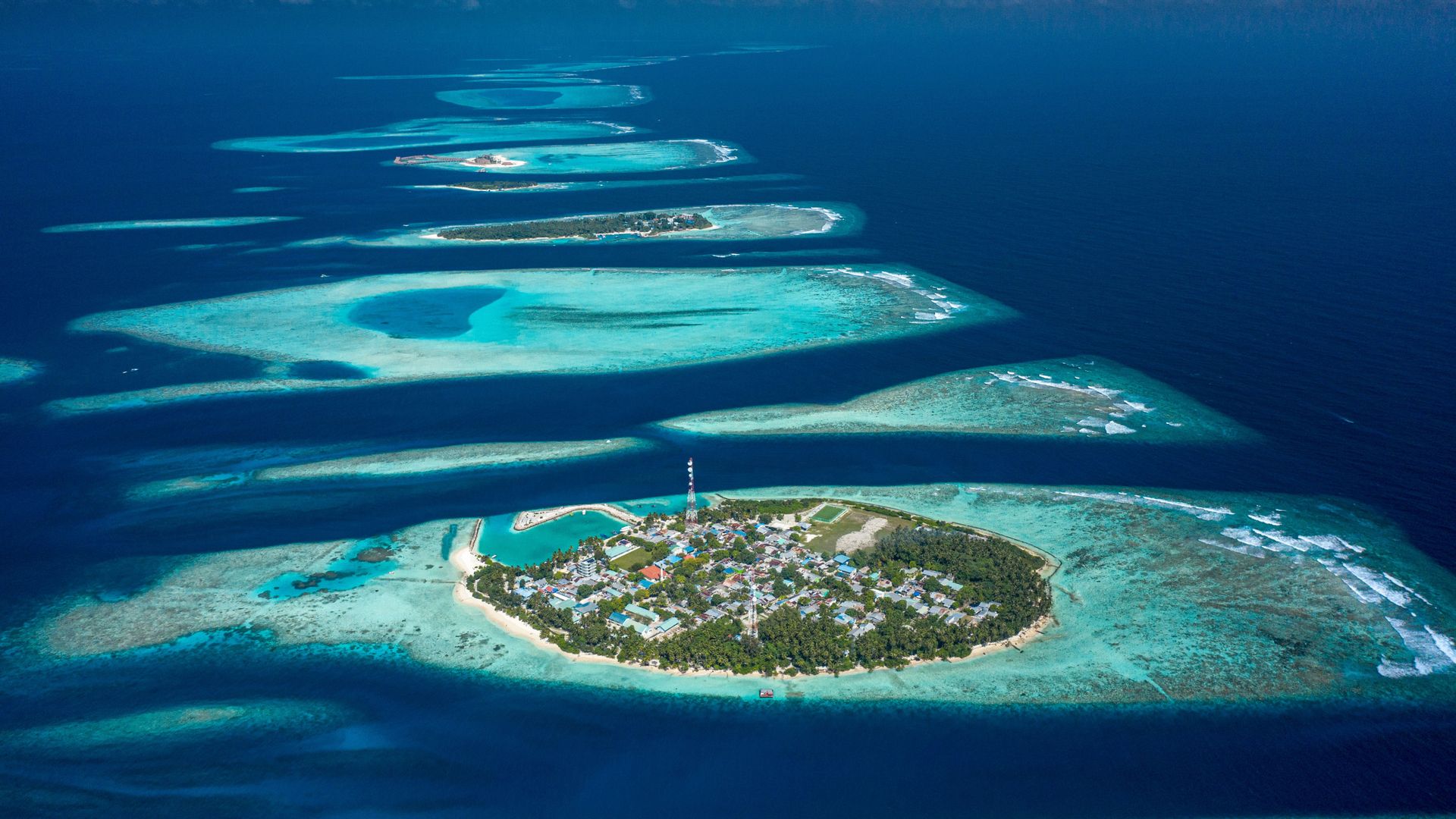
The headlines are bleeding again. Five dead in the Maldives. "Deep diving" is the villain. The public clutches their pearls, the media blames the pressure, and the armchair experts scream for more regulation. They are all wrong.
Depth didn't kill those divers. The "lazy consensus" blames the environment when the culprit is almost always a toxic cocktail of ego, gear complacency, and a fundamental misunderstanding of gas physics. If you think the ocean is a monster waiting to swallow you, you’ve been reading the wrong reports. The ocean is predictable. Human stupidity is the only variable that isn't.
The Depth Fallacy
Mainstream reporting focuses on the "deep" part of deep diving as if 40 meters is a magical line where physics breaks. It isn't. The human body is remarkably resilient to pressure. We are mostly liquid; we don't crush. What kills is the gas we breathe and the choices we make when our brains are clouded by nitrogen.
The Maldives incident is being framed as a tragedy of "extreme conditions." Let’s get real. The Maldives has some of the most accessible, high-visibility water on the planet. If you die there, you didn't succumb to the elements. You succumbed to a failure in your primary life-support system: your brain.
Most recreational divers treat their regulators like a kitchen toaster. You plug it in, it works, you don't think about it. But at 30 meters, your gas density triples. Your work of breathing skyrockets. If you haven't serviced your gear because "it worked fine last year," you aren't a victim. You’re a statistic waiting to happen.
Narcosis Is Not An Excuse
The "Rapture of the Deep" sounds poetic. In reality, it’s just getting drunk on compressed air. The industry has spent decades coddling divers, telling them they can "handle" their narcosis. This is a lie.
Nitrogen narcosis is a spectrum, and it starts much shallower than the textbooks admit. By the time a diver reaches 40 meters on air, their cognitive function is impaired. They make slow decisions. They miss the subtle signs of a malfunctioning gauge.
When five people die, the investigation usually points to a "sudden emergency." There is no such thing as a sudden emergency in diving. There is only a chain of small, ignored errors that eventually reach a tipping point. One diver gets "narked," fails to check their air, panics, and bolts for the surface. The rest follow suit out of a misplaced sense of loyalty.
We call it the "Lemming Effect." It's a failure of leadership and a failure of the "buddy system," which is often just two people being incompetent together.
The Equipment Trap
Go to any dive resort and you will see "tech" divers weighed down with enough gear to salvage the Titanic. They think redundant tanks and shiny computers make them safe.
They don't.
Complexity is the enemy of survival. Every extra hose, every D-ring, every "backup" is another point of failure. I’ve seen divers with $10,000 setups panic because they couldn't find their secondary in a cloud of silt. Meanwhile, a minimalist who actually knows how to breathe can survive a total equipment failure with a calm exhale.
The Maldives deaths likely involved a failure to manage the most basic metric: gas supply. No one "runs out of air" instantly. You run out of air because you weren't looking at your SPG for fifteen minutes. You weren't looking because you were distracted by a manta ray or your own ego.
The Industry’s Dirty Secret
Why do these "accidents" keep happening? Because the dive industry is a business built on high volume and low friction.
Training agencies have spent the last twenty years "streamlining" courses. They want you in the water and buying gear as fast as possible. They’ve turned a serious discipline into a lifestyle brand. "Anyone can dive!" the brochures say.
Actually, no. Not everyone should dive.
If you cannot perform a mid-water hover without moving your hands, you have no business going deep. If you don't understand the difference between $PPO_2$ and $PN_2$, you shouldn't be touching a Nitrox tank. But the industry won't tell you that because your certification fee pays the bills.
We have replaced skill with technology. We trust dive computers to tell us when to surface, but most divers couldn't calculate a decompression table with a pencil and paper if their life depended on it. And one day, it will.
Stop Blaming the Maldives
The Maldives isn't a dangerous place to dive. It is a place where the beauty of the environment masks the lethality of the sport. The warm water and the pretty fish lull you into a false sense of security.
You think you're on vacation. The ocean thinks you're an organism that needs to follow the laws of physics or die.
What People Also Ask (and why they're wrong)
Is deep diving safe?
The question is flawed. Diving isn't "safe" or "unsafe." It is a managed risk. If you are overweight, out of shape, and haven't practiced an air-sharing drill in three years, it is suicide. If you are disciplined, it’s a math problem.
Can you survive a 50-meter dive on air?
Physically, yes. Mentally, it’s a gamble. The partial pressure of oxygen ($PO_2$) starts creeping toward toxicity limits, and the nitrogen load makes you stupid. If you want to go deep, use Trimix. Helium isn't for "elites"; it’s for people who want to remember their dive.
What caused the Maldives tragedy?
The official report will likely cite "drowning" or "air embolism." Those are causes of death, not causes of the accident. The cause was a failure of gas management and a total breakdown of group situational awareness.
The Uncomfortable Truth
If you want to stay alive, stop looking for "safer" destinations. Start looking at your own logbook.
How many times have you skipped a pre-dive safety check because you were in a rush? How many times have you followed a dive guide deeper than your training allows because "they know what they're doing"?
The five people who died in the Maldives weren't killed by the Indian Ocean. They were killed by the same thing that kills most divers: the belief that it can't happen to them.
The ocean doesn't care about your PADI card. It doesn't care about your expensive carbon-fiber fins. It is an environment of absolute accountability. If you can't handle the math, the gear maintenance, and the cold-blooded reality of gas narcosis, stay in the snorkel zone.
The reef is beautiful, but it's not a playground. It’s a laboratory. And the lab doesn't tolerate errors.
Stop buying gear. Start buying training. Stop counting dives and start counting minutes spent practicing basic skills in three meters of water. Until you can manage your buoyancy with your lungs alone, stay away from the drop-off.
The depth isn't the problem. You are.