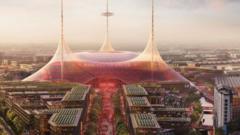
The proposal for a new 100,000-seat stadium at Old Trafford, aligned with a bid to host the 2035 Women’s World Cup, represents a shift from traditional sports real estate to a high-yield infrastructure play. This project is not merely an exercise in increasing gate receipts; it is a calculated attempt to capture the appreciation of the "Northern Powerhouse" economy through a multi-use district that anchors global sporting events. The success of this 10-year roadmap depends on three specific vectors: capital expenditure efficiency, the evolution of the women's professional game, and the regional regeneration multiplier.
The Tri-Lens Feasibility Framework
To evaluate the viability of a 2035 delivery date, the project must be viewed through three distinct analytical lenses. Each lens identifies a specific bottleneck that Manchester United and the Greater Manchester Combined Authority must navigate. Expanding on this theme, you can also read: The Childcare Safety Myth and the Bureaucratic Death Spiral.
1. The Capital Deployment Vector
A new stadium of this magnitude requires an estimated investment of £2 billion. Unlike the incremental renovations of the past, this is a "ground-up" build that necessitates a sophisticated financing structure.
- Public-Private Partnership (PPP) Dynamics: While the club’s owners seek private funding for the stadium itself, the surrounding infrastructure—transport links, power grids, and high-speed fiber—requires state involvement. The "Old Trafford Regeneration Project" serves as the vehicle for this public-private overlap.
- Debt Serviceability: With interest rates stabilized but higher than the previous decade, the club must ensure that the incremental revenue from premium seating and 365-day-a-year commercial usage exceeds the cost of debt.
- Inflationary Hedging: A 2035 target date implies a decade of exposure to construction material volatility. The procurement strategy must lock in supply chains early to prevent the budget overruns seen in projects like Tottenham Hotspur Stadium.
2. The Tournament Anchor and Women’s Football Growth
Linking the stadium to the 2035 Women's World Cup provides a political and social tailwind for planning approvals. However, the stadium's design must account for the specific elasticity of demand in the women's game. Observers at CNBC have shared their thoughts on this situation.
- Capacity Scalability: A 100,000-seat venue is a massive asset that risks looking underutilized for domestic women's fixtures unless the "eventization" of the sport continues its current trajectory.
- The World Cup Multiplier: Hosting a World Cup final serves as a global marketing campaign for the Trafford Wharfside area. The objective is to convert one-time international visitors into long-term digital or physical consumers of the Manchester United brand.
3. The Urban Regeneration Multiplier
The stadium is the "Loss Leader" for a larger real estate play. By creating a high-density "Stadium District," the club captures value from:
- Commercial Office Space: Attracting tech and media firms that want proximity to high-profile sporting hubs.
- Residential Density: Increasing the land value of the surrounding industrial zones by rezoning them for luxury and mid-tier housing.
- Retail and Leisure Displacement: Shifting the center of Manchester's nightlife and tourism westward from the city center.
Structural Constraints of the 2035 Timeline
The ten-year horizon is both a luxury and a constraint. While it allows for thorough planning, it introduces variables that can derail the original thesis.
The Planning and Permitting Bottleneck
The UK’s planning system is notoriously slow for Nationally Significant Infrastructure Projects (NSIP). The "Bradshaw-Knight" effect—where local opposition or environmental regulations stall development—is a primary risk. To mitigate this, the club is framing the stadium as a "National Stadium of the North." This nomenclature is a strategic attempt to gain "Fast-Track" status from the central government, bypassing some of the granular local hurdles that delayed previous UK stadium projects.
The Transport Connectivity Function
A 100,000-seat stadium cannot function with the current transport links at Old Trafford. The "Last Mile" problem—getting fans from the stadium to major transit hubs—requires a massive overhaul of the Metrolink system and potentially the introduction of heavy rail upgrades.
- Flow Throughput: The stadium must be able to clear 100,000 people in under 90 minutes to meet safety and commercial standards.
- Intermodal Shifts: Moving away from car-centric attendance toward rail and active travel is a requirement for meeting the Net Zero targets associated with the 2035 Women's World Cup.
The Economic Impact of the Women’s World Cup Bid
The decision to target 2035 is mathematically significant. It allows the Women’s Super League (WSL) another decade to mature into a premier global media product.
Revenue Stream Diversification
The revenue model for the new stadium differs fundamentally from the current 74,000-seat Old Trafford. The new model focuses on:
- Dynamic Hospitality Tiers: Moving beyond "Executive Boxes" into high-volume, premium-casual lounges that cater to the modern corporate demographic.
- Variable Geometry: Designing the stadium bowl to feel full even at 50% capacity for smaller fixtures, through the use of lighting, digital tarping, and acoustic engineering.
- Data Harvesting: A fully "Smart" stadium allows the club to track consumer behavior in real-time, optimizing food and beverage sales and targeted sponsorship activations during the 2035 tournament.
The North-South Economic Rebalancing
The UK government’s interest in the 2035 bid is rooted in the "Leveling Up" agenda. By placing the jewel of the tournament in Greater Manchester rather than London (Wembley), the bid challenges the capital's monopoly on "Mega-Events." This creates a competitive tension that Manchester United can use to extract better terms from national governing bodies.
Engineering the 365-Day Asset
A fatal flaw in 20th-century stadium design was the "Dark Day" problem—the venue sitting empty for 340 days a year. The 2035 vision corrects this by treating the stadium as a digital-physical hybrid platform.
- Non-Matchday Monetization: The inclusion of esports arenas, hotel chains, and museum experiences ensures a constant baseline of cash flow.
- Modular Pitch Technology: To host a Women's World Cup alongside potential NFL games or concerts, a retractable or hybrid pitch system is non-negotiable. This prevents the turf degradation that historically plagued dual-purpose venues.
- The Digital Twin: Developing a "Digital Twin" of the stadium during construction allows for the simulation of crowd flows and emergency responses, a critical requirement for FIFA and UEFA tournament hosting standards.
Risk Assessment and Mitigation
The primary threat to this project is "Scope Creep." As the timeline extends toward 2035, the temptation to add features or adjust designs to meet shifting trends can lead to budget blowouts.
- Construction Inflation: The cost of specialized steel and sustainable concrete is projected to rise. The club needs a "Fixed-Price" contract model with a tier-one contractor, shifting the risk away from the balance sheet.
- Political Volatility: Changes in local or national government can alter the level of support for the Trafford Wharfside regeneration. Establishing a cross-party "Infrastructure Board" is the standard mechanism for insulating the project from election cycles.
- Market Saturation: With other clubs (Everton, Tottenham, Manchester City) also expanding or building, there is a risk of a "Premium Seat Bubble." The Manchester United strategy relies on the global nature of its brand to pull in international "Sports Tourists" who are less sensitive to local economic downturns.
The Strategic Alignment of 2035
The convergence of a new stadium and the Women’s World Cup creates a symbiotic relationship. The stadium provides the infrastructure necessary to host the world's second-largest football tournament, while the tournament provides the "Deadline Effect" required to force bureaucratic and financial momentum.
The move to 100,000 seats isn't just about being the largest club stadium in the UK; it is about establishing a monopoly on large-scale sporting and entertainment events in the North of England. By the time the first whistle blows in 2035, the "Old Trafford District" must be a self-sustaining economic ecosystem that functions independently of the football club's on-pitch performance.
The final strategic move for the Manchester United leadership is to secure "Preferred Bidder" status for the surrounding land parcels immediately. This prevents third-party developers from "rent-seeking" on the value created by the stadium investment. Control of the land is the only way to ensure the £2 billion capital expenditure yields a total return on investment through long-term leaseholds and commercial rents. The stadium is the magnet; the land is the profit.
Would you like me to analyze the projected revenue delta between a renovated 74,000-seat Old Trafford and a new 100,000-seat build?