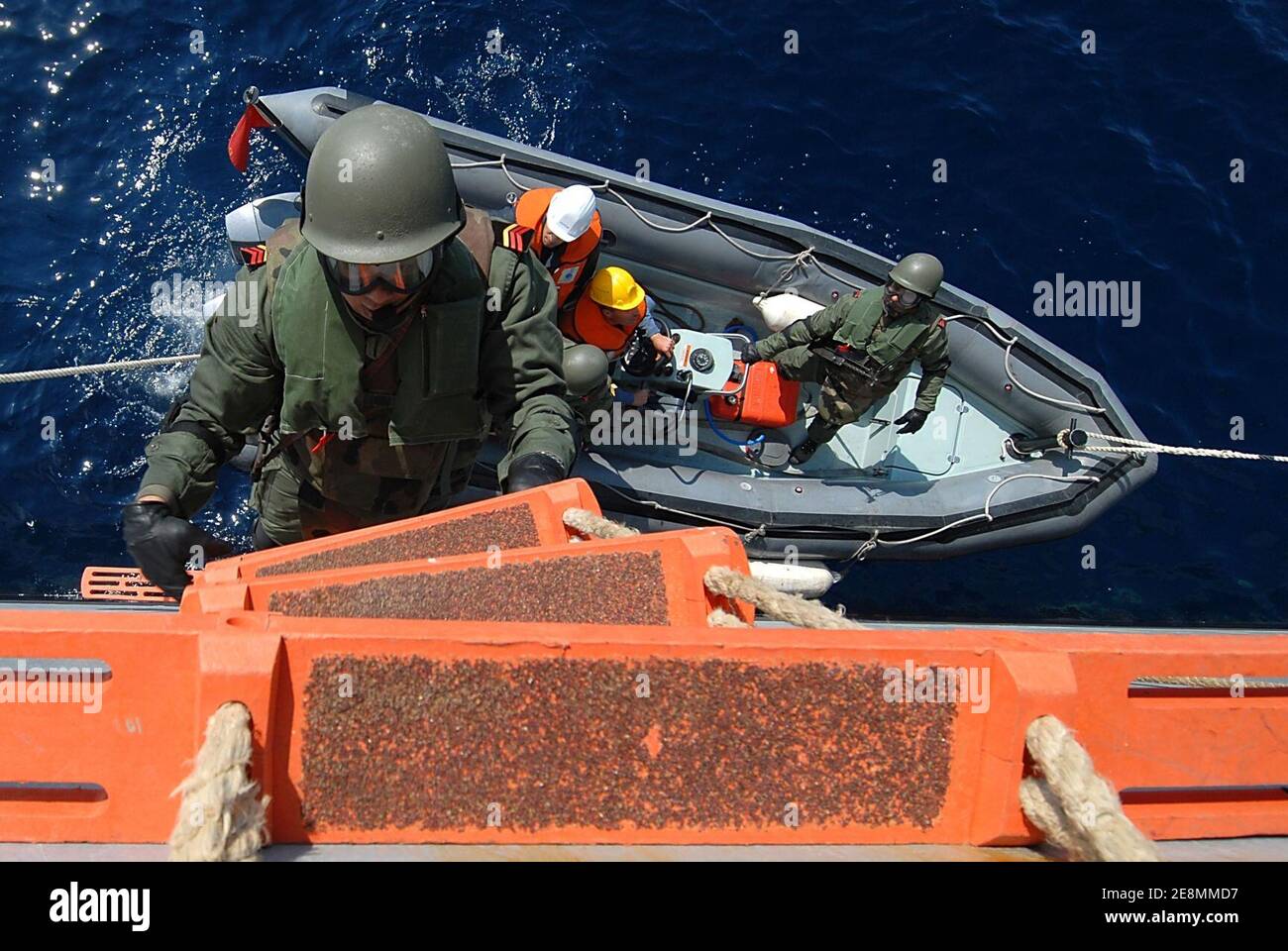
The boarding of a merchant vessel by U.S. Marines in the Arabian Sea represents a high-stakes application of Visit, Board, Search, and Seizure (VBSS) protocols designed to disrupt illicit maritime logistics. Beyond the immediate tactical execution, this event serves as a data point in the broader geopolitical friction between Washington and Tehran. The maneuver is not merely a policing action; it is a calculated signaling mechanism intended to enforce international sanctions and secure critical sea lines of communication (SLOCs).
The Functional Triad of Maritime Interdiction
Successful maritime interdiction operations (MIO) rely on three distinct operational pillars. When one of these pillars is compromised, the entire legal and strategic justification for the boarding dissolves. For a more detailed analysis into this area, we suggest: this related article.
- Actionable Intelligence and Surveillance: The decision to board a vessel begins long before a helicopter hovers over a deck. It originates from a fusion of signals intelligence (SIGINT) and human intelligence (HUMINT) that identifies deviations in a ship's declared manifest, historical route patterns, or ownership structures. In the case of vessels suspected of heading to Iran, the focus typically rests on dual-use technology, petroleum products, or arms.
- Legal Authority under International Law: The U.S. Navy and Marine Corps operate under the United Nations Convention on the Law of the Sea (UNCLOS) and specific UN Security Council resolutions. Boarding a merchant ship in international waters requires "flag state consent"—permission from the country where the ship is registered—unless the vessel is suspected of piracy, slave trade, or is functionally stateless.
- Tactical Superiority and Force Projection: The physical act of boarding involves a specialized Marine Corps Force Reconnaissance or Navy SEAL team. The objective is to establish "Positive Control" of the bridge and engine room within seconds to prevent the crew from scuttling the vessel or destroying evidence.
The Strategic Cost Function of Regional Containment
Every interdiction carries a significant cost-to-risk ratio. The U.S. Fifth Fleet, headquartered in Bahrain, must weigh the potential for escalation against the necessity of enforcement. The "Cost Function" of these operations can be broken down into three variables:
- Political Capital: Boarding a vessel of a neutral nation creates diplomatic friction. If the search yields no contraband, the U.S. faces international backlash regarding the freedom of navigation.
- Operational Attrition: Maintaining a constant presence in the Arabian Sea requires a massive logistical tail. The wear on airframes (MV-22 Ospreys or MH-60 Seahawks) and the fatigue of specialized boarding teams limit how many of these operations can be sustained simultaneously.
- Retaliatory Risk: Tehran has historically responded to maritime seizures with "tit-for-tat" maneuvers in the Strait of Hormuz. This creates a cycle of escalation where the security of the global energy supply becomes the collateral.
Logistics of Illicit Transfers
The suspected movement of goods to Iran often utilizes "Ghost Fleet" tactics. These involve several layers of obfuscation designed to bypass standard monitoring systems. For broader information on the matter, extensive reporting can be read on Associated Press.
AIS Spoofing and Dark Activity
The Automatic Identification System (AIS) is mandatory for most large vessels. However, ships engaged in illicit trade frequently disable these transponders or use "spoofing" technology to broadcast false coordinates. A vessel may appear to be anchored off the coast of the UAE while it is actually offloading cargo at an Iranian port. Analysts identify these discrepancies by comparing AIS data with Synthetic Aperture Radar (SAR) satellite imagery, which can see through cloud cover and darkness to detect the physical presence of a hull where no signal exists.
Ship-to-Ship (STS) Transfers
To further mask the origin of cargo, merchant vessels often conduct STS transfers in the open ocean. A "clean" ship transfers its load to a "suspect" ship. This process allows the final vessel in the chain to claim the cargo originated from a legitimate, non-sanctioned source. Interdiction teams prioritize boarding during or immediately after these transfers to catch the parties in the act of document falsification.
The Friction of Sovereignty and Sanctions
The Arabian Sea is a geographic bottleneck. A significant percentage of the world’s liquefied natural gas (LNG) and crude oil passes through this region. When the U.S. Marines board a merchant ship, they are asserting a "Universal Jurisdiction" over specific types of transborder crime.
This creates a paradox in maritime law. While the U.S. promotes the "Freedom of Navigation," it simultaneously restricts that freedom for vessels suspected of violating unilateral or multilateral sanctions. The legal loophole utilized is often the "Right of Visit," which allows a warship to board a foreign merchant vessel if there are reasonable grounds for suspecting the ship is engaged in illicit activities defined by international treaty.
Tactical Execution: The Anatomy of a Boarding
A standard VBSS mission is executed with clinical precision to minimize the window for resistance.
- Approach and Hail: The warship contacts the merchant vessel via bridge-to-bridge radio. The captain is informed of the intent to board.
- Insertion: Depending on the sea state and the vessel's cooperation, the boarding team enters via "Fast Rope" from a helicopter (Vertical Insertion) or via Rigid-Hull Inflatable Boats (RHIBs).
- Security Sweep: The team moves through the ship using "Close Quarters Battle" (CQB) techniques. The primary goal is to muster the crew in a single location—usually the galley or a designated deck—to ensure they cannot interfere with the search.
- The Search (The "Exploitation" Phase): Technical experts examine the ship’s logs, computers, and cargo holds. They look for "hollow spaces" or modified bulkheads where contraband might be hidden.
The Bottleneck of Evidence
The primary limitation of maritime interdiction is the "Evidentiary Threshold." Finding physical goods is straightforward, but proving the intent to deliver them to a sanctioned entity is complex. Maritime contracts are often layered through multiple shell companies in jurisdictions like Panama, the Marshall Islands, or Liberia.
If the Marines find "dual-use" electronics, the shipping company may argue the cargo was destined for a legitimate civilian buyer in a third country. This necessitates a "Reachback" capability, where the boarding team transmits photos of serial numbers and manifests to intelligence centers in the U.S. for real-time verification against global trade databases.
Regional Stability and the Risk of Miscalculation
The Arabian Sea is not a vacuum. The presence of other regional actors—India, Pakistan, China, and Oman—adds layers of complexity to U.S. operations.
- China’s Maritime Silk Road: Beijing’s investment in ports like Gwadar in Pakistan means Chinese-flagged or Chinese-operated vessels are increasingly common. A U.S. boarding of a vessel with Chinese interests would trigger a major diplomatic crisis.
- The Drone Threat: The proliferation of Unmanned Aerial Vehicles (UAVs) and Unmanned Surface Vessels (USVs) by non-state actors and regional powers has changed the security calculus. A boarding team on a merchant ship is a "static" target, vulnerable to a swarm attack or a suicide boat while they are occupied with the search.
Quantifying the Impact of Interdiction
Does boarding a single ship stop the flow of goods to Iran? In isolation, no. However, the cumulative effect of these operations increases the "Risk Premium" for shipping companies.
- Insurance Hikes: When a region is deemed high-risk for interdiction or seizure, maritime insurance (Hull and Machinery, and Protection and Indemnity) premiums spike.
- Delayed Delivery Cycles: Even a "clean" ship that is boarded faces hours or days of delays. In the "Just-in-Time" world of global shipping, these delays result in massive financial penalties for the carrier.
- Deterrence by Denial: By demonstrating the capability and willingness to board ships anywhere in the Arabian Sea, the U.S. forces illicit actors to take longer, more expensive routes, effectively acting as a tax on their operations.
The strategic play moving forward will involve the integration of AI-driven predictive modeling to identify "high-probability" targets before they even leave port. The U.S. will likely shift toward "Unmanned Interdiction Support," using autonomous underwater vehicles to shadow suspect ships for weeks, gathering acoustic and visual data before committing human assets to a boarding. The focus is shifting from "Reactive Boarding" to "Persistent Surveillance," where the physical act of boarding is merely the final, undeniable proof of a long-monitored transgression. Enforcement in the Arabian Sea is evolving into a game of attrition where the side with the most transparent view of the water wins.
Strategic actors should monitor the frequency of these boardings as a leading indicator of regional tension; an increase in VBSS activity typically precedes a diplomatic "freeze" or an expansion of sanctions. The maritime domain remains the primary theater where global powers can exert force with a lower risk of total war compared to land-based incursions, making it the permanent frontline of the 21st-century's shadow conflicts.