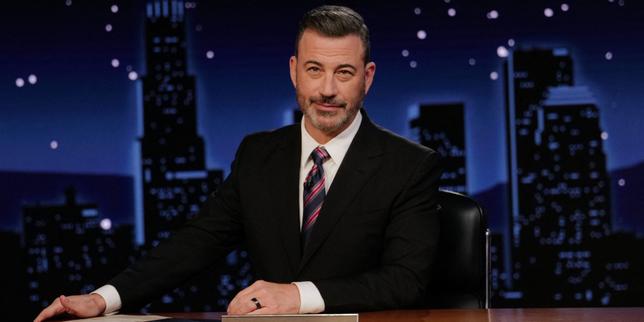
Late-night hosts are obsessed with their own importance. They want you to believe they are the front line of a cultural resistance, the brave truth-tellers holding the powerful accountable with a well-timed punchline. Jimmy Kimmel’s recent defense—insisting his jokes about Melania Trump were never a "call to assassination"—is the perfect example of this industry-wide delusion.
The media circus surrounding this is asking the wrong question. We shouldn't be debating whether a comedian’s monologue is a dog whistle for violence. We should be asking why we still pretend these scripted, corporate-approved 11:30 PM segments have any actual teeth.
Kimmel isn't a revolutionary, and his critics aren't "defending the Republic." They are all participants in a mutually beneficial outrage economy.
The Lazy Logic of the Satire Defense
The "satire defense" is a shield used by comedians who want to play in the sandbox of high-stakes politics without any of the actual risk. When a joke lands them in hot water, they retreat to the "I’m just a clown" routine. It’s a convenient trapdoor. If you take them seriously, you're a humorless snowflake; if you ignore them, they claim they’re the only ones "speaking truth to power."
Let’s look at the actual mechanics of the Melania joke. Kimmel, or rather his room of Harvard-educated writers, finds a cheap angle on a public figure. They polish it until it fits the demographic expectations of their advertisers. The joke is delivered. The internet reacts. The "outrage" generates millions of clicks for both the show and the news outlets reporting on the outrage.
This isn't political commentary. It’s a recurring revenue model. By framing the conversation around "assassination calls," the industry distracts us from the reality that these jokes are remarkably toothless. They don't change minds. They don't shift policy. They provide a nightly hit of dopamine for people who already agree with the host.
The Death of Punching Up
The fundamental rule of comedy used to be "punching up." You target the institutions and individuals who hold the levers of power. But in the current media ecosystem, late-night hosts are the institution. Kimmel, Colbert, and Fallon are multi-millionaires backed by massive telecommunications conglomerates.
When they target a spouse or a family member, they aren't punching up. They are punching across at a rival brand. The Trump family isn't just a political entity; they are a competing content stream. Every time Kimmel spends ten minutes on Melania, he isn't dismantling a regime—he’s competing for SEO rankings against the "other team."
I have sat in rooms where these segments are mapped out. The goal is never "how do we expose the truth?" The goal is "how do we get a clip that goes viral on Reddit by 8:00 AM?" If you think there is a moral core to this, you haven't seen the spreadsheets.
The Myth of the Radical Comedian
We have been conditioned to see comedians as the successors to court jesters—the only ones allowed to tell the king he’s naked. But the court jester actually faced the executioner’s axe if he missed the mark. Kimmel faces a slightly lower Nielsen rating or a sternly worded tweet from a press secretary.
The "danger" of late-night comedy is a manufactured product. By defending his jokes as "not an assassination call," Kimmel is actually trying to inflate his own relevance. He wants you to believe his words have that kind of weight. He wants to be seen as a person whose jokes are so potent they could destabilize the state.
They aren't. They are dinner theater for people who want to feel intellectually superior without actually doing the work of political engagement.
Dismantling the "Call to Violence" Accusation
Let’s be brutally honest: Nobody is taking up arms because Jimmy Kimmel made a joke about a former First Lady’s accent or her absence from the campaign trail. The people accusing him of "inciting violence" are just as performative as he is.
- Political Operatives: They use these moments to fundraise. "The radical left is calling for hits on our families! Donate $20 now!"
- Media Pundits: They need 500 words by noon. Kimmel’s monologue provides the easiest "A-block" in the business.
- The Comedy Industrial Complex: It protects its own. If one host is held accountable for "rhetoric," the whole house of cards falls.
Imagine a scenario where late-night actually mattered. If a comedian managed to uncover a genuine, suppressed scandal through humor—something that actually changed the polling data—the network would pull the plug in a heartbeat. The reason Kimmel is allowed to say what he says is precisely because it doesn't matter.
Why You’re Asking the Wrong Questions
Most people are arguing over whether the joke was "in poor taste." That is a subjective, boring debate. Taste is irrelevant in the attention economy.
The real questions you should be asking are:
- Why is a Disney-owned network (ABC) the primary arbiter of political "truth" for a third of the country?
- Why do we accept "satire" as a substitute for investigative journalism?
- How did we reach a point where a comedian’s PR defense is considered "Breaking News"?
The status quo says we need these hosts to "make sense of the chaos." I argue they thrive on the chaos. Without the constant polarization, their monologues would return to what they used to be: jokes about airline food and bad movies. They have a vested interest in keeping the temperature high while claiming to be the ones trying to cool it down.
The Professionalization of "The Take"
The "contrarian" take usually stops at saying the joke was bad. I’m telling you the joke doesn't exist. It’s a data point.
In the corporate entertainment world, every monologue is vetted by legal. Every potentially "dangerous" line is scrubbed. If Kimmel’s joke made it to air, it’s because a team of lawyers decided it was safe enough to generate views but not so risky that it would lead to a genuine lawsuit. The "controversy" is the product.
When Kimmel goes on air the next night to "address the backlash," he’s just extending the content cycle. He’s doubling his inventory without having to write new material. It’s a genius business move masquerading as a defense of free speech.
The Unconventional Advice for the Audience
Stop watching for "the truth." Stop looking for "the take."
If you want to understand the political climate, look at where the money flows, not where the laughter lands. The obsession with Melania, the obsession with the "assassination" rhetoric, it’s all a distraction from the fact that our media is no longer designed to inform. It’s designed to keep you locked in a loop of indignation.
The downside to my perspective? It’s lonely. It’s much more fun to pick a side and cheer for your favorite late-night "warrior." But once you see the strings, you can't unsee them. You realize that Kimmel isn't fighting for you. He’s fighting for his 11:35 PM slot.
The next time a host makes a "brave" stand against a politician, or a politician’s spouse, don't tweet about it. Don't share the clip. Realize that you are being asked to participate in a marketing campaign.
The most radical thing you can do is realize that the court jester and the king are on the same payroll. They both need the audience to stay in their seats.
The industry isn't broken. It's working exactly as intended. It’s keeping you busy while the world burns, and it’s charging you for the privilege of watching the embers.
Quit looking for a moral center in a medium that only values a viral hit. Kimmel's joke wasn't a call to arms; it was a call to the box office. And as long as you keep arguing about it, he’s already won.