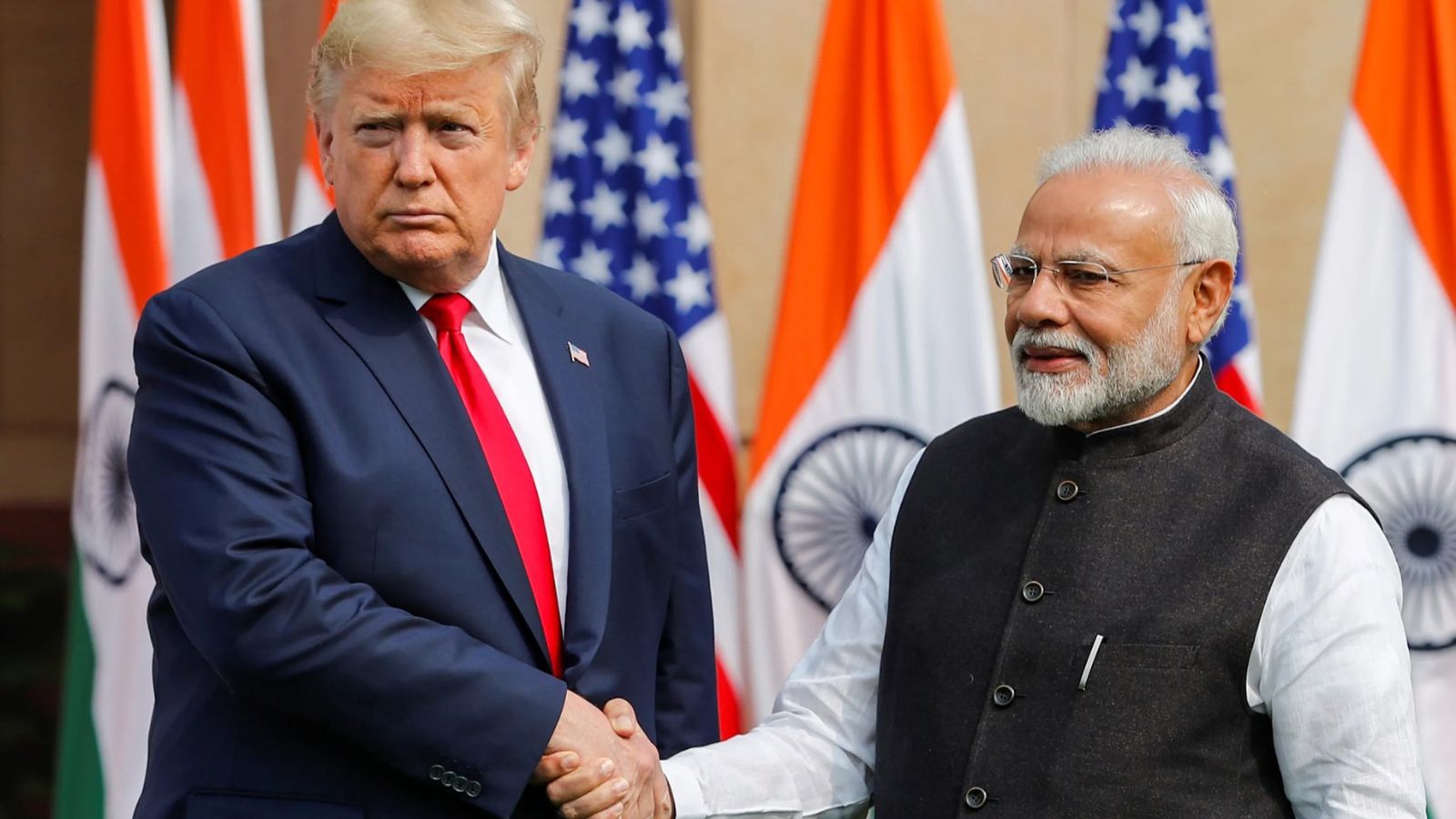
Forty minutes. That is the magic number being circulated. Trump and Modi spent forty minutes on the phone discussing West Asia, regional stability, and "shared goals." The mainstream press is treating this like a tectonic shift in global governance. They want you to believe this is a masterclass in high-stakes mediation.
They are wrong. You might also find this connected article insightful: Why Military Delay Headlines Are the Smoke Screen for a Massive Industrial Pivot.
This was not a diplomatic summit. It was a synchronized PR drop designed to serve two domestic agendas that have nothing to do with the actual resolution of conflict in the Middle East. If you think a phone call between a former/future president and a prime minister creates a roadmap for peace, you are ignoring how power actually moves in the 21st century.
The Myth of the Strategic Mediator
The "lazy consensus" suggests that India is the bridge between the West and the Global South, and that Trump is the "deal-maker" who can bypass traditional State Department bureaucracy. It sounds good on a campaign poster. It falls apart under the slightest scrutiny. As extensively documented in detailed articles by Reuters, the effects are significant.
Diplomacy requires institutional memory. It requires desks at the State Department and the Ministry of External Affairs working through 800-page dossiers on water rights, border demarcations, and trade tariffs. A forty-minute chat is barely enough time to exchange pleasantries and touch on three talking points prepared by staffers.
When you hear "very good conversation," read: "We reaffirmed our mutual brand value."
India’s stance on West Asia—specifically the Israel-Palestine conflict—has been a delicate balancing act for decades. They need Iranian oil and port access (Chabahar), yet they are deepening defense ties with Israel. Trump’s approach is historically maximalist. These two positions do not "synergize" (to use a term I despise). They collide. The phone call didn't resolve the tension between India’s BRICS commitments and its Western aspirations. It just papered over them with a coat of "strongman" paint.
The Geopolitical Performance Art
Let’s look at the timing. Why now?
- For Trump: It validates his claim that world leaders are waiting for his return to fix the mess. It bypasses the current administration and creates a shadow cabinet aura.
- For Modi: It signals to a domestic audience that India is the "Vishwa Mitra" (friend of the world), capable of influencing the most powerful men on earth regardless of who sits in the Oval Office.
I’ve spent years watching how these narratives are constructed. When a "leak" about a private call happens this quickly, it isn't news—it's a press release. True diplomacy happens in the dark. If the public knows about the call before the ink is dry on the notes, the purpose of the call was the announcement, not the content.
Why the West Asia Premise is Flawed
The media is obsessed with asking, "Can Trump and Modi bring peace to the Middle East?"
This is the wrong question. The real question is: "Does either leader actually want to risk their political capital on a solution that requires compromise?"
The Abraham Accords were touted as a total shift. Yet, the underlying issues were ignored, leading to the current volatility. India’s involvement is hampered by its own internal contradictions. You cannot be the leader of the Global South—a bloc that is increasingly vocal about Palestinian rights—while simultaneously performing a bromance with the chief architect of the "Maximum Pressure" campaign on Iran.
The Institutional Vacuum
Real power is boring. It lives in the bureaucracy.
When Trump bypasses official channels, he isn't "cutting red tape." He is creating an institutional vacuum. Foreign policy by personality is volatile. It relies on the mood of two individuals rather than the long-term interests of two nations.
Imagine a scenario where a trade dispute over H-1B visas or medical exports turns sour. The "special friendship" evaporates in a single tweet. We saw this during Trump’s first term with the removal of India from the Generalized System of Preferences (GSP). The "Howdy Modi" rallies didn't stop the tariffs. The hugs didn't protect the trade status.
Why do we keep falling for the theater?
Breaking the "Special Relationship" Delusion
Stop looking for "chemistry" between leaders. Chemistry is for high school labs and Netflix rom-coms. In the world of sovereign states, there are only interests.
India wants:
- Technology transfers (iCET).
- Counter-terrorism cooperation against regional rivals.
- Permanent membership in the UN Security Council.
The US (under a Trump-style doctrine) wants:
- Market access for American companies.
- A massive counterweight to China that pays for its own defense.
- Alignment against Iran.
These interests overlap in some areas but are fundamentally at odds in others. India will never be a junior partner in a US-led crusade against Tehran. It can’t afford to be.
The Data the Media Ignores
Look at the trade numbers. Look at the defense procurement cycles. These move at a glacial pace. A forty-minute call doesn't accelerate the production of GE F414 jet engines in India. It doesn't settle the dispute over the S-400 missile system India bought from Russia.
The media focuses on the "40 minutes" because it's easy to report. Investigating the stalled trade negotiations is hard. Analyzing the impact of the CAATSA sanctions is dense. It’s much easier to print a quote about a "warm conversation."
The Actionable Reality
If you are an investor or a policy analyst, ignore the headlines about the "bond" between these two.
- Watch the Ministry of External Affairs (MEA) briefings, not the tweets.
- Track the movement of hardware, not the exchange of compliments.
- Follow the energy corridors. India’s recent moves in the IMEEC (India-Middle East-Europe Economic Corridor) are far more significant than any phone call, yet they receive a fraction of the breathless coverage.
The status quo is a feedback loop of personality worship. It obscures the fact that the world is becoming more multipolar, not less. India isn't "choosing" Trump; it is hedging its bets. Trump isn't "consulting" Modi; he is building a narrative of inevitability.
The Brutal Truth
We are witnessing the "influencer-ification" of global politics.
In this new era, the appearance of influence is more valuable than the exercise of it. A call is a "win" because it generates a cycle of content. It fills the 24-hour news void. It gives pundits something to argue about.
But back in the real world, the borders are still closed, the missiles are still flying, and the trade barriers are still high.
Stop treating every interaction between two populist leaders like a breakthrough. It’s just a check-in between two CEOs of the same industry: The Industry of Perception.
The call wasn't the start of a new peace process. It was a 40-minute rehearsal for a play that has been running for years.
You’re not watching history. You’re watching a commercial.
Go back to work.