The mainstream media loves a "trapped" narrative. Open any major news outlet right now and you’ll see the same tired script: migrant workers in the Middle East are helpless pawns caught between Iranian missiles and crumbling economies back home. They paint a picture of desperate people shivering in labor camps, waiting for a flight out that will never come.
It’s a lie. It’s patronizing. And it misses the cold, hard logic of the global labor market.
I’ve spent fifteen years tracking capital flows and labor migration across the Gulf Cooperation Council (GCC) and the Levant. I’ve seen what happens when the sirens go off in Haifa or the tankers get harassed in the Red Sea. The "fragility" narrative isn't just wrong; it’s an insult to the most resilient economic actors on the planet. Foreign workers aren't fleeing the risk. They are pricing it.
The Risk Premium Nobody Mentions
Western analysts view "risk" as a reason to stay home. For a worker from Kerala, Manila, or Dhaka, risk is a commodity. It’s something you trade for a higher margin.
The competitor articles suggest that rising tensions between Iran and Israel will spark a mass exodus of the millions of foreign nationals powering the region. They argue that the "economic strain" at home makes their situation a double-edged sword.
Here is the truth: The higher the geopolitical tension, the more the Gulf has to pay to keep the lights on.
When regional stability wavers, the cost of labor doesn’t drop—it spikes. I’ve watched construction firms in Dubai and logistics hubs in Qatar quietly bump "hardship" bonuses and overtime rates the moment a headline turns red. The migrant worker isn't a victim; they are a high-stakes investor in their own earning potential. They understand a fundamental truth that the comfortable laptop class in London or DC doesn't: Volatility is a ladder.
The Domestic Collapse Trap
The "economic strain at home" argument is equally flawed. Pundits claim that workers are stuck because their home countries—like Egypt or Pakistan—are in financial ruin. They frame this as a tragedy.
In reality, the collapse of home currencies is the greatest incentive to stay in the line of fire.
When the Pakistani Rupee or the Egyptian Pound devalues by 30% in a year, a salary paid in Dirhams or Riyals (which are pegged to the USD) becomes a superpower. That worker isn't "trapped" by a bad economy at home; they are arbitraging it. They are the only thing keeping their extended families from falling into poverty. To suggest they should "evacuate" for their safety is to suggest they should bankupt their entire lineage.
Safety is a luxury. Remittances are a necessity.
The Logistics of Resilience
Let's talk about the actual mechanics. The narrative suggests that in a full-scale conflict, these workers would be abandoned.
- Fact: The GCC economies are 80-90% dependent on foreign labor.
- Fact: Abandoning that labor force would result in a total national heart attack for the host country.
- Fact: These governments have more sophisticated evacuation and protection protocols for their labor force than most Western cities have for a heavy snowstorm.
I’ve seen the "crisis centers" in Riyadh. They aren't humanitarian camps; they are business continuity assets. The Saudis and Emiratis aren't protecting these workers out of the goodness of their hearts—they are protecting their $400 billion giga-projects. If the workers leave, Neom stops. If Neom stops, the Vision 2030 branding dies. The worker is the most valuable infrastructure in the desert.
Stop Asking if They Are Safe
The "People Also Ask" sections of the internet are filled with "Is it safe for Filipinos to work in the Middle East right now?"
It’s the wrong question. The right question is: "Is the compensation adjusted for the current threat level?"
If you are an engineer or a welder in a zone within range of a drone strike, and your pay hasn't shifted, you’re being exploited. But most of these workers aren't stupid. They communicate via massive, encrypted WhatsApp and Telegram networks that move faster than any HR department. They know which companies provide bunkers and which ones provide excuses.
They are making a rational, calculated trade: the 0.01% chance of being collateral damage in a regional skirmish versus the 100% chance of financial ruin if they return to a village with no jobs.
The Arrogance of the "Evacuation" Narrative
There is a profound Eurocentric arrogance in the idea that the "best" outcome for a worker is to be rescued and sent back to a stagnant economy.
When the US pulled out of Afghanistan, we saw what "evacuation" looks like. It’s chaos. Contrast that with the way labor moves in the Mideast. Even during the height of the 2023-2024 escalations, the flow of labor into the region remained net positive.
Why? Because the "threat" of Iran is a constant background hum that has existed for forty years. To the person trying to build a house in Kathmandu, a headline about a drone in Isfahan is noise. The paycheck is the signal.
The Hierarchy of Hardship
We need to dismantle the idea that all migrant workers are the same. The competitor piece treats them as a monolith. They aren't.
- The Professional Tier: Western expats who flee at the first sign of a stock market dip. They are the truly fragile ones.
- The Skilled Tier: Technicians and medics from East Asia and India. They renegotiate. They stay.
- The Labor Tier: The backbone. They have the most to lose and the least "safety net," yet they show the highest retention.
The "experts" focusing on the third group's "risk" are ignoring the fact that these workers have navigated much worse. Many have survived civil wars, environmental disasters, and systemic corruption that would make a New York journalist faint. A missile defense system interception over Riyadh is just another Tuesday.
The Bottom Line for Industry Insiders
If you’re running a firm in the region, stop apologizing for the "instability." The people you are hiring aren't looking for a playground; they are looking for a bank.
The downside of my contrarian view? Yes, it’s cold. Yes, it’s transactional. But it’s the only view that respects the agency of the worker. By treating them as victims, we strip them of their status as the world’s most daring venture capitalists. They are venturing their time and their safety for a return on investment that the West can no longer provide.
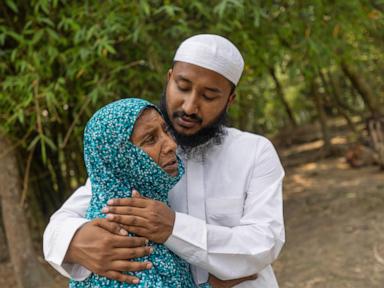
The next time you see a headline about the "plight" of foreign workers in the Mideast, remember that the person in the photo probably has a better grasp of geopolitical risk-reward ratios than the person writing the article.
They don't want your pity. They want their wire transfer to go through.
Stop trying to save people who are busy saving their own futures. If you want to help, fix the banking hurdles that make it hard for them to send money home. Everything else is just noise.
The war isn't the problem. The "economic strain" isn't the problem. The problem is a global media class that can't fathom why someone would choose a bunker in the desert over a breadline at home.
The migrants have already made their choice. They’re staying. Pay them.