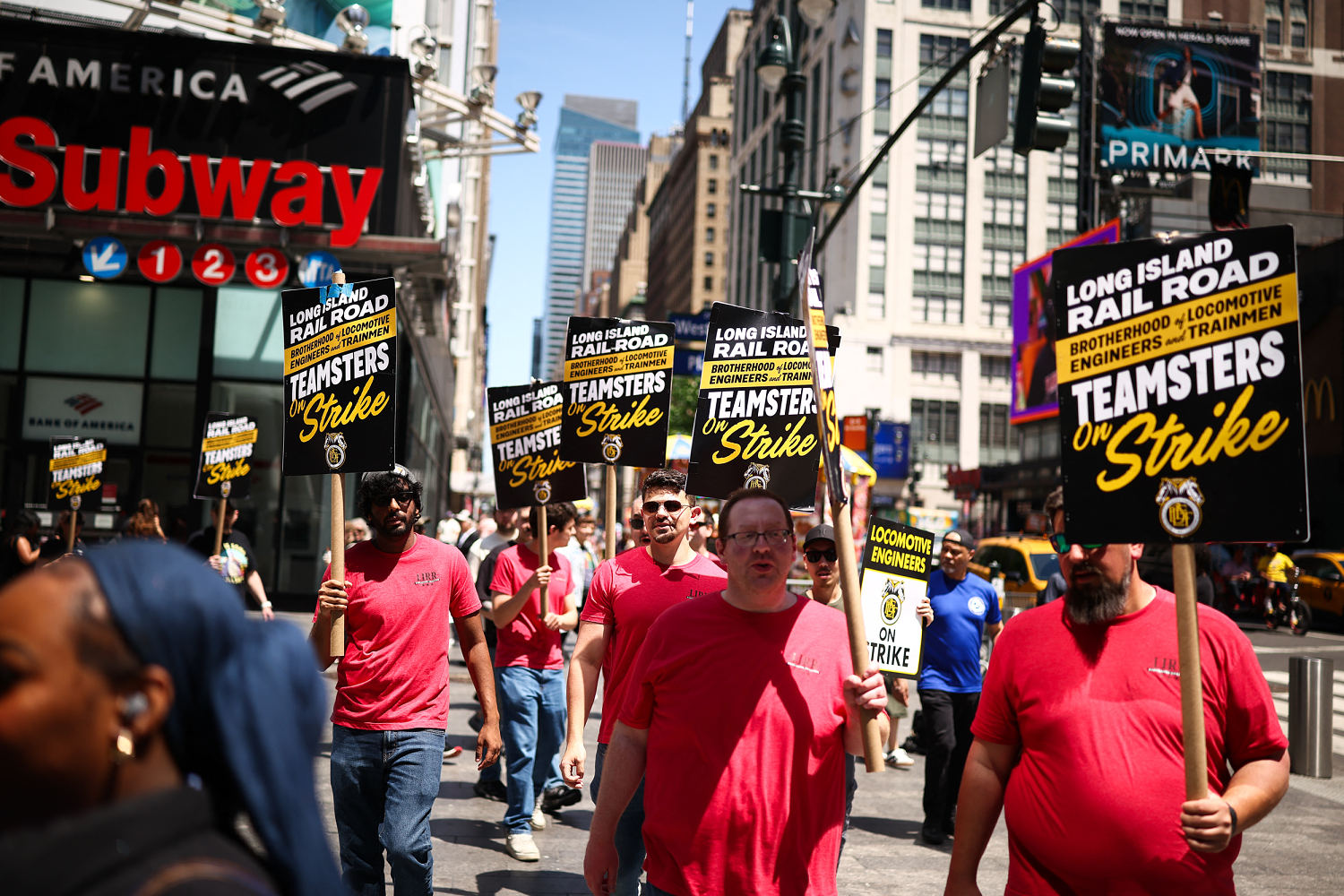
The legacy media loves a good transit panic. Every time the Long Island Rail Road union threatens a work stoppage, the headlines write themselves. We get the predictable B-roll of stressed-out suburbanites stranded at Jamaica Station, the frantic soundbites from regional politicians demanding a return to the negotiating table, and the standard hand-wringing over a "manic Monday" economic apocalypse.
It is a tired, lazy narrative.
The media treats transit strikes as sudden, catastrophic natural disasters—like a hurricane hitting the morning rush hour. They frame the gridlock as a failure of modern management. They assume that a functioning economy requires absolute, uninterrupted compliance from its commuter rail lines.
They are entirely wrong.
The standard commentary misses the entire structural reality of public infrastructure. A transit strike is not a breakdown of the system. A transit strike is the system operating exactly as designed. In fact, if you look closely at the history of labor economics and urban infrastructure, a periodic, high-stakes shutdown is often the only mechanism that forces bloated, bureaucratic agencies to reckon with reality.
The Compulsory Crisis of Public Transit
We are told that negotiators need to find a middle ground to save the regional economy. This assumes both sides are operating under standard market forces. They aren't.
In a private enterprise, a strike hurts profits, forcing management to compromise, while workers lose wages, forcing labor to stay reasonable. But the Metropolitan Transportation Authority (MTA) is an insulated, state-controlled monopoly funded by a complex web of taxes, subsidies, and toll diversions. It does not exist to make a profit. It exists to survive.
Because the MTA is insulated from market discipline, its default state is stagnation. It suffers from institutional inertia. Bureaucracies do not voluntarily reform their work rules, modernize their archaic staffing requirements, or streamline their pension liabilities during a period of calm.
The Structural Reality: In public infrastructure, change requires a crisis. Without the immediate threat of a complete system shutdown, the political will to reform work rules or challenge legacy labor agreements evaporates completely.
When commentators complain about a "manic Monday," they look at the short-term inconvenience of a delayed commute. They ignore the long-term cost of avoiding the fight. Every time a governor steps in at the eleventh hour to broker a frantic deal just to keep the trains running, they buy peace by kicking the financial can down the tracks. They trade a week of bad headlines for decades of structural deficits.
Dismantling the Commuter as Victim Narrative
The current discourse positions the Long Island commuter as an innocent bystander targeted by greedy unions. Let's dismantle that premise.
Suburban commuters are not passive victims; they are active participants in a subsidized transit ecosystem. The farebox recovery ratio—the percentage of operating expenses covered by passenger fares—historically hovers around 30% to 40% for major commuter lines, with the rest covered by public subsidies.
+---------------------------------------------------------+
| Typical Commuter Rail Funding Breakdown                 |
+---------------------------------------------------------+
| Passenger Fares:       [████████] 35%                   |
| Government Subsidies:  [███████████████] 65%            |
+---------------------------------------------------------+
When you rely on a heavily subsidized, state-run monopoly to get to your office, you accept an inherent systemic risk. You have outsourced your mobility to a political entity. To complain that the state-run monopoly is unstable is like moving next to an airport and complaining about the noise.
Furthermore, the panic over a frozen morning commute ignores the reality of the modern white-collar workplace. The panic narrative belongs to 1996, not today. The regional economy does not collapse because the tracks are quiet for 72 hours. Distributed workforces, remote access, and decentralized hubs mean that a significant portion of the LIRR's core demographic can pivot to working from home with a single keystroke. The "crisis" is largely psychological, fueled by organizations that refuse to adapt their operational models to the twentieth-first century.
Why Management Secretly Needs the Strike
If you talk to veteran labor negotiators behind closed doors, they will tell you something the press release never mentions: management often needs the strike just as much as the union does.
Public transit executives are trapped between two impossible forces:
- The Board and Taxpayers: Demanding cost control, efficiency, and balanced budgets.
- The Labor Unions: Demanding wage increases, healthcare protections, and the preservation of historical work rules (like minimum crew sizes that automation rendered obsolete decades ago).
In a peaceful environment, management cannot win. If they try to cut costs, they are labeled union busters. If they give in to union demands, they are labeled fiscally irresponsible.
A strike changes the math. A strike brings the third player into the game: the Governor.
Only when the trains stop does the executive chamber get involved directly. The political risk shifts from the MTA management to the state house. A strike provides the political cover necessary to unlock state emergency funds, override rigid regulatory hurdles, or force concessions that would be dead on arrival during standard Tuesday afternoon talks.
Imagine a scenario where the LIRR operates flawlessly for a decade without a single labor dispute. What happens? Costs creep up incrementally, inefficiency becomes embedded as "standard procedure," and the public grows completely blind to the true cost of running a railroad. The friction of a strike is the price we pay for visibility. It forces a public accounting of where every dollar goes.
The Uncomfortable Truth About Transit Labor
Let's address the elephant in the station: the union's leverage is entirely artificial, yet entirely legitimate.
Critics accuse transit workers of holding the city hostage. Of course they are. That is the definition of collective bargaining in a vital service industry. If your absence doesn't cause chaos, you have no leverage.
The mistake critics make is assuming this leverage is a sign of union malice rather than management's failure to diversify infrastructure. If a single point of failure—a strike by a specific subset of rail workers—can paralyze an entire economic corridor, that is a design flaw created by the state, not the workers.
For decades, regional planning has favored radial infrastructure, funnelling everyone into a single centralized hub. We concentrated our economic eggs in one basket, and now we act shocked when the basket-carriers demand higher wages.
The contrarian solution to transit strikes is not to ban strikes or force workers back to their posts through legislation. That just breeds resentment, slows down work performance, and delays the inevitable explosion. The solution is to embrace the disruption, let the system break, and allow the resulting chaos to expose exactly which parts of our infrastructure are obsolete, which work rules are indefensible, and which managers are incapable of steering the ship.
Stop praying for a quick settlement that patches over the rot. Let the negotiations fail. Let the tracks go cold. Let the system reset.