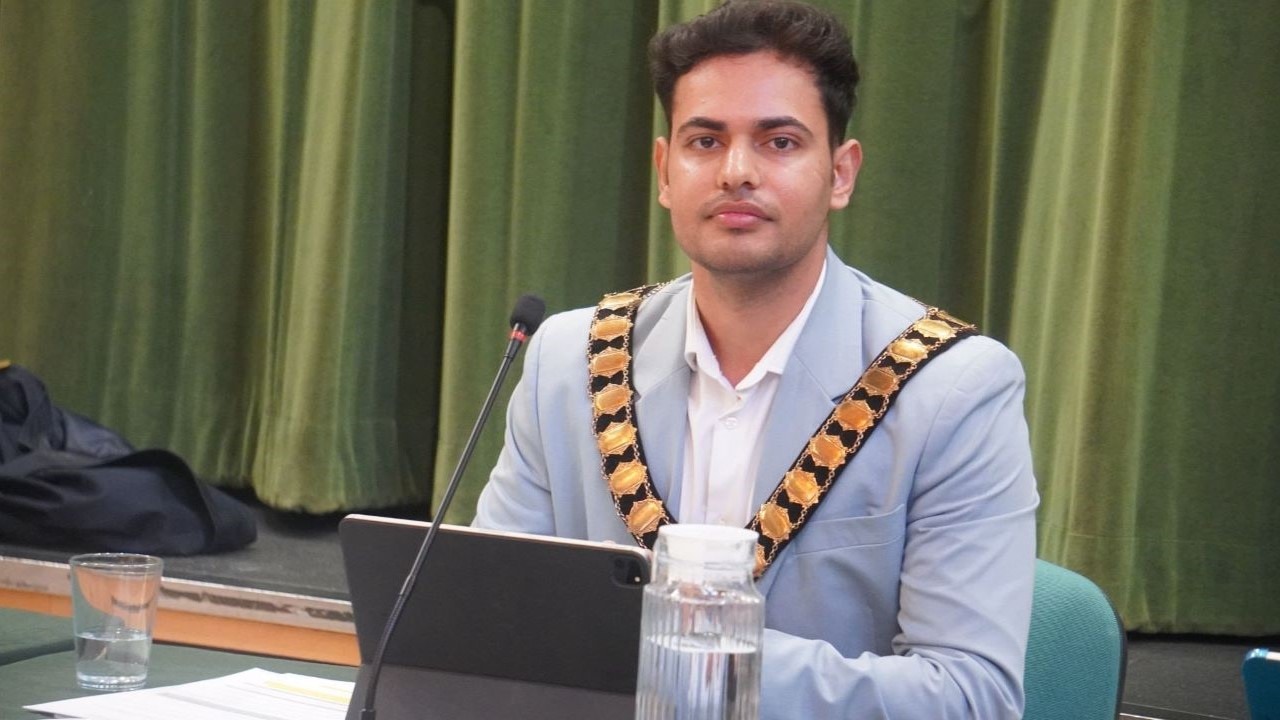
The media is currently swooning over Tushar Kumar, the 23-year-old King’s College London graduate who just became the United Kingdom’s youngest-ever Indian-origin mayor. From London to New Delhi, headlines are celebrating this milestone in Elstree and Borehamwood as a monumental breakthrough for youth leadership. They call it a historic development. They claim it shatters age barriers. They paint a picture of a fresh-faced visionary poised to wield power and rewrite the rules of local government.
It is a beautiful story. It is also entirely hollow.
The breathless coverage of Kumar’s appointment exposes a deep, systemic misunderstanding of how British local government actually functions. We are trained to applaud the optics of youth representation while completely ignoring the structural reality of the positions they occupy. I have watched political parties cycle through bright, ambitious young graduates for over a decade, channeling their energy into roles designed specifically to keep them busy doing absolutely nothing of substance.
If we want genuine, disruptive youth leadership, we need to stop celebrating the coronation of 23-year-olds into positions of purely ornamental authority.
The Illusion of the Chain of Office
To understand why the celebration around Kumar is misplaced, you have to separate political theatre from institutional power. In the UK, the structure of local government is bifurcated into two distinct formats: executive leadership and ceremonial representation.
Town and parish councils—like the Elstree and Borehamwood Town Council—operate almost exclusively on a ceremonial mayoral model. The mayor is not an executive executive officer. They do not draft municipal budgets, they do not dictate housing policy, and they cannot overhaul public infrastructure.
The Local Government Act 1972 outlines the parameters of these civic roles. The mayor is simply the Chairman of the Council. Their actual duties consist of:
- Chairs council meetings using basic parliamentary procedure.
- Attends local charity events, ribbon cuttings, and school openings.
- Acts as the official face of the town at formal dinners.
- Wears the traditional "chains of office" to maintain historic continuity.
The real administrative and financial power in Hertfordshire resides at the borough and county council levels, managed by full-time executives and committee chairs who control the actual purse strings. A town council mayor is an ambassador, not a policymaker.
When Kumar notes his intent to focus on "being present within the community" and supporting local groups like WD6 Food Support, he is not presenting a radical new political agenda. He is simply describing the exact, limited job description that the institutional framework allows.
Why Political Parties Love the Useful Graduate
Political organizations have perfected a specific pipeline. They find highly capable, credentialed students—often from institutions like King’s College London’s Civic Leadership Academy—and fast-track them into local civic roles.
On paper, this looks like a progressive commitment to diversity and youth inclusion. In practice, it is a risk-mitigation strategy for the establishment.
Young graduates possess immense academic knowledge, high digital literacy, and boundless energy. By placing them into ceremonial mayoralties or junior council seats, the party political machinery achieves two things simultaneously:
- Optics without concessions: The party secures a modern, inclusive image to present to voters and international media without having to hand over control of actual legislative or economic leverage.
- Compliance training: The young politician spends their formative years learning the art of institutional compromise, standard public relations management, and bureaucratic decorum before they ever get near a real policy lever.
By the time a young politician climbs the ladder to a position where they can pass actual legislation, the radical edge that made their youth valuable has been completely ground down by years of cutting ribbons and writing polite press releases.
The Experience Gap is Real (But Not for the Reasons You Think)
The traditional conservative critique of young politicians is predictable: they lack the life experience to govern. This argument is lazy. A 23-year-old graduate with a political science background and experience at the Department for Work and Pensions often understands the mechanics of public policy far better than a retired businessman who stumbles into local politics as a retirement hobby.
The actual issue is not a lack of capability; it is the structural mismatch between their education and their authority.
When you train an individual in high-level policy analysis, macroeconomic principles, and systemic social reform, and then place them in a role where their biggest challenge is managing the seating arrangement at a civic dinner, you create institutional stagnation. The individual’s talent is effectively neutralized by the triviality of the office.
Imagine a tech firm hiring a top-tier software engineer from MIT and tasking them exclusively with organizing the company holiday party and acting as the brand ambassador on LinkedIn. You would not call that an advancement for young engineers; you would call it bad talent management. Yet, when local government does the exact same thing, we call it history.
Dismantling the Representation Trap
We are constantly told that visibility matters above all else. The premise is that seeing an Indian-origin 23-year-old wearing the mayoral chains will naturally inspire an entire generation to enter public service.
Let's test that premise. Does symbolic representation at the ceremonial level actually translate to structural changes for young citizens?
Data from the Local Government Association consistently shows that the average age of a local councillor in England remains around 60 years old. The entry of a few exceptional, highly educated young individuals into ceremonial positions has done nothing to change the broader demographic reality of local government.
True systemic change does not occur when the establishment allows a young person to hold a ceremonial gavel. It occurs when young people organize outside the traditional civic structures to force concrete policy concessions on issues that directly impact their material reality: housing affordability, local transport infrastructure, and regional employment opportunities.
The obsession with "firsts" and "youngests" creates a false sense of progress. It allows local authorities to point to a diverse, youthful figurehead while maintaining the exact same conservative approach to resource allocation and municipal governance behind closed doors.
Stop Campaigning for Chains, Start Organizing for Capital
The advice given to ambitious young professionals looking to make a genuine impact is almost always flawed. They are told to join local party branches, serve as deputy mayors, and wait their turn for a ceremonial title.
This path is a trap. If your objective is to drive structural change, chasing ceremonial civic titles is an inefficient use of leverage.
The individuals shifting the parameters of local communities are not the ones wearing historical regalia at town halls. They are the community land trust organizers acquiring real estate to build permanently affordable housing. They are the mutual aid coordinators building independent logistical networks to address food insecurity without waiting for a mayoral charity endorsement. They are the policy advocates drafting targeted municipal bylaws that force major urban developers to include genuine community benefits.
If you are a young person entering the civic arena, do not look at a historic ceremonial appointment as the pinnacle of achievement. Recognize it for what it is: a highly visible, tightly controlled platform designed to absorb your energy into the existing institutional framework.
Real leadership is not granted by a council vote at a Fairway Hall ceremony. It is built by organizing material capital, commanding local economic leverage, and refusing to settle for a title when you actually need the power to act.