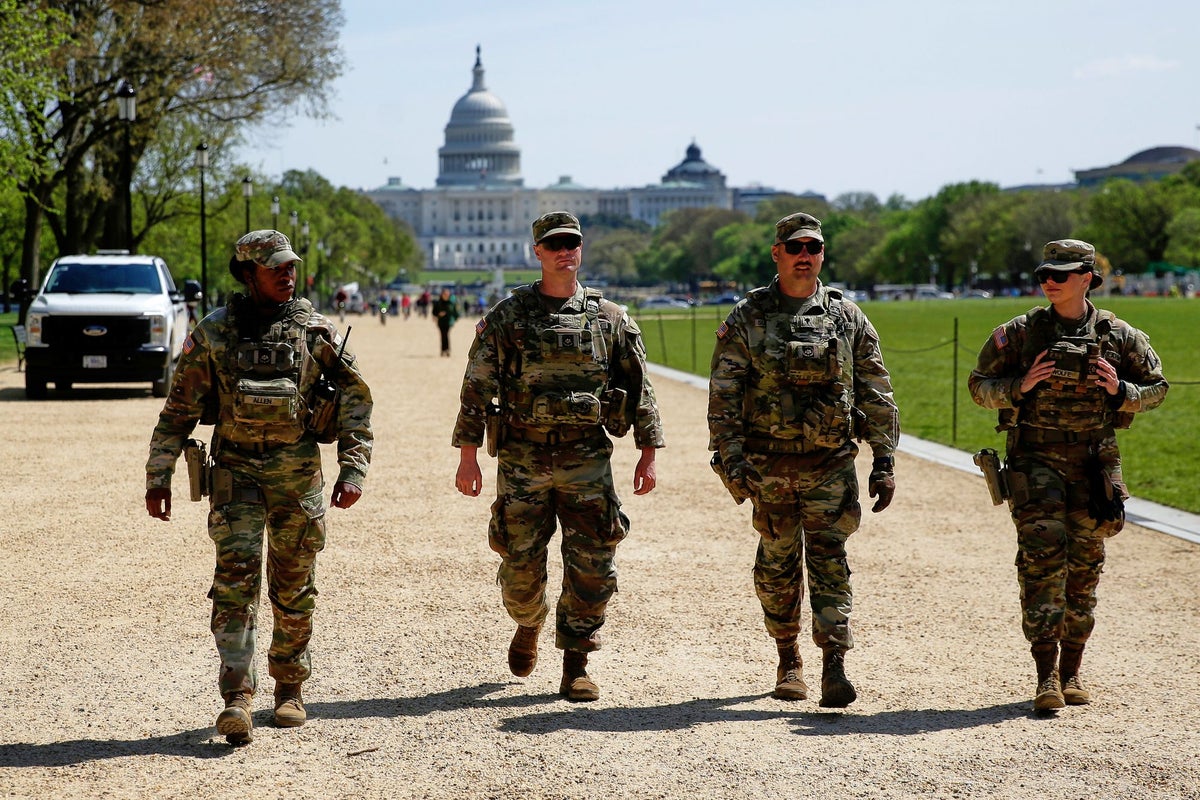
The sight of camouflage and heavy weaponry on the streets of Washington, D.C. has become an expensive new normal. It's been months since the initial deployment, and taxpayers are footing a bill that tops $1 million every single day. This isn't just about security anymore. It's a logistical and financial quagmire. We’re watching a temporary solution turn into a permanent fixture of the capital's geography without a clear explanation of why they're still there or when they're leaving.
You see the humvees parked near the National Mall. You see the soldiers standing behind perimeter fencing. It’s a jarring image for the seat of American democracy, but the real shocker is the ledger. This deployment is draining resources at a rate that should make any fiscal hawk scream. But instead of a timeline for withdrawal, we’re getting vague statements about "ongoing threats" and "evolving security needs."
The massive cost of a permanent military presence
Maintaining thousands of troops in a domestic city is an accounting nightmare. We aren't just talking about salaries. The $1 million daily price tag covers per diem rates, hotel stays because the Guard can’t sleep on the floor forever, equipment maintenance, and the massive cost of transporting units from across the country.
Most people don’t realize that National Guard members have lives, jobs, and families back in their home states. When they’re stuck in D.C. indefinitely, their employers lose workers and their families lose parents. The Pentagon is effectively subsidizing a security layer that was meant to be a stopgap. If the threat is so high that we need a standing army in the capital, why aren't we hearing more about the specific risks?
It's a classic case of mission creep. A force sent in for a specific event stayed for a week, then a month, and now it feels like they're part of the furniture. The Department of Defense hasn't provided a hard "out" date, which usually means the money will keep flowing until someone in Congress makes a loud enough scene about the budget.
Why local officials are getting restless
District leaders aren't exactly thrilled. While security is a priority, the optics of a militarized city are terrible for tourism and local business. Imagine trying to run a coffee shop or a boutique when your storefront is behind a checkpoint. It kills the vibe of a living city.
Washington, D.C. already has a massive police force. We have the Metropolitan Police Department, the U.S. Capitol Police, the Park Police, and the Secret Service. That’s a lot of badges. Adding the National Guard to that mix creates a command-and-control headache. Who's actually in charge? If an incident happens, is it a civilian police matter or a military one? These are the questions that keep civil liberties lawyers up at night.
Honestly, the lack of transparency is the most frustrating part. We're told the Guard is necessary for "continuity of government," but that's a broad term that can justify almost anything. It's basically a blank check for a perpetual deployment.
The toll on the Guard members themselves
Let’s talk about the soldiers. These aren't full-time active-duty troops who signed up to live in a D.C. hotel for half a year. They're teachers, mechanics, and small business owners. They’re being pulled away from their careers to stand on street corners.
Morale is a real factor. Guard members thrive on clear missions with defined start and end dates. When the mission is "stand here until further notice," the drive fades. They’re professionals, sure, but they’re also humans. They want to go home. The longer this drags on, the harder it will be for the Guard to retain people. Why stay in the service if you can be activated indefinitely for a mission that looks a lot like being a glorified security guard?
Breaking down the daily million
Where does that money actually go? It’s not just disappearing into thin air.
- Lodging and Meals: D.C. is one of the most expensive cities in the world. Feeding and housing thousands of troops isn't cheap.
- Operations: Fuel for vehicles, communications gear, and the logistics of rotating units in and out.
- Personnel Costs: Pay and benefits for troops who are often on Title 32 orders, meaning the federal government picks up the tab.
When you add it all up, the million-dollar figure starts to look like a conservative estimate. Some analysts suggest the true cost, including lost economic productivity from the soldiers' civilian jobs, is much higher.
A security theater or a real necessity
There's a fine line between being prepared and being paranoid. If there’s a credible intelligence report suggesting an imminent attack, then by all means, keep the troops there. But the public deserves to know the nature of the threat. Without that information, the National Guard presence starts to look like "security theater."
It’s meant to make people feel safe, but for many, it does the opposite. It creates an atmosphere of tension. It suggests that the city is under constant siege. Is that the image we want to project to the world? A capital city that can’t function without a military perimeter?
The precedent is dangerous. If we can justify a $1 million-a-day deployment in D.C. for months on end, what’s to stop this from happening in other cities whenever there's a hint of unrest? We’re drifting toward a normalized domestic military presence, and that’s a shift that should be debated openly, not buried in a budget report.
The exit strategy that doesn't exist
So, what happens next? Usually, these things end when the money runs out or the political pressure becomes unbearable. We need a clear set of benchmarks. What specific conditions need to be met for the Guard to go home?
- Specific Threat Assessments: The intelligence community needs to provide clear, declassified justifications for why local police can't handle the current environment.
- Budgetary Caps: Congress should put a hard limit on how long federal funds can be used for this specific deployment without a new vote.
- Phased Withdrawal: Start sending units home now. We don't need a massive force for everyday security. Scale it back to a skeleton crew and let the rest of the soldiers return to their lives.
The current situation is unsustainable. We can't keep spending $1 million a day on a "just in case" scenario. It’s time to demand a timeline. It's time to bring the Guard home and return the streets of Washington to the people who live and work there.
Call your representatives. Ask them why the Guard is still there. Ask them why we're spending millions with no end in sight. The longer we stay silent, the more permanent this deployment becomes. Don't let the fences become a permanent part of the skyline.