Scrambling jets is a PR exercise, not a defense strategy. When you read that NATO launched F-16s or Eurofighters because Russian drones hit an oil facility near the border, you are watching a theater of the absurd. The headlines want you to feel a sense of escalating tension and military readiness. The reality is far more embarrassing for the West: we are using million-dollar hammers to swat at five-figure flies, and we are losing the math.
The mainstream narrative is obsessed with the "violation of sovereign airspace" and the "rapid response" of alliance air forces. This focus is a distraction. If a drone is already crashing into an oil terminal, the scrambling of a fighter jet is a post-mortem, not a prevention. You don’t send a supersonic interceptor to stop a lawnmower with wings that has already reached its target. You send it so the evening news has a grainy cockpit photo to show a public that still thinks 20th-century hardware wins 21st-century proxy wars.
The Mathematical Collapse of Traditional Air Superiority
Let’s talk about the cold, hard physics of the "scramble." A standard interceptor mission costs tens of thousands of dollars per flight hour. That is before you factor in the wear on the airframe or the cost of the missiles. A Russian-designed Shahed-series drone, or its local variants, costs somewhere between $20,000 and $50,000.
When NATO scrambles jets to "shadow" or "monitor" these incursions, they are participating in a massive wealth transfer. We are burning through the finite flight hours of our most expensive assets to watch cheap, disposable carbon-fiber shells blow up stationary infrastructure.
- The Velocity Gap: An F-16 is designed to fight other jets. It struggles to fly slow enough to effectively engage a low-altitude, slow-moving drone without risking a stall or using insanely expensive heat-seeking missiles that often cost $400,000 a pop.
- The Attrition Trap: Russia isn't trying to win a dogfight. They are trying to empty the magazines of Western air defense systems. Every time a Patriot battery or a sophisticated jet engages a cheap drone, the cost-exchange ratio tilts further toward Moscow.
I’ve spent enough time around defense procurement to know that "readiness" is often a code word for "justifying the budget." Scrambling jets makes for a great "Action-Reaction" news cycle, but it ignores the tactical reality: the drone already won the moment it forced a billion-dollar integrated defense system to wake up.
The Oil Storage Fallacy
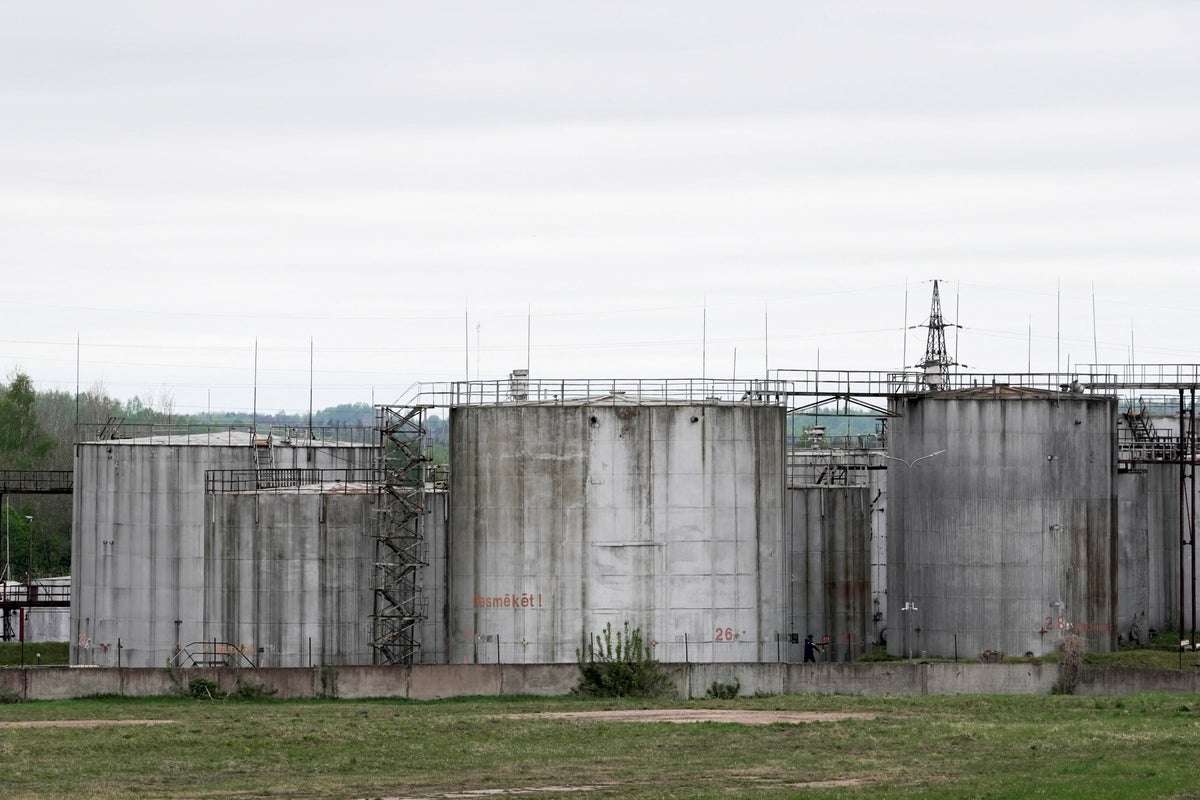
The media fixates on the "oil storage facility" as the primary target. It’s a classic error in strategic analysis. The oil isn't the point. The infrastructure is a secondary concern. The primary target is the psychology of the border.
By hitting targets within a stone's throw of NATO territory—or occasionally "accidentally" drifting across the line—Russia is conducting a stress test of Article 5. They are checking to see where the "red line" actually sits. Is it the moment a drone enters Polish or Romanian airspace? Is it when the debris hits a field? Or is it only when a NATO citizen dies?
By reacting with fighter jets, the Alliance signals panic rather than strength. It shows that we lack a persistent, low-cost "shield" and must rely on "swords" that are too heavy for the task at hand. If we were serious, we wouldn't be talking about jets; we would be talking about a permanent, automated electronic warfare (EW) curtain and high-volume, low-cost kinetic interceptors like Gepard-style flak systems.
Stop Asking if the Jets Reached the Drones
The wrong question is: "Did NATO intercept the threat?"
The right question is: "Why does NATO still rely on 1980s doctrine for a 2026 problem?"
People also ask if these crashes are intentional provocations or navigation errors. It doesn't matter. In modern warfare, the "intent" is found in the result. If a drone crashes in a NATO member state and the only response is a "scramble" and a strongly worded diplomatic cable, the intent was to prove that the border is porous.
We are currently obsessed with "air superiority." But you cannot have air superiority against an enemy that doesn't care about keeping its aircraft. Russia is treating the sky like a sea of cheap, guided loitering munitions. NATO is still treating the sky like a chess board where every piece is a Queen.
The Electronic Warfare Ghost
If you want to know what’s actually happening, stop looking at the flight tracks of the jets. Look at the GPS interference maps over the Baltics and the Black Sea. This is where the real war is fought.
The "scrambled" jets are often flying blind—or at least partially degraded—as massive EW complexes in Kaliningrad or Crimea saturate the area with noise. When a drone "crashes" into an oil facility, it’s often because its guidance was jammed, not because a pilot performed a heroic maneuver.
Imagine a scenario where a NATO jet, in its haste to "shadow" a drone, enters a high-intensity EW zone, loses its primary navigation, and has a mid-air incident. That is the win Russia is actually looking for. They aren't trying to bomb a shed in Romania; they are trying to bait a high-value Western asset into a catastrophic failure during a high-stress, low-value intercept.
The Hardware Pivot Nobody Wants to Admit
We need to stop celebrating the scramble. It is a failure of modern border security.
True defense in this era looks boring. It looks like thousands of small, automated jamming towers. It looks like microwave directed-energy weapons that cook a drone's circuits for pennies. It looks like 30mm cannons with programmable airburst ammunition.
But you can't put a 30mm cannon on the cover of a magazine and call it "Projecting Power." You can't justify a multi-billion dollar aerospace contract by saying you've perfected a short-range radio jammer.
We are addicted to the "Top Gun" imagery of the scramble because it’s easier than admitting our current military-industrial complex is fundamentally unsuited for the age of the expendable machine. We are bringing a scalpel to a riot. It’s precise, it’s expensive, and it’s completely the wrong tool.
Every time a headline shouts about jets being "scrambled," Russia laughs. They just traded a pile of scrap metal for a multi-million dollar demonstration of NATO's tactical inflexibility. We are being bled dry, one "precautionary launch" at a time.
Stop looking at the jets. Look at the invoice.