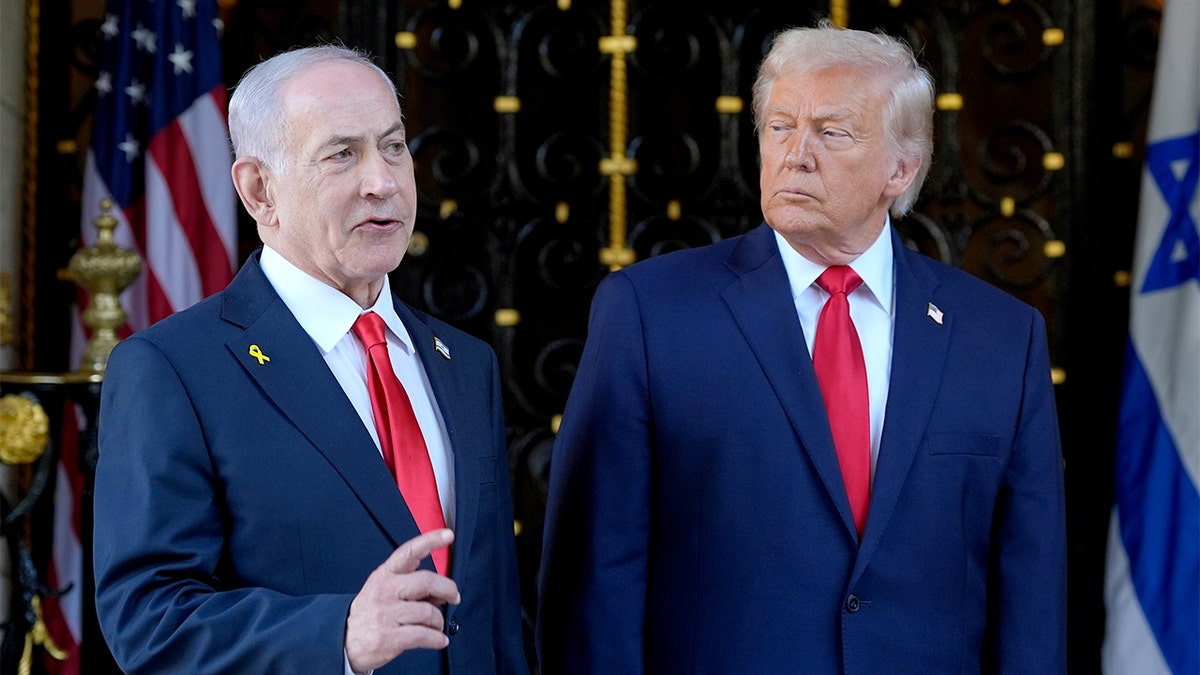
The pundit class is obsessed with the optics of the "snub." They watch Benjamin Netanyahu’s video addressing the Lebanese people—specifically the segment warning of "destruction like Gaza"—and they immediately scramble to view it through the narrow lens of the 2024 U.S. election. The lazy consensus suggests Netanyahu is either defying Donald Trump’s calls for peace or signaling a preference for a specific American administration.
This analysis is not just shallow; it is fundamentally wrong.
Netanyahu isn't snubbing Donald Trump. He isn't snubbing Joe Biden. He is actively moving past the era where the United States is the primary audience for Israeli military strategy. While Washington journalists argue over whether a three-minute video clip is a "middle finger" to Mar-a-Lago, the Israeli security establishment is executing a cold, calculated shift toward regional unilateralism. The video wasn't a campaign message for Americans; it was a psychological warfare operation aimed at the Mediterranean coast.
The Fallacy of the American Audience
Foreign policy "experts" love to center every global event around the White House. They assume that if an Israeli leader speaks, he must be checking the wind in D.C. first. This "Washington-Centric Fallacy" ignores the existential math on the ground in the Middle East.
When Netanyahu threatens Lebanon with "long suffering," he is responding to the internal pressure of 60,000 displaced Israelis and the tactical necessity of breaking the Hezbollah-Hamas "unity of fronts."
The logic of the armchair critics:
- Trump wants "deals" and quick resolutions.
- Netanyahu is escalating.
- Therefore, Netanyahu is defying Trump.
The reality of the insider:
- Netanyahu understands that American political cycles are four years, but the Hezbollah threat is permanent.
- He is using the current transition period—a time of perceived American weakness or distraction—to reset the regional status quo.
- The video is a direct appeal to the Lebanese populace to decouple their fate from Iran, regardless of who sits in the Oval Office.
Why "Peace Through Strength" is Being Replaced by "Security Through Erasure"
The media keeps asking: "Does this video hurt Trump’s brand as a peacemaker?" This is the wrong question. The real question is whether Netanyahu believes the U.S. can still provide the deterrent umbrella Israel needs. The answer is clearly "no."
For decades, the U.S.-Israel relationship was built on the idea of management. Manage the conflict. Manage the escalations. Netanyahu’s rhetoric signals the death of management. He is pivoting to a strategy of resolution through kinetic force.
Imagine a scenario where a CEO ignores a board member’s suggestion to "play nice" with a competitor because the CEO knows the competitor is literally trying to burn the warehouse down. Is that a snub? No, it’s a fiduciary duty to survive. Netanyahu views the Hezbollah threat not as a diplomatic puzzle to be solved by a savvy negotiator, but as a physical barrier to the state's continued existence.
The Misunderstood Mechanics of the Video
The "Lebanon Destruction" video was a Masterclass in tactical psychological operations (PSYOPs), yet the media treated it like a campaign ad.
Netanyahu spoke in English. The critics pounced: "He’s talking to the West!" Wrong. He spoke in English because English is the lingua franca of the Lebanese elite and the international business community in Beirut—the people who actually have something to lose. He wasn't talking to the Biden administration; he was talking to the Lebanese bankers, the Maronite Christians, and the Sunni merchants who do not want to see their skyscrapers turned into the rubble of Khan Yunis.
By threatening Gaza-style destruction, Netanyahu is attempting to create a domestic rift in Lebanon. He is forcing the Lebanese citizen to choose: Hezbollah or Lebanon.
The Trump "Snub" Narrative is a Projection
The idea that Netanyahu is snubbing Trump assumes that Trump’s "peace" and Netanyahu’s "victory" are mutually exclusive. They aren't. In fact, they are perfectly aligned in a way the media refuses to acknowledge.
Trump’s foreign policy has always been transactional and results-oriented. If Netanyahu can "finish the job" before January 2025, or at least break the back of the Iranian proxy network, he hands the next administration a fait accompli. He doesn't want to snub a future president; he wants to present that president with a Middle East where the "Hezbollah problem" is already solved, or at least fundamentally altered.
The pundits claim Netanyahu is being reckless. I’ve seen this play out in corporate boardrooms a thousand times: the "reckless" actor is often the only one in the room with a clear-eyed view of the bottom line. While the consultants (the U.S. State Department) preach "gradualism" and "de-escalation," the stakeholder (Israel) knows that half-measures lead to bankruptcy.
Dismantling the "People Also Ask" Nonsense
Is Netanyahu trying to influence the U.S. election?
The premise is narcissistic. While Netanyahu certainly has preferences, his primary concern is the 150,000 rockets pointed at Tel Aviv. To suggest he would modulate a survival-level military threat just to help or hurt a candidate in Pennsylvania is an insult to the gravity of the situation.
Does this rhetoric make Israel less safe?
The status quo of the last 15 years—where Hezbollah built a "ring of fire" around Israel while the world talked about "stability"—is what made Israel unsafe. Netanyahu is betting that a credible threat of total destruction is a more effective deterrent than a UN resolution that isn't worth the paper it's printed on.
The Hidden Danger: The Unintended Audience
If there is a flaw in Netanyahu’s aggressive messaging, it isn't that it offends Trump. It’s that it validates the Iranian narrative of "The Zionist Entity" as an inherent aggressor.
The risk isn't a diplomatic snub; it's a regional mobilization. By explicitly threatening a Gaza-style campaign in Lebanon, Netanyahu may be inadvertently strengthening the very "unity of fronts" he is trying to dismantle. If the Lebanese people feel that destruction is inevitable regardless of Hezbollah’s actions, they have no incentive to resist the militia.
This is the nuance the "snub" articles miss. The danger isn't political friction in Washington. The danger is a strategic misfire in Beirut.
The New Rules of Engagement
We are witnessing the end of the "Client State" era. For years, Israel acted like a junior partner that needed permission for every major move. That era ended on October 7.
Netanyahu’s video is a declaration of independence from the expectations of the Western diplomatic elite. He is signaling that Israel will define its own red lines, its own victory conditions, and its own methods of warfare.
If Trump is offended, Netanyahu will deal with that later. If Biden is concerned, Netanyahu will listen and then proceed. The "snub" is a ghost. The reality is a nation-state deciding that its survival is not a matter for negotiation or international consensus.
Stop looking at the polls in Michigan and start looking at the logistics in Haifa. Netanyahu isn't playing for the next news cycle; he’s playing for the next fifty years. He is betting that the world respects power more than it respects compliance. And in the brutal reality of the Levant, he might be right.
The video wasn't a snub. It was a funeral for the idea that Israel can be managed.
Get used to it.