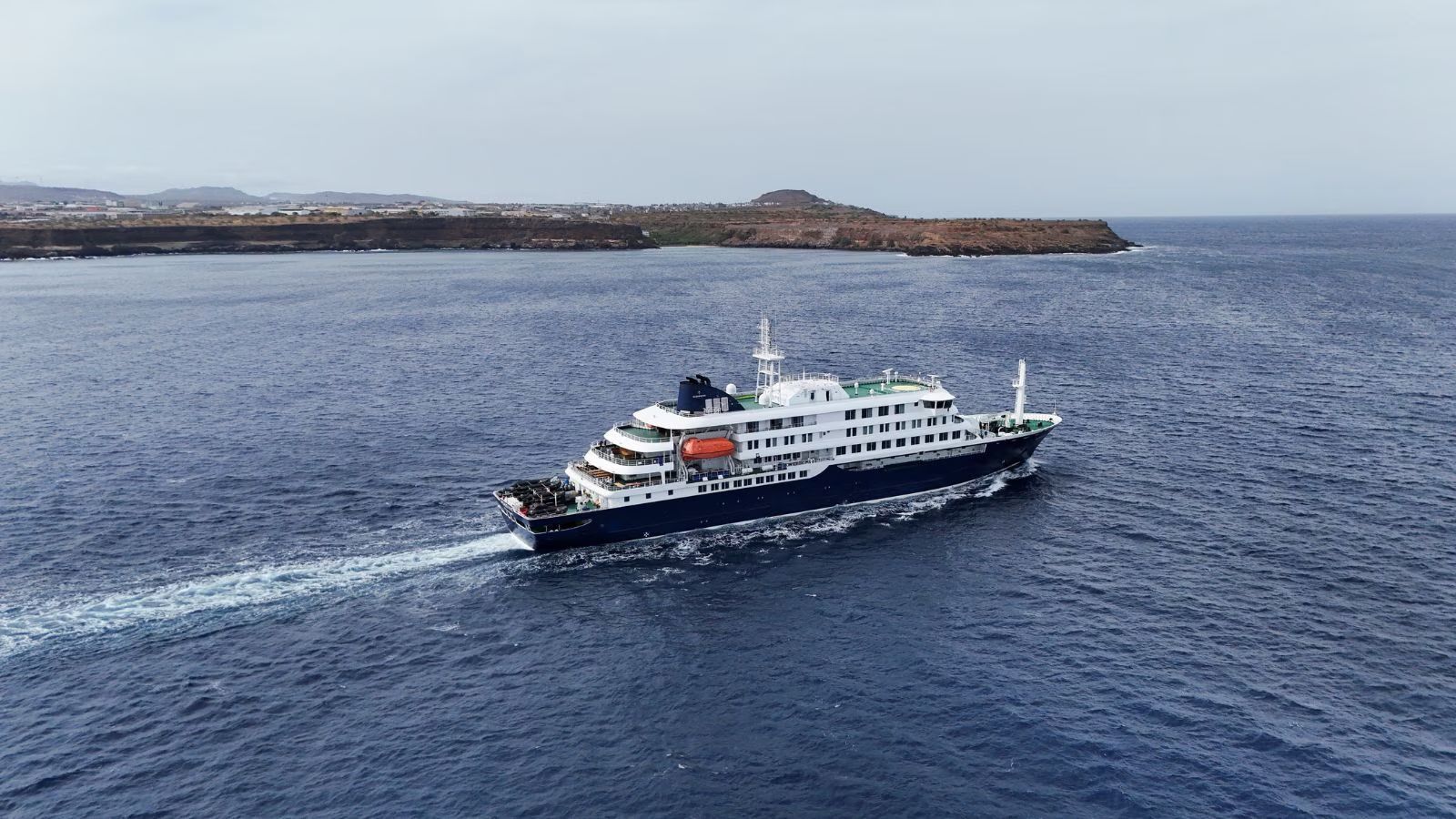
The disembarkation of passengers from a cruise vessel in Tenerife following a Hantavirus outbreak exposes a critical vulnerability in maritime biosecurity: the disconnect between luxury hospitality standards and rigorous zoonotic vector control. While the cruise industry prioritizes aesthetic sanitation, the biological reality of Hantavirus—a pathogen primarily transmitted via aerosolized rodent excreta—indicates a localized failure in supply chain integrity or structural pest exclusion. This incident is not merely a medical anomaly; it is a breakdown in the Integrated Pest Management (IPM) protocols that govern international shipping.
The Zoonotic Transmission Chain in Maritime Environments
Hantaviruses are not transmitted human-to-human in the vast majority of cases. Their presence on a vessel necessitates a direct link to the Muridae family of rodents. The transition from a terrestrial reservoir to a stabilized maritime environment involves three distinct entry points that current cruise ship designs struggle to mitigate. Meanwhile, you can explore other stories here: Why Caribbean Cruises Are Still Dealing with Norovirus Outbreaks.
- Supply Chain Infiltration: Provisions sourced from regional distribution centers where rodent populations are endemic. If grain or dry goods are contaminated at the point of origin, the virus survives in desiccated droppings or urine.
- Infrastructure Voids: Ships are essentially floating cities with miles of internal ducting, cable runs, and void spaces. These "highways" allow rodents to move from lower-deck storage to passenger-facing ventilation systems.
- Port-Side Breach: Traditional mooring lines are the primary physical bridge between the pier and the ship. The failure to maintain "rat guards"—the conical disks intended to prevent ascent—represents a basic operational lapse.
The primary risk to passengers on this specific vessel was not proximity to one another, but the aerosolization of viral particles through the Heating, Ventilation, and Air Conditioning (HVAC) system. When infected rodent waste is disturbed—either by cleaning crews or air movement—the virus becomes airborne. Inhaling these microscopic particles triggers the onset of Hantavirus Pulmonary Syndrome (HPS) or Hemorrhagic Fever with Renal Syndrome (HFRS), depending on the specific viral strain.
Quantifying the Response Lag
In maritime medicine, the "Time to Intervention" (TTI) is the most significant predictor of legal and physical liability. The delay between the first reported symptom and the decision to dock in Tenerife suggests a failure in differential diagnosis. Because Hantavirus symptoms—fever, myalgia, and fatigue—mimic more common shipboard illnesses like Norovirus or Influenza, medical staff often default to the most statistically likely cause. To explore the complete picture, we recommend the excellent analysis by Lonely Planet.
This creates a diagnostic bottleneck. By the time respiratory distress occurs, the viral load within the environment has likely reached a saturation point. The decision to disembark in Tenerife was a logistical necessity driven by the ship's inability to provide Level 3 biocontainment. Cruise ship infirmaries are designed for stabilization, not the management of high-pathogenicity zoonotic outbreaks.
Structural Vulnerabilities of the Cruise Industry
The cruise industry operates on a high-density, high-turnover model. This model creates an "Efficiency-Risk Paradox." To maintain profitability, turnaround times at port are minimized, often leaving insufficient windows for deep-cleansing protocols that address sub-surface reservoirs of pathogens.
The HVAC Vector
Standard HEPA filtration on commercial vessels is often insufficient to trap all viral particles if the exchange rate is not optimized for biosecurity. If a rodent dies within a ventilation shaft, the airflow serves as a distribution mechanism for pathogens. Unlike a hotel on land, a ship is a closed pressurized system, meaning the concentration of airborne contaminants can increase exponentially without significant fresh air intake.
Vector Control Disparity
Most cruise lines outsource pest control to third-party contractors who focus on visible infestations (cockroaches or bedbugs). However, Hantavirus requires a focus on cryptic infestations. This involves infrared scanning of void spaces and DNA swabbing of dust in ventilation returns—measures that are currently not standard in the industry’s "Health and Safety" checklists.
Financial and Reputational Cost Functions
The economic impact of the Tenerife disembarkation extends beyond the immediate medical costs. The industry uses a specific formula to calculate the cost of a "Bio-Event" (BE):
$$C_{BE} = L_{R} + O_{D} + P_{C} + R_{D}$$
Where:
- $L_{R}$ = Loss of Revenue from cancelled future bookings.
- $O_{D}$ = Operational Deviation (fuel, port fees, docking penalties).
- $P_{C}$ = Passenger Compensation (refunds, medical bills, litigation).
- $R_{D}$ = Reputational Devaluation (impact on stock price or brand equity).
In the case of a Hantavirus outbreak, $R_{D}$ is disproportionately high because the disease is associated with "unsanitary" conditions (rodents), unlike Norovirus, which is often blamed on passenger hygiene. This creates a branding crisis that is harder to resolve through traditional PR channels.
Operational Requirements for Biosecurity Hardening
To prevent a recurrence, maritime operators must shift from reactive cleaning to proactive structural exclusion. This requires a three-tier strategy:
- Molecular Surveillance: Implementation of routine Environmental DNA (eDNA) testing in cargo holds and galley sub-floors. This identifies the presence of rodent genetic material before a physical sighting occurs.
- Aseptic Supply Chain Management: Requiring suppliers to provide "Certified Rodent-Free" (CRF) documentation for all palletized goods, backed by thermal imaging inspections during the loading process.
- Zonal Isolation: Redesigning HVAC systems to allow for the immediate isolation of specific decks. In the Tenerife incident, the inability to "wall off" the contaminated air supply necessitated the total evacuation of the vessel.
The current strategy of "disembark and disinfect" is a 19th-century solution to a 21st-century logistical problem. Disinfecting the surfaces of a ship is useless if the source of the virus—the rodent population and its nesting sites—remains embedded in the ship’s internal architecture.
The Strategic Shift to Bio-Resilient Infrastructure
The Tenerife incident serves as a signal that the regulatory environment for cruise ships is likely to tighten. We should expect the International Maritime Organization (IMO) to introduce stricter guidelines regarding zoonotic vector controls.
Operators must now treat biosecurity as a core engineering requirement rather than a housekeeping task. This means replacing porous insulation materials that provide nesting sites for rodents with closed-cell foam and installing ultrasonic deterrents within cable chases. The long-term viability of high-capacity cruising depends on the ability to guarantee a sterile environment that is physically separated from the surrounding ecological risks of port cities and global trade routes.
The immediate move for cruise line executives is to audit all "Void Space Management" protocols. If your safety manual does not include a map of internal rodent migration paths and a corresponding filtration strategy for each, the vessel is operating at an unacceptable level of biological risk. Total transparency regarding the source of the Tenerife breach is the only way to restore the trust required to maintain current passenger density levels.