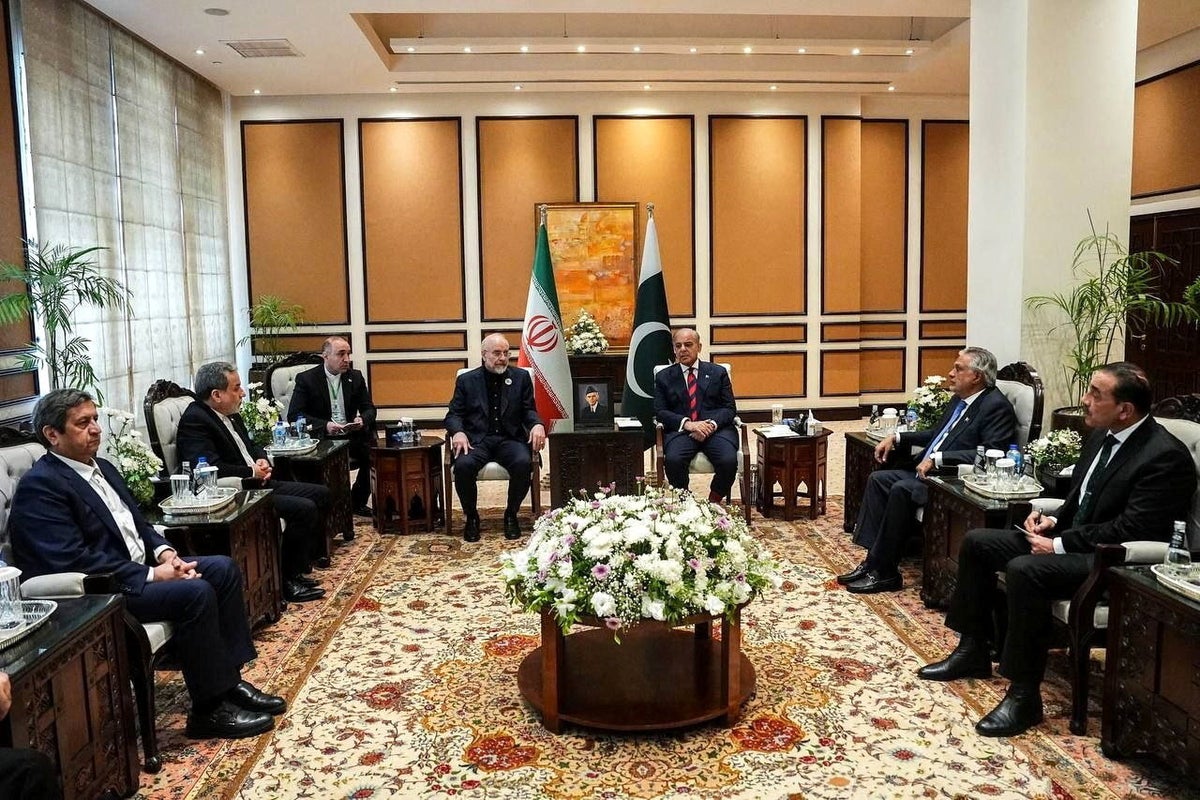
Pakistan is currently sitting in the world's most awkward waiting room. While the ceasefire in Lebanon hangs by a thread that gets thinner every hour, high-level officials from both Washington and Tehran have descended on Islamabad. This isn't a coincidence. It's a high-stakes diplomatic scramble. They aren't there for the tea. They're there because Pakistan holds a unique, often overlooked position as a bridge—or a potential fuse—in a Middle East that’s currently on fire.
The timing is everything. Just as US and Iranian envoys arrived to meet with Pakistani leadership, the fragile truce between Israel and Hezbollah started taking hits. If that ceasefire collapses, the region doesn't just go back to "normal" fighting. It slides into a wider war that neither the West nor the East is ready to handle. Pakistan, a nuclear-armed nation with deep ties to the US and a long, complicated border with Iran, is the only player that can talk to both sides without looking over its shoulder. Meanwhile, you can explore similar events here: The Islamabad Gamble: JD Vance and the Brutal Reality of the New Persian War.
The Diplomatic Balancing Act in Islamabad
Islamabad has spent decades trying to keep both the US and Iran happy. It’s a nightmare of a job. On one hand, you have the American side, led recently by Deputy Secretary of State Richard Verma, pushing for regional stability and looking for partners to help contain the fallout from the Levant. On the other, you have Iranian Foreign Minister Abbas Araghchi making frequent stops to ensure Pakistan doesn't lean too far into the Western camp.
This isn't just about handshakes. It’s about survival. Pakistan needs American investment and military cooperation to stay afloat. But it can't afford to alienate a neighbor like Iran, especially with the shared security mess in the Balochistan region. When these two powers meet in the same capital within days of each other, they're using Pakistan as a neutral ground to pass messages that they can't—or won't—say directly to each other. It’s the ultimate game of "tell him I’m not talking to him," but with regional stability on the line. To see the full picture, check out the recent article by The New York Times.
Why the Lebanon Ceasefire Matters to South Asia
You might think Lebanon is too far away to matter to a shopkeeper in Lahore. You'd be wrong. The Lebanese ceasefire is the barometer for the entire region's temperature. If Hezbollah and Israel go back to full-scale kinetic warfare, Iran is forced to decide how much it’s willing to lose to protect its most valuable proxy.
If Iran gets sucked deeper into the conflict, the pressure on Pakistan doubles. Washington will expect Islamabad to tighten the screws on Iranian influence. Tehran will expect "brotherly" cooperation or at least a blind eye. Pakistan’s Prime Minister Shehbaz Sharif is basically trying to walk a tightrope during a hurricane. He knows that any spark in Beirut eventually sends smoke toward his own borders.
The Quiet Crisis on the Border
While the world watches the missiles in the Middle East, the Pakistan-Iran border is simmering. This is the detail most mainstream reports skip. Both countries have been trading accusations—and occasionally missiles—over militant groups operating in the borderlands.
During these recent meetings, Iranian officials haven't just talked about Lebanon. They’ve talked about the Jaish al-Adl militants. They’ve talked about border security. They want Pakistan to be a buffer, not a staging ground. Meanwhile, the US wants Pakistan to keep its focus on counter-terrorism and away from helping Iran bypass international sanctions. It’s a messy, overlapping web of demands that leaves Pakistan with zero room for error.
Pakistan’s Nuclear Shadow
Let’s be real about why everyone is actually in Islamabad. Pakistan is the only Muslim-majority country with a nuclear arsenal. In a region where "nuclear breakout" is the phrase that keeps every general in the Pentagon awake at night, Pakistan’s stance is a massive factor.
The US wants to ensure that as the Middle East destabilizes, Pakistan’s strategic assets remain secure and its foreign policy remains predictable. Iran, meanwhile, wants to ensure that Pakistan doesn't become a launchpad for any potential Western "contingencies" against Tehran. This isn't just about diplomacy. It’s about managing the heaviest hitters on the global stage.
Breaking the Cycle of Neutrality
Pakistan likes to call its policy "non-alignment." In reality, it’s a policy of desperate pragmatism. They can't afford to choose. If they pick the US, they face a hostile neighbor and internal unrest from pro-Iran factions. If they pick Iran, the IMF loans—the only thing keeping the lights on in Islamabad—evaporate overnight.
So, what did these meetings actually achieve? Probably not a breakthrough. But in the world of high-stakes geopolitics, "not a disaster" is a win. By hosting both sides, Pakistan proves it’s still relevant. It proves that even as the world shifts toward a more polarized "East vs West" dynamic, there’s still a need for a middleman who knows how to handle both.
What Happens if the Lebanon Truce Fails
If the fighting in Lebanon ramps up this week, expect the traffic to Islamabad to get even heavier. The US will look for ways to isolate Iran further, and Pakistan will be the first place they go to ask for "cooperation." Iran will do the exact opposite.
The Lebanese ceasefire isn't just a local agreement. It’s the linchpin of a much larger global strategy. If it snaps, the meetings we just saw in Pakistan will look like the opening act of a much longer, much uglier play. Pakistan isn't just a spectator. It’s the stage.
If you're watching the news, don't just look at the maps of Beirut or Tel Aviv. Watch the flight paths into Islamabad. That’s where the real deals—or the real breakdowns—are happening. The next few weeks will decide if Pakistan can keep its balance or if the weight of two empires will finally pull it down. Keep an eye on the border trade agreements and the specific language used by the State Department regarding Pakistani "sovereignty." Those are the tells. If the rhetoric gets sharper, the peace is already gone.



