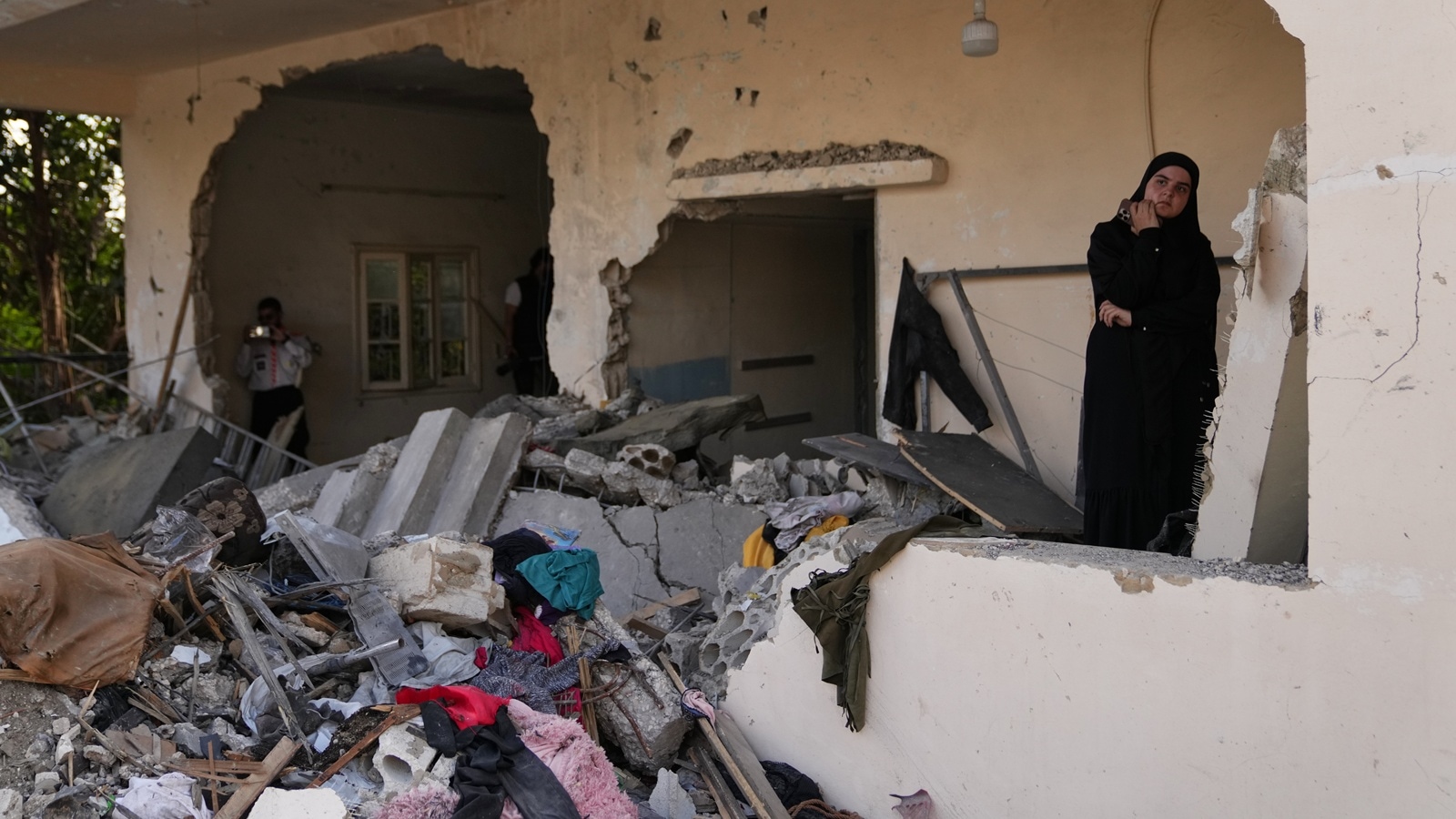
The standard media script is exhausting. You’ve seen it a thousand times: diplomats in expensive suits sit in a neutral European city, "cautious optimism" leaks to the press, and the public is told that a breakthrough is imminent. Then, a rocket screams across the border, an artillery shell levels a structure, and the pundits act shocked. They call it a "violation." They call it "sabotage."
They are wrong.
In the Levant, the violence isn't an interruption of the peace process; it is the most vital part of the negotiation. To view Hezbollah’s latest strikes on Israel as a failure of diplomacy is to fundamentally misunderstand how power works in a proxy-heavy, asymmetric conflict. These aren't "violations" of a ceasefire. They are the opening arguments of the second round.
The Myth of the Good Faith Ceasefire
The "lazy consensus" in Western journalism assumes that parties enter a ceasefire because they want the shooting to stop forever. That is a fantasy born of comfort. In reality, a ceasefire is a tactical pause used to rearm, reposition, and—most importantly—test the threshold of the opponent’s resolve.
When Hezbollah strikes Israel the day before a scheduled meeting, they aren't trying to end the talks. They are anchoring their position. They are signaling that their capacity to inflict pain remains intact despite months of Israeli air campaigns. If you go to the table after a week of silence, you go as a party that has been suppressed. If you go to the table after a successful strike, you go as an active combatant.
Israel’s retaliatory strikes serve the same function. This is not a "cycle of violence." It is a sophisticated, kinetic dialogue.
Deconstructing the Violation Narrative
Stop using the word "violation" as if there is a referee on the field. There is no referee. The UNIFIL forces in Southern Lebanon are essentially high-priced observers with no mandate to actually stop a determined militant group or a state military.
When the media reports that Hezbollah fired because of "Israeli violations," they are falling for a propaganda trap. Both sides create "violations" to justify their next move.
- Tactical Encroachment: Moving a sensor a hundred yards.
- Overflights: Israeli jets breaking the sound barrier over Beirut.
- The Reaction: A Kornet missile hitting a technical fence.
In any other context, we would call this a stress test. In the Middle East, we call it a "fragile truce." It isn't fragile. It’s working exactly as intended: it keeps the conflict simmering at a level that avoids total regional war while allowing both sides to claim they are "defending" their sovereignty.
Why the Second Round is Already Rigged
The second round of peace talks is often touted as the moment when the "real work" begins. This is a delusion. The real work happened in the six months of blood that preceded the first round.
By the time negotiators sit down, the borders have already been drawn in dirt and shell casings. Hezbollah knows it cannot push the IDF back to Tel Aviv. Israel knows it cannot fully "erase" Hezbollah without an occupation of Lebanon that would bankrupt the country and destroy its international standing.
So, what are they actually talking about?
- Buffer Zones: Defining exactly how many kilometers of "empty" space will exist.
- Monitoring: Deciding which ineffective international body will pretend to watch the border.
- Face-saving: Designing a document that allows both Netanyahu and Hezbollah leadership to tell their respective bases that they won.
If you think these talks are about "peace" in the Jeffersonian sense, you are the mark. These talks are about managing the rate of attrition.
The Cost of the Diplomacy Industrial Complex
I’ve watched billions of dollars and decades of "diplomatic capital" vanish into the vacuum of the Levant. The mistake is always the same: treating a religious and existential struggle like a labor dispute at a car factory.
In a labor dispute, you can split the difference on wages. In a conflict where one side views the other as an illegitimate colonial entity and the other views its opponent as a genocidal proxy of Iran, there is no "middle ground." There is only a temporary equilibrium of exhaustion.
The "insider" secret that no one wants to admit is that stability is often the enemy of a permanent solution. By constantly rushing to "de-escalate," the international community prevents either side from achieving a decisive outcome. We have created a system where the war never ends because we never let it finish. We just reset the clock every time it gets too loud.
The Iran Factor: The Invisible Man at the Table
You cannot talk about Hezbollah’s "violations" without talking about Tehran. Hezbollah is not a rogue militia; it is the most successful export of the Islamic Revolutionary Guard Corps (IRGC).
When Hezbollah fires a rocket 24 hours before a meeting, they are checking the pulse of the regional power dynamic. They are making sure that the United States knows that any deal made in a vacuum, without considering Iran’s broader interests—from the Red Sea to the nuclear program—is a deal written in sand.
Israel knows this. Their strikes aren't just against launch sites; they are messages to the Iranian leadership. "We can hit your assets whenever we want, regardless of what the diplomats are saying in Geneva or Paris."
Stop Asking if the Ceasefire Will Hold
The most common question people ask is: "Will the ceasefire hold?"
It’s the wrong question. It’s a fundamentally flawed premise. A ceasefire "holds" as long as both sides feel they are gaining more from the silence than from the noise. The moment the math shifts, the "violation" occurs.
Instead, ask this: What is the price of the next silence?
Right now, the price for Israel is the continued displacement of tens of thousands of citizens in the north. The price for Hezbollah is the continued degradation of its middle-management and missile stockpiles. Both sides are currently comfortable paying those prices. When one side finds the cost too high, they will sign a paper. They will shake hands. They will go home.
And they will start preparing for the next round.
The Brutal Reality of "Peace" Talks
Peace is not the absence of war. In this region, peace is merely the period where you gather enough stones to throw in the next fight.
The strikes we saw today aren't a sign that the talks are failing. They are a sign that the talks are getting serious. When the stakes are high, you don't show up to the table with a gift basket; you show up with a smoking gun to remind everyone why they bothered to sit down in the first place.
If you want to understand the Middle East, stop reading the communiqués. Watch the flight paths. Count the shells. The truth isn't in the ink; it’s in the gunpowder.
The diplomats are just there to provide the soundtrack for the inevitable.
Get used to the noise. It's the only thing that's real.