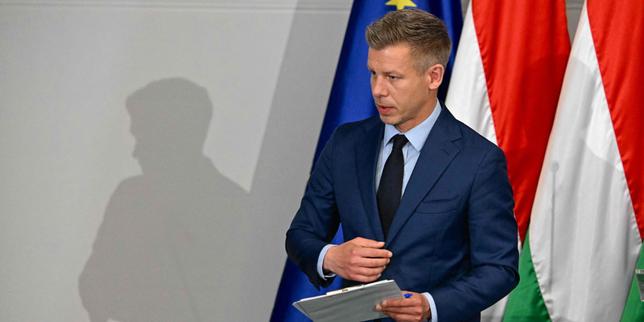
Péter Magyar, the breakaway challenger threatening Viktor Orbán’s fourteen-year grip on Hungary, has officially signaled a seismic shift in the country's foreign policy. Should his Tisza party take power, Hungary will no longer act as a European sanctuary for those fleeing international justice. Specifically, Magyar has confirmed that his administration would execute all International Criminal Court (ICC) warrants, including the one issued for Israeli Prime Minister Benjamin Netanyahu. This is not merely a legal technicality. It is a calculated demolition of the "illiberal" fortress Orbán spent over a decade building.
The current Hungarian government has spent years refining a specific brand of diplomatic obstructionism. By refusing to publish or enforce ICC warrants, the Orbán administration positioned Hungary as a unique outlier in the European Union—a place where geopolitical loyalty supersedes international treaties. Magyar’s declaration strips away that protection. It signals to Brussels and Washington that the "Hungarian veto" is a dying instrument of statecraft. For a different look, see: this related article.
The Legal Trap Orbán Built for Himself
To understand why Magyar’s stance is so disruptive, one must look at the specific legal knots the Fidesz party tied over the last decade. Hungary is a signatory to the Rome Statute, the founding treaty of the ICC. However, the Orbán government has consistently argued that the statute was never properly "promulgated" into Hungarian domestic law. This creates a convenient gray zone where the government can claim it lacks the constitutional authority to arrest someone like Netanyahu or Vladimir Putin, despite the country's international obligations.
Magyar is an insider. He knows exactly where the bodies are buried because he helped dig the graves. As a former high-ranking official within the Fidesz machine, he understands that this legal ambiguity is a choice, not a mistake. By promising to close this loophole, he is doing more than targeting specific world leaders. He is promising to dismantle the very mechanism Orbán uses to exert leverage over the EU. Similar reporting on this trend has been shared by The New York Times.
The "promulgation" excuse has always been a thin veneer for realpolitik. When the ICC issued a warrant for Putin, the Hungarian Prime Minister’s office was quick to call it "unfortunate." By contrast, Magyar’s approach treats international law as a binary. You are either in the club or you are out. His insistence on following ICC mandates suggests a return to a pre-2010 consensus where Hungary sought to be a "good student" of Western institutions rather than their loudest critic.
The Netanyahu Warrant and the Pro-Israel Gambit
The mention of Benjamin Netanyahu is particularly pointed. Orbán has cultivated a deep, personal alliance with the Israeli Prime Minister, framing it as a partnership of "sovereigntists" against "globalist" forces. In the halls of Budapest, Netanyahu is often held up as a model for how a small nation can punch above its weight by ignoring international condemnation.
Magyar’s willingness to break this bond is a high-stakes gamble. It risks alienating conservative voters who see the Orbán-Netanyahu axis as a necessary defense of Western values. Yet, Magyar is betting that the Hungarian public is more tired of international isolation than they are invested in Middle Eastern geopolitics. He is framing the issue not as a critique of Israel, but as a restoration of Hungarian reliability.
The Mechanics of an Arrest
If an ICC warrant holder were to land at Budapest Ferenc Liszt International Airport under a Magyar government, the process would look fundamentally different than it does today. Currently, the police would likely receive orders to stand down or find a bureaucratic reason to delay. Under the proposed Tisza framework, the judicial path would be streamlined.
- Judicial Independence: Re-establishing the wall between the Ministry of Justice and the Prosecutor General’s office.
- Direct Incorporation: Passing the legislative amendment to fully integrate the Rome Statute into the national penal code.
- Police Cooperation: Re-aligning the National Bureau of Investigation (NNI) with Interpol and Europol standards for high-priority targets.
This isn't just about Netanyahu. It’s about signaling to every foreign investor and diplomatic mission that the rules in Budapest are once again predictable. Predictability is the one thing the Orbán era lacks.
The Shadow of the Kremlin
While Netanyahu is the current headline, the ghost in the room is Vladimir Putin. Hungary’s refusal to commit to an arrest warrant for the Russian leader has been a primary source of friction with the North Atlantic Treaty Organization (NATO). Magyar’s "all-in" approach on international warrants naturally extends to Moscow.
This is where the investigative trail leads to the energy sector. Hungary’s reliance on Russian gas and the Paks II nuclear power plant expansion are the golden handcuffs that keep Orbán tethered to Putin. If Magyar commits to arresting Putin, he is effectively committing to a total decoupling of the Hungarian economy from Russian influence. It is a promise of a "Cold War" style pivot that most European leaders have already made, but which remains a radical concept in Budapest.
The risk for Magyar is that he is promising a transition that could cause immediate economic pain. Decoupling from Russia isn't just about politics; it’s about heating homes and keeping the lights on in a country with few natural resources.
The Inside-Out Strategy of Péter Magyar
Magyar is not a traditional opposition figure. He does not come from the liberal intelligentsia of the 1990s or the socialist remnants of the early 2000s. He is a product of the very system he seeks to destroy. This gives him a unique "Experience" factor that his predecessors lacked. He speaks the language of the Fidesz base.
He knows that for many Hungarians, the "sovereignty" argument has started to feel like a cover for corruption. When the government says it won't execute a warrant to "protect Hungarian interests," a growing segment of the population hears "to protect the elite's friends." By pivoting to a hardline pro-ICC stance, Magyar is attempting to reclaim the concept of the rule of law from the "Brussels vs. Budapest" narrative.
He is essentially saying that true sovereignty comes from being a trusted partner, not a rogue state. This is a sophisticated rebranding. He isn't arguing for a surrender to the EU; he is arguing for a takeover of Hungary’s rightful place within it.
Digital Warfare and the Propaganda Machine
The response from the government-controlled media has been swift and predictable. They have framed Magyar’s stance as a betrayal of Hungary’s allies. They use sophisticated data tracking and social media bot nets to flood the zone with the message that Magyar is a "war proponent" who would drag Hungary into global conflicts by arresting world leaders.
However, the technology of dissent is catching up. Magyar has utilized Telegram and encrypted messaging apps to bypass the state-run television networks. He is running an analog campaign—massive rallies in rural towns—supported by a digital infrastructure that the government hasn't yet figured out how to switch off. The battle for the ICC warrants is being fought in the comment sections of Facebook as much as it is in the legislative chambers.
A Fracture in the Visegrád Four
The "V4" group (Poland, Czech Republic, Slovakia, and Hungary) was once a solid bloc of Central European resistance to Western EU norms. With Poland’s recent shift away from populism and Magyar’s rise in Hungary, the bloc is effectively dead. If Magyar succeeds, the "Eastern" style of governance in Central Europe becomes an island, restricted perhaps only to Robert Fico’s Slovakia.
This shift would have massive implications for EU voting blocks. The "Hungarian Veto" has been the primary tool for stalling aid to Ukraine and sanctions on human rights violators. If Magyar removes that veto by aligning with international judicial standards, the entire power dynamic of the European Council shifts.
The Reality of the "Arrest on Arrival"
Is it realistic to think a Hungarian police officer would actually handcuff a sitting head of state? The logistical hurdles are immense. Diplomatic immunity usually shields leaders, but the ICC specifically removes that shield for its member states. The tension between the Vienna Convention on Diplomatic Relations and the Rome Statute is a legal minefield.
Magyar’s stance assumes that the Hungarian judiciary would be brave enough to act. After years of court-packing and administrative pressure, the "Expertise" within the Hungarian legal system is frayed. Rebuilding the spine of the judiciary is a prerequisite for any of these international warrants to be worth more than the paper they are printed on.
It requires a total purge of political appointees in the high courts. It requires a new generation of prosecutors who are more afraid of the law than they are of the Prime Minister’s office. This is the "how" that Magyar hasn't fully articulated yet. It is easy to say you will follow the law; it is much harder to rebuild the institutions that allow the law to function.
Why the West Should Remain Cautious
There is a tendency in Washington and Brussels to see any challenger to Orbán as a savior. This is a mistake. Magyar is a nationalist. He is not a neoliberal, and he is not a federalist. His support for the ICC warrants is a tactical move to differentiate himself from Orbán’s "pariah" status.
He still speaks of "Hungarian interests" first. He is still skeptical of certain EU migrations policies. The difference is that he wants to play the game by the rules to win better terms for Hungary, rather than trying to flip the table over. This is a "Business" decision for the country. Being an outcast is expensive. High interest rates, frozen EU funds, and a volatile Forint are the costs of Orbán’s defiance. Magyar is offering a return to fiscal and diplomatic normalcy.
The commitment to international warrants is his "down payment" to the West. He is showing that he is willing to do the one thing Orbán never would: sacrifice a powerful "strongman" ally on the altar of international law.
The Structural Fragility of the New Opposition
The rise of the Tisza party is meteoric, but meteors often burn out upon entry. Magyar is currently a one-man show. He lacks the deep bench of seasoned administrators needed to run a country that has been hollowed out by cronyism. Implementing a policy as radical as "universal warrant execution" requires more than just a decree. It requires a functional state.
If he wins, he will inherit a civil service staffed entirely by Fidesz loyalists. Every warrant that comes across a desk will be a potential landmine. A "slow-walk" strike by the bureaucracy could make Magyar look powerless within months of taking office. He will have to decide between a "Holistic" reform of the state—which takes years—or a series of quick, perhaps legally dubious, purges to clear the way for his agenda.
The irony is that to restore the rule of law, he may have to use the very "strongman" tactics he criticizes in Orbán. It is a paradox that has claimed many reformers before him.
A New Era of Central European Realism
Péter Magyar’s promise to arrest Benjamin Netanyahu or Vladimir Putin is not about those individuals. It is about a country deciding it no longer wants to be a "middleman" between East and West. For fourteen years, Hungary has tried to have it both ways: enjoying the benefits of EU membership while acting as a gateway for Russian and Chinese influence.
Magyar is calling time on that strategy. He is betting that the Hungarian people are ready to pick a side. By aligning with the ICC, he is anchoring Hungary firmly in the Western legal tradition. It is a high-risk, high-reward play that could either stabilize Central Europe or trigger a domestic crisis that makes the current unrest look like a rehearsal.
The era of "sovereignty" as a shield for international fugitives is under threat. If the polls hold, the next flight into Budapest might be a very nervous one for certain world leaders. The transition won't be clean, and it won't be quiet. But for the first time in a decade, the outcome is no longer a foregone conclusion. Hungary is moving from a state of managed "illiberalism" into a volatile, unpredictable experiment in institutional restoration.
The first arrest warrant that hits a desk in a post-Orbán Budapest will be the true test of whether Magyar is a reformer or just a more efficient version of what came before. He has set the bar at the highest possible level. Now, he has to survive the jump.