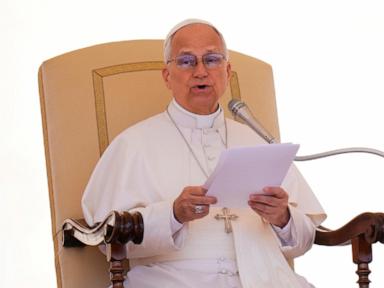
Pope Leo XIV isn't mincing words about the financial future of the Church. During his recent address to a delegation of wealthy American Catholics, the Pontiff made it clear that the Church’s global mission depends heavily on the continued generosity of the United States. It isn't just about keeping the lights on at the Vatican. It’s about a massive, complex network of schools, hospitals, and relief programs that would likely collapse without American capital.
If you've followed the Holy See’s finances over the last decade, you know things have been rocky. Between legal settlements and the lingering economic effects of global instability, the Vatican's coffers aren't what they used to be. Leo XIV knows this. He also knows that the United States remains the single largest source of private donations to the Catholic Church. This latest appeal isn't a suggestion. It's a strategic necessity.
The Economic Reality of the Modern Papacy
The Pope’s message focused on the "theology of stewardship," but the underlying math is hard to ignore. The Vatican’s annual budget often runs a deficit. Peter’s Pence, the primary collection for the Pope’s charitable works, has seen fluctuations that make Rome nervous. When Leo XIV sits down with American billionaires, he's talking to the people who fund the front lines of Catholic social teaching.
American donors often want to see transparency. They want to know exactly where their money goes. Historically, the Vatican hasn't always been great at showing the receipts. However, Leo XIV has pushed for more rigorous accounting standards to reassure these high-net-worth individuals. He's trying to bridge the gap between ancient tradition and modern financial expectations.
The reality is that Catholic philanthropy in the U.S. is changing. Younger wealthy donors don't give the same way their parents did. They aren't just writing checks to the local diocese and calling it a day. They're looking for impact. They're looking for data. Leo XIV's challenge is to convince a new generation of American elites that the Church is still the most efficient vehicle for global good.
Why American Dollars Matter Most
Why is the Pope focusing so much on the U.S. right now? Look at the numbers. While Catholicism is growing rapidly in the Global South—specifically in Africa and Southeast Asia—those regions don't have the accumulated wealth of the American pews. The Church is in a position where its growth is happening in places that require the most financial support, while its traditional financial engines in Europe are cooling off.
Western Europe has seen a steady decline in "church taxes" and voluntary giving. That leaves the U.S. as the last standing superpower of Catholic finance. If American Catholics stop giving, the Church's ability to respond to humanitarian crises in places like South Sudan or the Amazon is severely neutered. Leo XIV mentioned this explicitly, calling on the "Spirit of the Great Commission" to remind the wealthy that their bank accounts have a spiritual purpose.
Common Misconceptions About Vatican Wealth
Most people think the Vatican is sitting on an infinite pile of gold. It’s a common trope. You see the art, the statues, and the architecture, and you assume they’re loaded. But you can't pay a doctor in a rural Congolese clinic with a Michelangelo fresco. The Vatican is "asset rich" but often "cash poor."
- The Art is Illiquid: The Church views its art collection as part of the "patrimony of mankind." They aren't going to sell the Pietà to cover a budget shortfall.
- The Global Network: The Church manages thousands of hospitals and schools. The overhead is astronomical.
- Sovereignty Costs: Being a sovereign state means the Vatican has to fund its own security, diplomatic corps, and communications infrastructure.
Leo XIV is trying to shift the narrative. He wants donors to stop looking at the Vatican as a museum and start seeing it as a global NGO with a 2,000-year-old mission. He’s pushing the idea that wealth is a tool for "integral human development," a term that pops up constantly in his encyclicals. It’s basically code for: "Use your money to help the whole person, not just their belly."
The Tension Between Faith and Finance
It’s no secret that some wealthy American Catholics have been at odds with Leo XIV’s more progressive stances on the environment and economic inequality. There’s a certain irony in a Pope who critiques "unfettered capitalism" asking the winners of that system for more money. But Leo XIV is a pragmatist. He’s willing to have the tough conversations.
I've talked to donors who feel like the Church’s rhetoric sometimes bites the hand that feeds it. They hear the Pope talk about the "idolatry of money" and then get an invite to a high-dollar fundraiser. It’s a weird dynamic. Yet, Leo XIV’s approach in this recent address was remarkably diplomatic. He didn't scold. He invited. He framed the act of giving as a way for the wealthy to find genuine meaning in an increasingly secular world.
Transparency is the New Currency
If the Church wants to keep the American spigot open, it has to keep cleaning up its act. The 2019 financial reforms were a start, but Leo XIV is doubling down. He knows that in 2026, donors have too many options. They can give to the Gates Foundation or local community chests where they see immediate, tracked results.
The Pope is reportedly working on a new directive that would allow for even more local control over how donated funds are used in international missions. This is a huge shift. Historically, money went to Rome and then got redistributed. Now, there’s a move toward direct-impact funding. If a donor in Chicago wants to fund a specific clean-water project in Nigeria via the Church, Leo XIV wants to make that process easier and more transparent.
What This Means for Your Giving Strategy
If you're an American Catholic, or even just someone interested in global philanthropy, this shift matters. The Church is the largest non-governmental provider of healthcare and education on the planet. Its financial health affects millions of people who have never even seen a Bible.
Don't just give blindly because it's what your family has always done. Look for the specific initiatives that Leo XIV is highlighting—climate resilience, refugee integration, and tech ethics. These are the areas where the Church is trying to innovate.
- Verify the Impact: Use tools like Charity Navigator or independent Catholic audits to see how your diocese or chosen Catholic charity handles its funds.
- Direct Your Giving: If you're wary of the Vatican's general fund, look into specific Catholic organizations like Catholic Relief Services (CRS) or the Catholic Medical Mission Board (CMMB). They operate with high levels of transparency.
- Engage with the Parish: Financial stewardship starts at the local level. If the local parish is healthy, the broader