The steel hull of a Very Large Crude Carrier (VLCC) is roughly three football fields long, a floating fortress holding two million barrels of oil. When you stand on the deck of a ship like the Abqaiq, the horizon doesn't feel like a line. It feels like a weight. Beneath your boots, the vibration of the massive engines hums through the soles, a constant reminder that you are moving the lifeblood of modern civilization through a space no wider than a suburban commute.
Twenty-one miles.
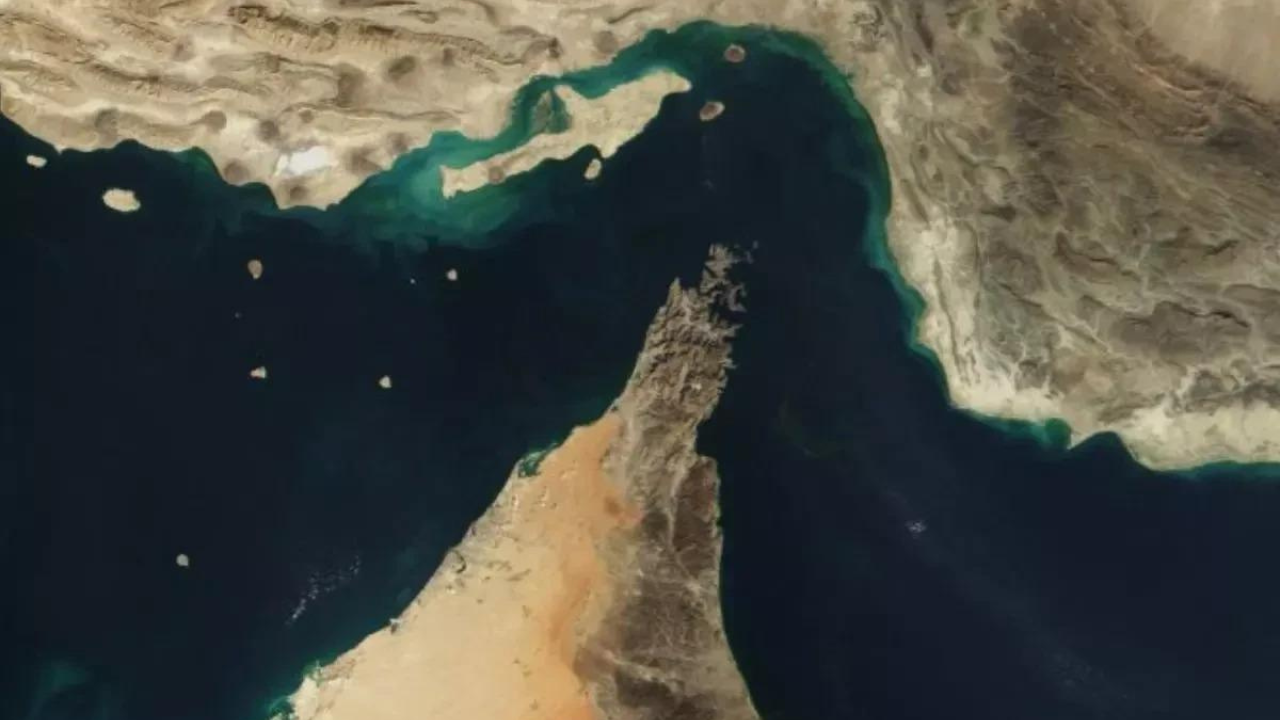
That is the width of the Strait of Hormuz at its narrowest point. If you were driving a car at highway speeds, you could cross that distance in about twenty minutes. But for the global economy, those twenty-one miles are the most claustrophobic stretch of water on the planet. One-fifth of the world’s liquid petroleum passes through this needle's eye. Every light switch flipped in a London flat, every plastic toy manufactured in a Shenzhen factory, and every gallon of gas pumped into a minivan in Ohio is tethered to this specific, turquoise patch of the Persian Gulf.
When the headlines break—Trump warns Iran, Tehran threatens to close the Strait—the world reacts with a practiced, cynical shiver. We have heard this song before. It is a geopolitical ritual. Yet, for the mariners on those tankers and the analysts staring at flickering Bloomberg terminals, the threat is never just "news." It is a calculation of catastrophe.
The Geography of a Chokehold
To understand why a few angry words from a podium in Washington or a Revolutionary Guard commander in Tehran can send shockwaves through your bank account, you have to look at the map. The Strait isn't just a hallway; it’s a funnel. On one side sits the Arabian Peninsula, specifically Oman and the United Arab Emirates. On the other, the rugged, jagged coastline of Iran.
The actual shipping lanes—the deep-water paths where the giants can safely tread—are only two miles wide in each direction. They are separated by a two-mile buffer zone. This isn't an open ocean. It is a two-lane road in a dangerous neighborhood.
Imagine a hypothetical captain named Elias. He has spent thirty years at sea. He knows that if Iran decides to "close" the Strait, they don't need a massive armada. They don't need to defeat the U.S. Fifth Fleet in a conventional Trafalgar-style engagement. They only need to make the cost of transit higher than the value of the cargo. They can do this with "mosquito" tactics: fast-attack boats, sea mines that cost a fraction of a torpedo, or shore-based anti-ship missiles hidden in the limestone cliffs.
If Elias sees a swarm of small boats approaching, his insurance premiums don't just go up. They vanish. Lloyd’s of London declares the area a war zone, and suddenly, that two-million-barrel fortress is a liability. It stops moving.
When the ships stop, the world holds its breath.
The Invisible String
The rhetoric coming out of Washington during the Trump administration focused on "maximum pressure." The logic was simple: squeeze Iran’s economy until the regime breaks or comes back to the table. But pressure in a closed system has to go somewhere. Tehran’s counter-pressure has always been the Strait.
"If we cannot export our oil, no one will," is the recurring refrain from Iranian officials. It is a suicide pact disguised as a military strategy.
We often talk about oil prices as abstract numbers on a screen—$75 a barrel, $90, $110. But consider the reality of a sustained closure. Within forty-eight hours of a total blockade, the "risk premium" would skyrocket. Speculators would drive prices toward $200. This isn't just about the cost of filling up a truck. It’s about the cost of the bread inside the truck. Modern agriculture is essentially a way of turning petroleum into calories. Fertilizers are made from natural gas; tractors run on diesel; shipping containers require heavy fuel oil.
The Strait of Hormuz is the physical manifestation of our vulnerability. We like to think we live in a digital, cloud-based world, but our reality is stubbornly physical. It is made of steel, salt water, and combustible liquids.
The Ghost of 1988
History isn't a straight line; it's a circle. To understand the current tension, you have to look back to the "Tanker War" of the 1980s. During the Iran-Iraq conflict, both sides targeted merchant vessels to bleed the other’s economy. The U.S. eventually stepped in with Operation Earnest Will, re-flagging Kuwaiti tankers and providing naval escorts.
It culminated in Operation Praying Mantis, a one-day naval battle that saw the U.S. destroy a significant portion of Iran’s navy. That memory stays in the minds of the commanders in Tehran. They know they cannot win a head-to-head fight. But they also know that the world’s appetite for $10-a-gallon gas is zero. They don't need to win a war; they just need to create enough chaos to make the "maximum pressure" unbearable for the American voter.
This is the psychological theater of the Strait. Every time a drone is shot down or a tanker is mysteriously limpet-mined, the actors are checking the other's pulse. How much risk are you willing to take? How much are you willing to pay?
The Human Toll of a Tightened Throat
Let's look at a hypothetical family in a suburb of Chicago. They don't know where the Strait of Hormuz is. They couldn't find it on a map if their lives depended on it. But their lives do depend on it.
If the Strait closes, the supply chain—already fragile from years of global upheaval—begins to snap. The cost of electricity spikes. The local shipping company adds a fuel surcharge. The grocery store passes that cost to the consumer. Suddenly, that family is choosing between a full tank of gas and a full cart of groceries.
This is the "human element" that politicians often skip over when they talk about "strategic assets" and "maritime security." A blockade in the Persian Gulf is a tax on the poorest people on Earth. It is a cold, hard squeeze on the middle class.
The tension is a high-stakes game of chicken played with other people's livelihoods. When Trump tweeted warnings and Iran responded with threats of closure, they were both reaching for the same lever: the global heart rate.
The Fragility of the Status Quo
Is it actually possible to close the Strait?
Military experts argue about this constantly. Some say the U.S. Navy could clear a path in days. Others point out that clearing mines is a slow, agonizing process. You can't rush a mine-sweeper. You can't "intimidate" a submerged explosive.
But the physical closure is almost secondary to the psychological one. The moment the first missile is fired, the Strait is closed to the commercial world. No CEO is going to risk a billion-dollar vessel and thirty lives to prove a point about maritime law.
We live in a world of "just-in-time" delivery. We don't keep massive stockpiles of anything anymore. We rely on the flow. The Strait of Hormuz is the valve.
Right now, as you read this, there are dozens of tankers navigating those two-mile lanes. The crews are drinking coffee, checking charts, and watching the radar. They are the silent workers of a global machine that never sleeps. They look out at the Iranian coastline, then back at the Omani side, and they hope that the people in the tall buildings in D.C. and Tehran keep their cooling systems working.
The world is a very small place when you’re standing in a twenty-one-mile gap. We are all on those ships, whether we realize it or not. We are all transit passengers in a narrow sea, waiting to see if the valve stays open or if the pressure finally becomes too much for the pipe to hold.
The silence on the water is never really silence. It’s just the sound of a fuse that hasn't reached the powder yet.